Future-Proofing Your Professional Value
Golden Hook & Introduction
SECTION
Nova: What if the very things you're doing right now to secure your career are actually making you vulnerable to obsolescence?
Atlas: Whoa, that's a bold claim, Nova. I imagine a lot of our listeners, who are constantly striving for relevance and growth, might find that a bit unsettling. We're told to specialize, to dig deep, to become indispensable. Are you saying that's wrong?
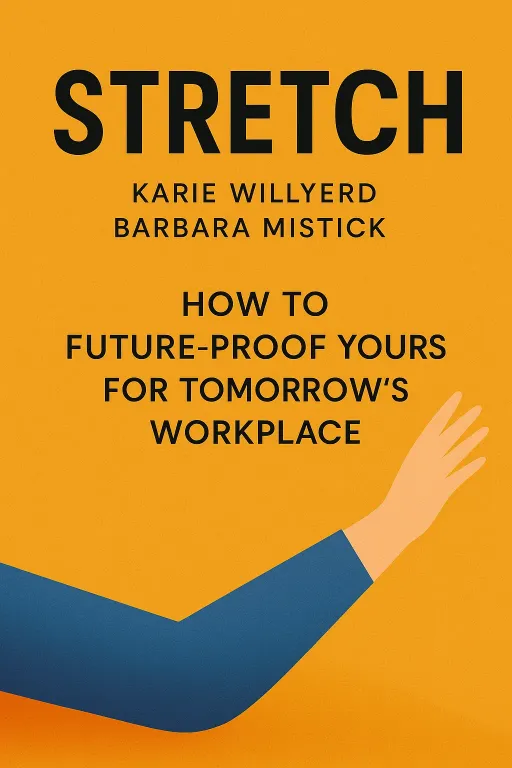
Nova: Not wrong, Atlas, but perhaps incomplete. Today, we're diving into the art of future-proofing your professional value, and it's a far more dynamic process than just collecting certifications. We're pulling insights from two phenomenal books: "Stretch" by Karie Willyerd and Barbara Mistick, and "Mastering the Game" by Sharon E. Jones. Willyerd and Mistick are both seasoned talent strategists who've spent decades observing how careers truly evolve and, sometimes, stagnate. Jones, on the other hand, comes from a background of empowering diverse professionals to strategically navigate complex corporate landscapes.
Atlas: That makes sense. We’re always looking for the best path forward, and the idea of "future-proofing" is incredibly appealing to anyone who wants to build a secure future and lasting impact. So, are we talking about a complete overhaul, or more of a strategic pivot?
Nova: More of a strategic pivot, absolutely. These books offer complementary lenses on how to stay ahead. "Stretch" gives us a powerful toolkit for individual resilience and growth, almost like an internal operating system upgrade. Then, "Mastering the Game" reveals the invisible levers of influence and connection within any organization.
The Proactive Professional's Toolkit: Five Practices to Prevent Obsolescence
SECTION
Nova: So let's start with "Stretch." Willyerd and Mistick lay out five essential practices they call the "stretch" habits. Think of them as your personal anti-obsolescence program. The first is "Learning on the Fly."
Atlas: That sounds like a fancy way of saying 'keep learning,' right? But how do you 'learn on the fly' when you're already swamped with daily tasks? For someone with a sharp intellect, the abundance of knowledge feels like a gift, but also a burden to discern.
Nova: Exactly, it's about discernment. Learning on the Fly isn't just about taking another online course, Atlas. It's about being incredibly intentional and adaptive with your learning. It means when a new technology emerges, or a new market trend hits, you don't wait for a formal training program. You dive in, experiment, ask questions, and teach yourself the fundamentals, often in real-time, as the problem presents itself.
Atlas: So it's about active engagement, not passive consumption. It reminds me of the user profile's recommendation to schedule 20 minutes daily for focused reading. That could be a perfect practical application of 'learning on the fly,' right? Researching a future skill, as the takeaway suggests.
Nova: Precisely. The second practice is "Openness." This involves being receptive to new ideas, feedback—even uncomfortable truths—and different ways of doing things. It's about pushing past your confirmation bias.
Atlas: That’s a tough one. It’s easy to get comfortable in your own expertise. How do you cultivate genuine openness, especially when you’ve built a career on a particular way of thinking?
Nova: It requires a conscious effort to seek out diverse perspectives, Atlas. Think of it like a scientist always looking for data that might their hypothesis, not just confirm it. It’s about intellectual humility. The third practice is "Relentless Networking."
Atlas: Ah, networking. That word often conjures images of awkward cocktail parties and transactional business card exchanges. For someone who values lasting impact, that often feels a bit superficial. What does 'relentless' mean in a non-cringeworthy way?
Nova: That's a great distinction, Atlas. "Relentless" here doesn't mean aggressive or transactional. It means and. It's about building genuine relationships you need them. It’s understanding that your network isn't just about who you know, but who knows and what you're capable of. It’s about reciprocity, offering help and insights freely.
Atlas: So it’s more about cultivating a community of trust than just collecting contacts. I can see how that aligns with building lasting impact.
Nova: Absolutely. The fourth practice is "Being a Data Scientist." This doesn't mean you need a PhD in statistics, but it means developing a comfort and curiosity with data. It’s about asking data-driven questions, understanding metrics, and using evidence to make decisions rather than just gut feeling or anecdote.
Atlas: Okay, but how does someone in a non-tech niche, say, a creative field or even HR, apply 'being a data scientist'? What does that look like in practice?
Nova: It means understanding the analytics behind your website, the engagement metrics of your content, or the hiring and retention data in HR. It's about using available information to identify patterns, make smarter choices, and measure your impact. It's about moving from intuition to informed intuition. Finally, the fifth practice is "Staying Robust."
Atlas: I like the sound of that. Being resilient, I imagine?
Nova: Yes, but more than just resilience. It’s about maintaining your physical, mental, and emotional well-being so you can sustain peak performance and adapt to stress. It means prioritizing sleep, exercise, and mental breaks, recognizing that your personal well-being is the foundation of your professional value. It’s not just about bouncing back, but about having the deep reserves to prevent burnout in the first place.
Navigating the Human Labyrinth: Leveraging Social Capital and Mentorship for Advancement
SECTION
Nova: Now, moving from your internal operating system to the external landscape, let's look at Sharon E. Jones's "Mastering the Game." She argues that for diverse professionals, especially, understanding and leveraging 'social capital' and 'mentorship' are primary drivers of advancement.
Atlas: That’s a crucial point. For many, career advancement feels like a purely meritocratic climb. You do good work, you get promoted. But Jones is saying there's an unseen layer, right?
Nova: There absolutely is. Jones emphasizes that competence alone often isn't enough, particularly when you're navigating environments that weren't necessarily built with your background in mind. Social capital isn't just about who you know; it's about the value, trust, and influence embedded in your relationships. It's the goodwill and reciprocal obligations that make people want to help you, sponsor you, and advocate for you.
Atlas: So it's the depth and quality of those connections, not just the quantity. How do you build that kind of social capital authentically, without it feeling like a calculated transaction? For a pragmatic explorer, genuine connection is key.
Nova: It starts with genuine curiosity and generosity, Atlas. It's about offering value first, without expectation. It means being a good colleague, a reliable team member, and someone who actively helps others succeed. Jones highlights that for diverse professionals, this often means intentionally seeking out those who can bridge cultural gaps or advocate in rooms where you might not yet be present.
Atlas: That's a powerful distinction. It's not just about being seen, but about having someone else vouch for your capabilities when opportunities arise. What about mentorship? How does that tie into social capital?
Nova: Mentorship, as Jones explains, is a critical component of social capital, but she makes an important distinction between a mentor and a sponsor. A mentor provides guidance, advice, and shares wisdom. They help you develop skills and navigate challenges. A sponsor, on the other hand, is someone who actively advocates for your promotion, connects you to high-visibility projects, and uses their own capital to advance your career.
Atlas: Ah, that's a key difference! I imagine a lot of our listeners seek mentors for advice, but might not realize the strategic power of a sponsor. How does someone actively find or cultivate a sponsor, especially when they're focused on aligning growth with personal values and lasting impact?
Nova: Jones would say it starts with demonstrating high performance and potential, then intentionally building relationships with leaders who are in a position to champion you. It's about making your impact visible to the right people and showing you're ready for the next level. It’s less about asking for a sponsorship directly and more about earning it through consistent, impactful work and strategic relationship-building. It’s about understanding the internal politics and power structures, not to manipulate them, but to navigate them effectively and ethically towards your purpose-driven goals.
Synthesis & Takeaways
SECTION
Nova: So, when we put "Stretch" and "Mastering the Game" together, we see a really holistic picture of future-proofing. It’s about building an incredibly adaptable, resilient individual, while simultaneously understanding and strategically navigating the human ecosystem of your professional world.
Atlas: That's a profound synthesis. It tells us that our professional value isn't just about what we, but also about how we, how we, and how we within our environment. It's about combining relentless self-improvement with relational intelligence to build a secure future early and align career growth with personal values.
Nova: Exactly. It's about being the pragmatic explorer who constantly learns, the resilient builder who prioritizes well-being and strategic relationships, and the conscious achiever who drives towards lasting impact. The core takeaway from all this, for anyone wanting to truly future-proof their professional value, is to start small, but start now.
Atlas: So, what’s the one tangible step we can take today, inspired by all this wisdom, to begin that journey?
Nova: It's the challenge from our content: Identify one 'future skill' relevant to your tech niche, or even just your industry, and spend 20 minutes today researching its fundamentals. Just 20 minutes. It's the smallest 'Learning on the Fly' step, but it builds momentum. It’s about making that abundance of knowledge a gift, not a burden, by trusting your discernment and taking action.
Atlas: I love that. Small, actionable, purpose-driven. That's a perfect way to internalize these concepts and start building that lasting impact.
Nova: This is Aibrary. Congratulations on your growth!