Elevating Your Professional Game with Strategic Feedback
Golden Hook & Introduction
SECTION
Nova: Most people think feedback is about fixing what’s broken, right? You get a performance review, it highlights areas for improvement, and you go off to mend your professional fences.
Atlas: Oh, I know that feeling. It’s usually a list of things you do perfectly, or skills you need to acquire. It often feels like a post-mortem, not a roadmap. It’s a reactive exercise.
Nova: Exactly! But what if the most powerful feedback isn't about identifying flaws, but about discovering the secret blueprints to success that no one ever explicitly tells you? What if it's about unlocking the unwritten rules of the game, the unspoken pathways to influence and impact?
Atlas: That’s intriguing. For anyone who’s ever felt like they’re doing everything right by the book, meticulously following every instruction, but still not quite hitting the mark, that idea resonates deeply. It’s like there’s a whole hidden curriculum we’re all trying to figure out, a set of unspoken expectations that truly dictate who gets ahead.
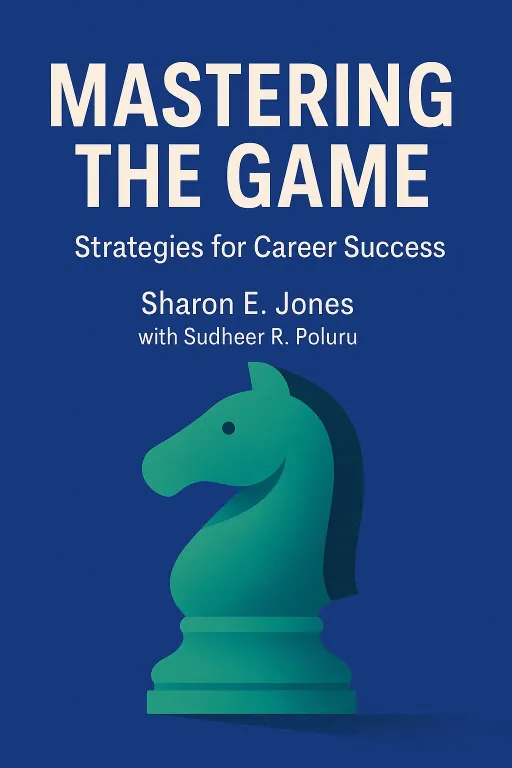
Nova: And that hidden curriculum is precisely what we’re diving into today. We’re drawing insights from two incredibly sharp resources. First, "Mastering the Game" by Sharon E. Jones with Sudheer R. Poluru, a book that brilliantly unpacks the unwritten rules of corporate success, particularly highlighting the nuances for diverse professionals, emphasizing strategic self-advocacy and understanding organizational politics. Then, we’ll look at "The Handbook of Strategic 360 Feedback" by Allan H. Church and his co-authors, which transforms 360 reviews from a potentially dreaded, bureaucratic chore into a powerful, strategic development tool.
Atlas: So, it’s not just about getting feedback, but about getting the of feedback to truly understand the actual game being played, and then using it to your advantage? That’s high-value insight right there, especially for someone who wants their learning to be efficient and impactful.
Nova: Absolutely. Today we'll explore this from two perspectives. First, we'll illuminate those often-invisible 'unwritten rules' that govern professional advancement and how strategic conversations can reveal them. Then, we’ll discuss how to strategically harness formal mechanisms like 360 reviews to proactively shape your career path and truly master the professional landscape. This isn't about just keeping your head down and working hard; it’s about looking up, understanding the terrain, and charting your own course.
Unveiling Unwritten Rules with Strategic Feedback
SECTION
Nova: So, let’s start with this idea of "unwritten rules." Sharon E. Jones and Sudheer R. Poluru in "Mastering the Game" make a compelling argument that true corporate success, particularly for diverse professionals, often hinges not just on explicit job performance, but on understanding and navigating these implicit expectations, power dynamics, and cultural norms. These are the things that are never in a job description, but everyone knows them.
Atlas: Hold on. "Unwritten rules" sounds a bit like secret handshakes or the kind of office politics people complain about, almost like a conspiracy. How do you even discover rules that are, by definition, unwritten? It’s like trying to find a ghost in a dark room; you know it’s there, but you can’t quite grasp it.
Nova: That’s a brilliant way to put it, Atlas, and it’s precisely why traditional feedback often falls short. Imagine Sarah, a brilliant software engineer. She consistently delivers high-quality code, meets all her deadlines, and her technical skills are top-notch. On paper, she’s a star performer. She’s dedicated, works long hours, and her projects are always flawless. Yet, she keeps getting passed over for team lead positions. She’s frustrated, feels undervalued, and her morale is starting to dip. Her performance reviews are always good, filled with praise for her technical prowess, so she’s left wondering, "What am I doing wrong? Is it me, or is it this place?"
Atlas: I can definitely relate to that feeling. For focused achievers, it’s maddening to excel at the explicit tasks, to pour your energy into measurable outcomes, and still feel stuck. It makes you wonder if there’s some kind of invisible barrier, a glass ceiling made of unsaid expectations.
Nova: Precisely. The "cause" of Sarah's stagnation isn't her technical ability; it's her blind spot regarding the unwritten rules for leadership in her specific organization. The "process" she's missing is proactively demonstrating leadership potential in ways that aren't explicitly outlined in her job description. For instance, she might not be actively "managing up" by communicating her strategic contributions and insights to senior leaders, or she might not be building cross-functional alliances that are absolutely essential for influencing decisions beyond her immediate team. She's a fantastic individual contributor, but leadership often requires a different kind of visibility and influence. The "outcome" is her being perpetually overlooked, despite her clear competence and dedication, leading to mounting frustration.
Atlas: So you’re saying her technical brilliance is actually blinding her to the other skills that are valued, the ones that aren't about lines of code but about lines of communication and influence? That’s kind of heartbreaking to hear, but also incredibly insightful. How does strategic feedback help her see these unwritten rules, these invisible threads of power?
Nova: Instead of asking her manager, "How am I doing?", which invites a generic performance review, Sarah needs to ask "What are the key drivers for success in a team lead role, in, that aren't on paper?" or "What behaviors do you observe in our most successful leaders that I might be overlooking in my own approach?" Or even, "What’s one thing you see as absolutely critical for someone to be seen as ready for X leadership position in our company that might not be obvious to an outsider?"
Atlas: That’s a very different kind of question. It shifts the focus from past performance to future potential and the implicit expectations of the organization. It's like asking for the cheat codes to the game, not just the score. It's about understanding the internal logic.
Nova: Exactly! It’s about seeking insights into the of success, not just the of her work. Think about another example, perhaps the highly effective but socially isolated leader. This person is an expert, delivers incredible results, maybe even generates significant revenue, but struggles to build rapport or influence across departments. Their internal feedback might be glowing about their output, their individual achievements, but they might not realize the unwritten rule that leadership also means being a connector, a culture-builder, someone who can rally diverse teams and build consensus. They are a silo of excellence.
Atlas: So, the cause is their singular focus on individual delivery and technical mastery, the process is neglecting relationship building beyond their immediate scope, and the outcome is being seen as a brilliant individual contributor, but not a holistic leader or someone who can drive broader organizational change. How do you even begin to get feedback on something as nebulous as "being a connector" or "building rapport?"
Nova: That's where feedback comes in. You don’t ask, "Am I a good connector?" because that's too vague. You might ask a trusted peer, "When you think about our most influential leaders, what’s one thing they do that helps them get buy-in for their ideas across different teams?" Or ask a senior leader, "What’s a common pitfall you see highly competent people make when they try to step into more influential roles here, especially when it comes to influencing without direct authority?" These questions aren't about personal traits; they reveal the behavioral expectations and the unwritten rules of influence within that specific environment. It’s about understanding the of the organization, not just its task list.
Atlas: That makes perfect sense. It’s about asking smarter questions to get smarter answers, especially for the pragmatic learner who wants to maximize their knowledge gain and make their time count. It sounds like you’re not just trying to improve, but to strategically yourself by understanding the underlying dynamics.
Strategic 360 Feedback for Career Navigation
SECTION
Nova: And that naturally leads us to the formal side of things: 360-degree feedback, but not as you might traditionally know it. Allan H. Church and his co-authors in "The Handbook of Strategic 360 Feedback" move beyond basic mechanics to show how this tool can be strategically designed and implemented to truly drive individual and organizational development, fostering a culture of continuous improvement.
Atlas: Oh man, 360 feedback. For a lot of people, that’s a phrase that conjures images of endless surveys, vague, often conflicting comments, and a process that feels more like a bureaucratic hurdle than a genuine growth opportunity. It can be a drain on time, and often, the actionable insights feel minimal. How do you possibly make that and valuable for a focused achiever?
Nova: You've hit on the core challenge, Atlas. Many organizations treat 360s as a compliance exercise, a check-the-box activity. But when designed and utilized strategically, it becomes a powerful GPS for your career. The key is to link the feedback directly to your personal career goals and the specific organizational strategic objectives, rather than just generic competencies. It’s about intentionality.
Atlas: So, it's not just about collecting data, but about collecting the data, from the, and then it through a strategic lens to connect it to your aspirations? That sounds like a lot more work than just filling out a form.
Nova: It is, but the payoff is immense. Let’s consider Maria, an aspiring manager. She’s well-liked, incredibly supportive of her team, and an excellent individual contributor. Everyone loves working with Maria. Her initial 360 feedback might say wonderful things like "great team player," "always helpful," "very approachable," "fosters a positive environment." Which sounds like the ideal colleague, right?
Atlas: Sounds like a dream employee! The kind of person everyone wants on their team. But I imagine there’s a "but" coming, given our earlier discussion about unwritten rules.
Nova: There is. When Maria starts aspiring to leadership roles, her 360 might also reveal comments like "sometimes avoids tough conversations," or "tends to defer to others in conflict situations," or even "needs to be more decisive when difficult choices arise." The "cause" here is a strength—her agreeableness and supportiveness—becoming a potential weakness in a leadership context where decisiveness, accountability, and conflict resolution are often unwritten rules for progression. The "process" is realizing this critical gap through specific, strategic feedback. The "outcome" is targeted development to bridge that gap and secure a promotion, rather than being perpetually seen as "not quite ready."
Atlas: That’s a brilliant example. It highlights how a strength in one context can inadvertently hinder you in another, and how strategic feedback can illuminate that often-unconscious shift. So, how do you get that specific, strategic feedback in a 360? How do you move beyond vague comments to actionable insights?
Nova: It’s all about the questions you ask and, crucially, you ask them of. Instead of generic "rate their communication skills," you design questions like, "How effectively does Maria influence team decisions in the face of differing opinions or resistance?" or "Describe a specific situation where Maria successfully navigated a difficult team conflict or delivered tough news." You also need to ensure you're getting feedback from a diverse set of perspectives—peers, direct reports, cross-functional partners, and even external stakeholders who see different facets of your work and how you interact with them. This breadth of perspective is vital.
Atlas: Okay, so it’s about making the feedback questions more behavioral and situation-specific, rather than just trait-based. And then, once you have that feedback, how do you turn something like "needs to be more decisive" into an actionable plan? Because that sounds like a huge, nebulous thing, like telling someone to "be happier."
Nova: That's where the "strategic" part truly comes alive. You don’t just accept "be more decisive" at face value. You look for patterns across the feedback sources. If multiple people mention "decisiveness," you don't just decide to "be more decisive" overnight. You break it down. What situations require it? What's holding you back? Is it a fear of being disliked, a lack of sufficient information, or perhaps an unconscious habit of over-collaboration? Then you identify specific, small, observable steps. For Maria, it might be consciously taking the lead on one minor decision each week, or practicing structured conflict resolution conversations with a trusted mentor, role-playing scenarios. It’s about translating that broad insight into tiny, actionable steps that align with your career goals and the specific unwritten rules of your organization, turning a vague comment into a concrete development plan.
Atlas: I guess that makes sense. For the pragmatic learner and focused achiever, it’s not about overwhelming self-improvement, but about focused, targeted adjustments based on real data, real insights into the unwritten rules. It's about cutting through the noise to find what truly matters for impact and advancement. It's about efficiency in growth.
Synthesis & Takeaways
SECTION
Nova: What we’re really talking about today is seeing feedback not as a judgment or a reactive process, but as a strategic asset, a proactive tool for career navigation. Both the informal, insightful questions you ask your peers and superiors, and the formally structured 360 reviews, become powerful tools when you use them to understand the implicit expectations and opportunities within your organization. It's about gaining clarity in a complex environment.
Atlas: It’s fascinating how these two books, on seemingly different aspects of professional growth, converge on this central idea: that success isn’t just about you do, but you play the game, and that feedback, when sought and interpreted strategically, is the ultimate coach, the ultimate guide. For those of us who are focused achievers, this is about making our learning efficient. It's not just getting better, but getting better at the that truly move the needle for our careers. It's about maximizing our impact.
Nova: Exactly. The core takeaway is to proactively seek strategic feedback—not just for performance review, but to understand those 'unwritten rules' of success in your specific professional environment. Then, you apply those insights to proactively shape your career path. It’s about being an active architect of your professional journey, rather than a passive recipient of opportunities or a victim of unseen forces. It's about taking control.
Atlas: So, for our listeners who are ready to elevate their professional game, who want to turn these insights into action, what’s one tiny step they can take this week to start this process?
Nova: Your tiny step this week: identify one trusted peer or superior, someone whose judgment you respect and who has a good understanding of your organizational culture. And instead of asking "how am I doing?", ask them "what’s one thing you see as absolutely critical for success in my role or for my next career step that isn’t explicitly written down anywhere?" Listen intently to their response, and reflect on how you might integrate that insight into your professional approach.
Atlas: That’s a powerful, actionable step. It shifts the entire dynamic of feedback from defensive to proactive, from reactive to strategic. It’s about seeking wisdom, not just evaluation.
Nova: Indeed. By asking better questions, we get better answers, and ultimately, we build better, more intentional careers.
Atlas: This is Aibrary. Congratulations on your growth!