

The Psychology of Resilient Leadership
Golden Hook & Introduction
SECTION
Nova: Most people think resilience is about gritting your teeth and pushing through the pain. But the latest science suggests that if you are gritting your teeth, you have already lost the battle before it began because that tension is actually a symptom of the very fragility you are trying to overcome.
Atlas: That is a harsh way to start, but I suspect you are right. We treat resilience like a muscle we have to force into growth, but you are hinting that it might be more about how we interpret the world around us.
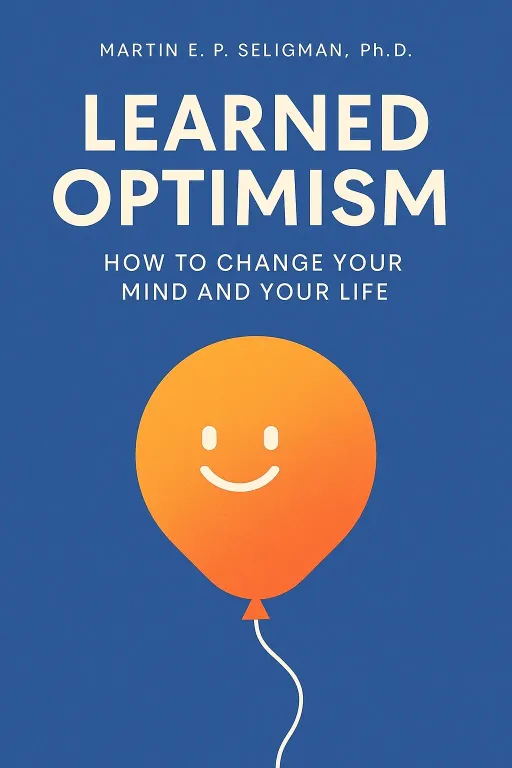
Nova: Exactly. Today we are looking at the mechanics of that interpretation. We are diving into the foundational work of Martin E. P. Seligman, specifically his classic, Learned Optimism, and pairing it with the tactical, modern approach found in Master Your Emotions by Thibaut Meurisse.
Atlas: Two heavy hitters. Seligman is often called the father of positive psychology. He spent decades shifting the field from merely fixing what is broken to understanding what makes us flourish. And Meurisse, he is the guy who turns those high-level psychological concepts into actionable, almost manual-like instructions for the brain.
Nova: That is the perfect way to frame it. One gives us the map of the mind, and the other gives us the tools to navigate it. We are going to explore how to move from being a victim of our circumstances to being the architect of our own response, especially when business, or life, hits a wall.
Atlas: I am ready to dig in. Let’s start with that map. Where do we even begin when a major setback happens?
The Architecture of Explanatory Style
SECTION
Nova: We begin with the way we talk to ourselves. Seligman discovered that resilience is not an inherent trait you are born with. It is a byproduct of your explanatory style. When something goes wrong, you have a split-second, internal narrative that explains the cause. This narrative falls into two main categories: permanent and pervasive, or temporary and specific.
Atlas: That sounds like a technical distinction, but I bet it has massive consequences. Can you break that down? Because when a project fails, my internal narrative usually goes straight to the worst-case scenario.
Nova: That is exactly the trap. Let’s look at the Pervasive versus Specific distinction. If you fail to hit a quarterly target, a pessimistic explanatory style looks at that and says, I am incompetent. That is pervasive. It assumes the failure in one specific area leaks into your entire identity and capability as a leader.
Atlas: Right. It’s like a drop of ink in a glass of water. It turns the whole thing black.
Nova: Precisely. But an optimistic explanatory style—and Seligman is very clear that this is not about wearing rose-colored glasses—would look at that same failure and say, This specific project had flawed market assumptions. That is specific. It isolates the failure to the context, leaving your overall competence, your intelligence, and your future potential completely untouched.
Atlas: Okay, I see the utility there. It acts as a firebreak. It stops the fire of one failure from burning down the entire house of your self-worth. But what about the permanent versus temporary piece?
Nova: That is the second dimension. The pessimistic style views the cause of the failure as permanent. They say, I always mess up these presentations, or, The market will never accept our product. They use words like always and never. It freezes time. It makes the failure feel like a permanent state of reality.
Atlas: And the alternative is to view it as temporary.
Nova: Exactly. You reframe it by saying, I missed the mark this time because of X or Y variable, but next time I will adjust the strategy. You are acknowledging the reality of the setback without signing a contract that says this failure is your destiny.
Atlas: This feels like the difference between a static mindset and a dynamic one. But I have to play devil’s advocate here. Is there a danger in this? If I tell myself the failure was just temporary and specific, am I avoiding accountability? Am I just making excuses so I don’t have to change?
Nova: That is the most common critique, and it is a vital one. The key here is accuracy, not delusion. Seligman argues that the goal is not to lie to yourself. The goal is to be a more accurate judge of your circumstances. If you are actually incompetent, you need to know that. But most of us are not analyzing our setbacks accurately. We are catastrophizing. We are taking a temporary bump in the road and paving a highway of despair with it.
Atlas: That makes sense. It is about precision. I am essentially being a scientist looking at the data of my life, rather than a judge handing down a life sentence based on one bad day.
Nova: You nailed it. You are the scientist, not the judge. When you stop viewing every setback as a permanent indictment of your character, you suddenly have the energy to solve the problem. If the problem is permanent, why bother trying? But if it is temporary, you are already halfway to the solution.
Reprogramming the Emotional Signal
SECTION
Atlas: That leads me into the second part of our discussion. Even if I intellectually know that my failure is temporary and specific, my body still feels the hit. My stomach drops, my heart rate spikes, I feel that wave of dread. That is where Thibaut Meurisse comes in, right? Because intellectual reframing is one thing, but how do I handle the biological reality of feeling like a failure?
Nova: You are spot on. That is where Meurisse’s approach in Master Your Emotions becomes essential. He argues that emotions are not the truth. They are just biological signals. They are like the dashboard lights in your car.
Atlas: I like that analogy. So, if I feel the panic of a missed deadline, that is just the check engine light?
Nova: Exactly. But most of us try to rip the dashboard out. We feel the panic, we label it as bad, we judge ourselves for feeling it, and then we try to suppress it. Meurisse says that suppression is the worst strategy. Instead, you treat the emotion as data. You pause, you acknowledge the signal, and you ask, What is this trying to tell me?
Atlas: That sounds easy in theory, but when I am in the middle of a high-pressure situation, I am not thinking about my dashboard lights. I am in the middle of the storm. How do I actually reprogram that response?
Nova: It starts with intentional focus. Meurisse highlights that we have a tendency to feed our negative emotions with our focus. If you are anxious about a setback, you ruminate on it. You replay the scene. You imagine the worst-case scenario. You are essentially pouring gasoline on the fire.
Atlas: So, the act of ruminating is actually a choice?
Nova: It is a habit, but you can turn it into a choice. Meurisse suggests that you can consciously shift your focus. When you feel that emotional spike, you first identify the signal. Ask yourself, What is the fear here? Is it fear of losing status? Fear of losing income? Once you label the emotion, you have separated yourself from it. You are no longer the emotion; you are the observer of the emotion.
Atlas: That is a subtle but massive shift. It is the difference between saying, I am angry, and saying, I am experiencing anger right now.
Nova: Exactly. That linguistic shift gives you space. And in that space, you can apply the reframing we talked about with Seligman. You use the emotional signal to tell you that something is wrong, and then you use your explanatory style to tell you that the problem is temporary and specific. You are essentially using your brain to regulate your nervous system.
Atlas: I can see how these two work together now. Seligman handles the narrative, the story I tell myself. Meurisse handles the physiology, the energy I feel in my body.
Nova: Precisely. And Meurisse takes it a step further. He talks about lifestyle adjustments. He is not just talking about mindset; he is talking about the inputs you give your brain. If you are constantly exhausted, over-caffeinated, and glued to a screen, your brain’s baseline for interpreting events is already skewed toward the negative.
Atlas: That is the pragmatic, architect-level stuff. It is not just about the moment of the setback; it is about building the foundation so you are not as reactive in the first place.
Nova: Right. If you are physically resilient, you are emotionally more stable. When you are stable, you are less likely to fall into the trap of thinking every setback is permanent and pervasive. It is a virtuous cycle.
Synthesis & Takeaways
SECTION
Atlas: This is starting to feel like a complete blueprint. We have the internal narrative, the biological signal management, and the lifestyle foundation. But let’s bring this home for the listener. If someone is listening to this and they are currently dealing with a major business setback, what is the one concrete thing they should do today to put this into practice?
Nova: If you are in the thick of a setback, start by writing it down. Do not keep it in your head. Write down the situation, and then write down your immediate interpretation of it. Then, audit that interpretation using the Seligman framework. Ask yourself: Am I calling this permanent? Am I calling this pervasive? And then, force yourself to write the alternative. How is this actually specific? How is this actually temporary?
Atlas: That is a great exercise because it forces you to slow down. You cannot write and panic at the same time.
Nova: Exactly. And once you have done that, check in with your body. Use the Meurisse approach. Notice the tension in your shoulders, the tightness in your chest. Acknowledge it as a signal, not as a fact. Take a deep breath and tell yourself, This is just the data. This is not the end of the road.
Atlas: I love that. It turns the entire experience from something that is happening to you, into something you are observing and managing. It moves you from a passive victim of your circumstances to an active participant in your recovery.
Nova: That is the ultimate goal of resilient leadership. It is not about avoiding setbacks. It is about changing your relationship to them. The truth is, the setback is just a piece of information. The resilience is in how you decide to process that information.
Atlas: This has been a fantastic synthesis. We have moved from the high-level psychology of how we explain our world, down to the tactical management of our biological signals. It is a reminder that we have more control over our internal landscape than we often give ourselves credit for.
Nova: We truly do. And remember, this is a practice. You will not get it right every time. But every time you pause, every time you reframe, you are building that capacity. You are training your brain to see the world differently.
Atlas: I think that is the perfect note to end on. It is not about perfection; it is about the practice. Thank you for walking us through this, Nova. This has been a masterclass in shifting perspective.
Nova: It has been a pleasure, Atlas. To all our listeners, take this framework and test it. See how it changes your response to the next challenge that comes your way.
Atlas: And that is all for today. This is Aibrary. Congratulations on your growth!









