

Mastering the Mind and Emotional Resilience
Golden Hook & Introduction
SECTION
Nova: Most people treat their internal monologue like a reliable narrator, but it is actually a deeply flawed storyteller. We assume our thoughts are facts, especially when things go wrong, yet we rarely question the mechanism behind those thoughts. We treat our own psyche like a fixed operating system that cannot be patched.
Atlas: That is the ultimate trap, isn't it? We act as if our reaction to a setback is a fixed character trait rather than a piece of software we can update. It is the difference between saying I am a failure and saying I failed at this specific task. One is a cage, the other is a data point.
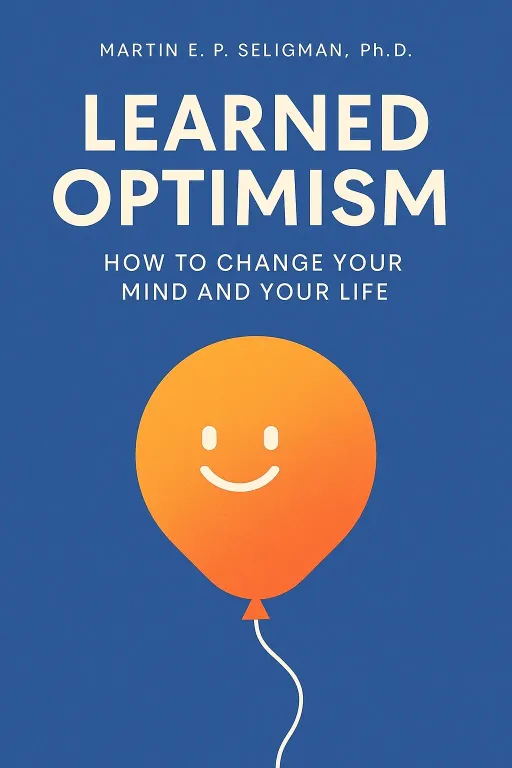
Nova: Exactly. Today we are unpacking that exact distinction by looking at two foundational works. First, we have Learned Optimism by Martin E. P. Seligman. He is often cited as the father of modern positive psychology, but his work actually started with a study on something much darker—learned helplessness. He flipped the script to show that optimism is not just a personality quirk, it is a cognitive skill.
Atlas: And then we are pairing that with Master Your Emotions by Thibaut Meurisse. Meurisse takes a much more modular, almost engineering-based approach to the psyche. He treats emotions not as mysterious clouds that pass over us, but as biological signals. He provides a framework to hack those signals through focus, physiology, and environmental design.
Nova: We are blending Seligman’s cognitive reframing with Meurisse’s biological toolkit. It is the perfect synthesis for anyone who wants to stop being a passive recipient of their own moods and start being the architect of their own resilience.
The Cognitive Architecture of Optimism
SECTION
Atlas: Let’s start with the cognitive side. Seligman’s premise is that optimism is a skill. But I imagine there are listeners who are naturally cynical—they might call this toxic positivity. How does Seligman defend the idea of optimism without falling into the trap of ignoring reality?
Nova: That is the most common critique, and it is a fair one. If you are optimistic about a sinking ship, you are just delusional. Seligman is not talking about blind cheerfulness. He is talking about what he calls your explanatory style. It is the habitual way you explain to yourself why events happen, especially negative ones.
Atlas: Explanatory style. That sounds like a fancy term for how we narrate our own lives.
Nova: It is exactly that. And he breaks it down into three dimensions. The first is permanence. When something goes wrong, do you think it is permanent or temporary? The second is pervasiveness. Is this a specific problem, or does it ruin everything? And the third is personalization. Do you blame yourself, or do you look at the external circumstances?
Atlas: I can see how that creates a downward spiral. If I miss a deadline, the pessimistic narrator says, I am incompetent—that is personal. This is always going to happen—that is permanent. And now my entire career is garbage—that is pervasive.
Nova: You just described the classic depressive explanatory style. The optimist, in the same scenario, says, this strategy didn’t work this time—that is temporary. I need to adjust my workflow for this specific project—that is specific. And perhaps there were external factors, like a lack of clear communication from the team—that is external.
Atlas: That is a massive difference in leverage. If it is permanent and pervasive, I have no agency. Why even try? But if it is temporary and specific, I have a clear path to improvement.
Nova: You hit the nail on the head. Agency is the key. Seligman’s research, which is widely acclaimed in psychological circles, shows that this isn’t just a nice way to think. It has measurable outcomes. People with an optimistic explanatory style are more productive, physically healthier, and perform better in high-pressure environments. They aren’t ignoring the setback; they are simply refusing to let the setback define their identity.
Atlas: It sounds like we are talking about a form of cognitive hygiene. We clean our thoughts the same way we clean our physical space. But how do we actually do it? It is easy to say, be an optimist. It is hard to do when you are staring at a failed launch or a rejected proposal.
Nova: The mechanism Seligman suggests is ABC. Adversity, Belief, and Consequence. Adversity is the event. The Belief is your immediate, often unconscious, explanation for that event. The Consequence is the feeling and action that follows that belief. Most people skip the Belief part. They go straight from Adversity to Consequence. They get rejected, and they immediately feel defeated.
Atlas: So the goal is to create a pause between the Adversity and the Consequence.
Nova: Precisely. You have to interrogate the Belief. You have to act like a lawyer cross-examining your own thoughts. You ask, is this belief actually true? Is there evidence for it? Is there an alternative explanation? It is not about lying to yourself; it is about finding the most accurate explanation, not the most catastrophic one.
Atlas: I love that. It is not about positive thinking; it is about accurate thinking. Catastrophizing is rarely accurate. It is usually just a bias.
Nova: That is the core of it. We are evolutionarily wired to notice threats, which means our brains are naturally biased toward the pessimistic, catastrophic narrative. Seligman’s work is about overriding that ancient hardware with some intentional software updates.
Reprogramming the Emotional Dashboard
SECTION
Atlas: That covers the cognitive side. But sometimes, even when I know my thoughts are irrational, I still feel the physiological weight of the stress. My chest is tight, my focus is scattered. That is where I think Thibaut Meurisse’s work becomes essential. He moves away from just changing the narrative and starts talking about the biology of the emotion.
Nova: Meurisse is fantastic for that. He treats emotions as data. If you are angry, sad, or anxious, he argues that those are not just abstract feelings. They are signals. They are the dashboard lights in your car telling you that something needs attention.
Atlas: I like the dashboard analogy. If the check engine light comes on, you do not just put a piece of tape over it and keep driving. You have to figure out what is wrong under the hood.
Nova: Exactly. And Meurisse suggests that we can influence those signals through three levers: focus, physiology, and environmental design. Let’s look at physiology first. It is the fastest way to change an emotional state. If you are sitting slumped over, breathing shallowly, and staring at a screen, your brain interprets that as a state of low energy or submissiveness. It reinforces the negative emotion.
Atlas: I have definitely felt that. If I am stressed, my shoulders are up by my ears. If I force myself to stand up, walk around, and take deep breaths, the intensity of the stress drops immediately. I am not solving the problem, but I am changing the biological state I am in, which makes solving the problem easier.
Nova: That is the key. You are changing the state. Meurisse emphasizes that you cannot think your way out of a physiological trap. You have to move your way out. It is a bottom-up approach. You change the body, and the mind follows.
Atlas: That makes perfect sense. What about the focus part? How do we hack that?
Nova: Focus is about where you direct your attention. If you are anxious, you are likely focusing on the future and all the things that could go wrong. Meurisse argues that you can shift that focus by asking different questions. Instead of asking, why is this happening to me, you ask, what is this emotion trying to tell me? Or, what is one thing I can do right now to improve this situation?
Atlas: It brings us back to the agency we discussed earlier. It is about shifting from a state of victimhood to a state of inquiry.
Nova: Right. And then there is the third lever: environmental design. This is often overlooked. We try to use willpower to overcome our environment, but that is a losing battle. If your workspace is cluttered, noisy, or filled with distractions, your brain is constantly processing that chaos. It drains your mental energy, which makes you more susceptible to negative emotions.
Atlas: This is where I think a lot of people go wrong. They try to meditate their way to calm while sitting in a chaotic, high-stress environment. They are fighting their surroundings instead of curating them.
Nova: Meurisse would say that is a fundamental error. If you are prone to anxiety, look at your inputs. Are you consuming high-stress media? Are you working in a place that triggers your fight-or-flight response? Design your environment to support the emotional state you want to cultivate. If you want focus, create a space for focus. If you want calm, create a space for calm.
Atlas: It sounds like he is advocating for a systematic approach to emotional regulation. It is not about being a monk who controls his feelings through sheer force of will. It is about being a systems engineer who controls his input and environment to produce a desired emotional output.
Nova: That is a brilliant way to put it. It is the difference between trying to control the waves and learning how to build a better boat.
Synthesis & Integrating the Approaches
SECTION
Atlas: We have looked at two very different, but complementary, approaches. Seligman gives us the cognitive frame—how we explain things to ourselves. Meurisse gives us the biological and environmental frame—how we manage the physical experience of those things. How do we put them together?
Nova: The integration is in the practice. Let’s go back to that professional setback we mentioned earlier. Let’s say you get some harsh feedback on a project.
Atlas: Okay, that happens. I feel that immediate sting of rejection.
Nova: Right. First, use Meurisse’s approach. Acknowledge the signal. Your chest is tight, your heart is racing. That is just data. You are not your emotion; you are the observer of the emotion. Change your physiology. Stand up, breathe, maybe step away from the computer. Don't try to think your way through the panic.
Atlas: Step one: Physiological reset. Got it.
Nova: Then, once your heart rate is down, you move to Seligman’s cognitive reframing. You analyze your explanatory style. You notice the thought saying, I am a failure, this is permanent, this is pervasive. And you challenge it. You ask, is that true? No. This was one project. I have had successes before. This is a specific issue with this specific strategy.
Atlas: So I am using the physical calm to allow for the cognitive clarity.
Nova: Exactly. It creates a virtuous cycle. The cognitive reframing reduces the stress, which keeps your physiology calm, which allows for even better cognitive reframing. It is a self-reinforcing system.
Atlas: And then you layer in the environmental design. Maybe you don’t read that feedback email at 9 PM when you are already tired and your defenses are down. You set a rule: I process difficult feedback in the morning when I have the mental bandwidth to handle it objectively.
Nova: That is the application of the system. You are proactively managing your resilience rather than reactively dealing with your breakdown.
Atlas: It is a total shift in power. Instead of being a victim of your own psyche, you are the manager of it. And that is the core of this. We are not trying to eliminate negative emotions—that would be impossible and frankly unnatural. We are trying to change our relationship with them.
Nova: That is the profound insight here. Resilience is not the absence of setbacks. It is the presence of a system that can handle them.
Atlas: I think that is the most important takeaway for our listeners. If you are feeling overwhelmed, do not beat yourself up for the feeling. That is just a signal. You have the tools. You have the explanatory style you can shift, and you have the physiological and environmental levers you can pull.
Nova: And remember the Tiny Step for this week. The next time you face a professional setback, catch yourself. Write down that initial belief. Then, rewrite it. Force your brain to shift that explanation from permanent and pervasive to temporary and specific. It sounds small, but it is the foundation of cognitive resilience.
Atlas: I love that. It is actionable, it is precise, and it works. We are not just talking about theory; we are talking about how to build a more resilient version of yourself, one thought and one breath at a time.
Nova: It has been a pleasure unpacking this with you, Atlas. The goal is always to move from understanding to application.
Atlas: And we have given our listeners a blueprint to do exactly that.
Nova: This is Aibrary. Congratulations on your growth!









