

Architecting Emotional Freedom in Relationships
Golden Hook & Introduction
SECTION
Nova: Did you know that the actual biological lifespan of an emotion is less than ninety seconds? That is the window between the chemical surge hitting your bloodstream and it dissipating.
Atlas: That sounds incredibly short. Most of the time, I feel like my frustration lasts for hours, or even days, if I am being honest. If it is only ninety seconds, why does it feel like a permanent state of being?
Nova: That is the gap between biology and narrative. The biology is ninety seconds. The narrative, the story we keep playing on loop in our heads, that is what keeps the fire burning for hours. Today, we are looking at how to shorten that loop and how to protect your peace while you do it. We are diving into two essential guides for anyone trying to master their internal and external world.
Atlas: I am ready for this. What are we looking at?
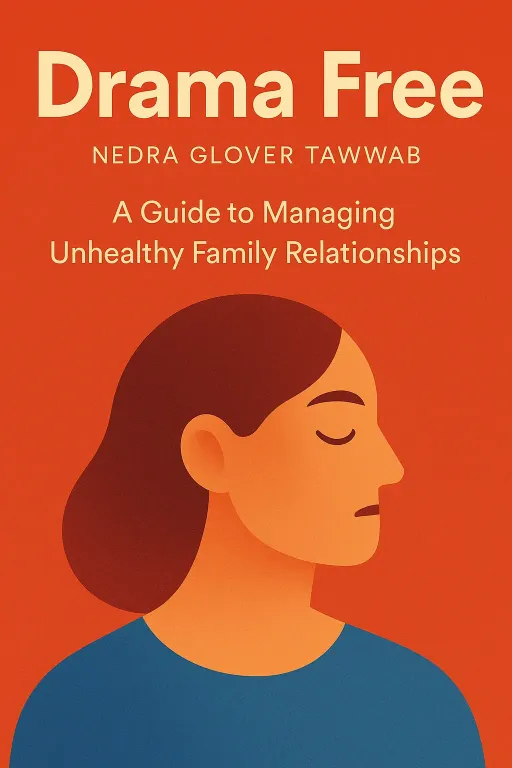
Nova: We are exploring the intersection of Drama Free by Nedra Glover Tawwab and Master Your Emotions by Thibaut Meurisse. Tawwab is a licensed therapist who gained massive recognition for her incredibly direct, no-nonsense approach to boundaries. She really demystified the idea of setting limits with family, which is often the hardest place to start. And Meurisse is known for his hyper-tactical approach to personal development. He writes like an engineer solving a problem, which is exactly why his work on emotional reprogramming resonates with people who want a blueprint rather than just theory.
Atlas: That combination feels like the perfect toolkit. One covers the structural, the boundaries, and the other covers the internal, the emotional regulation. It is like fixing the foundation and the plumbing at the same time.
The Architecture of Boundaries
SECTION
Nova: Exactly. Let us start with the foundation. In Drama Free, Tawwab argues that most of our relationship issues stem from a lack of clear architecture. We act as if boundaries are walls we build to keep people out, but they are actually the blueprints for how we want to be treated.
Atlas: That is a sharp distinction. For our listeners who are managing high-stakes professional environments or complex family dynamics, this is a crucial pivot. Most people think a boundary is a punishment. You are saying it is a communication tool.
Nova: It is a communication tool, but it is also a protective system. Tawwab points out that many of us are trying to break generational cycles without actually changing the rules of the house. You cannot expect a different outcome if you keep operating on the same outdated blueprints your parents or your environment gave you.
Atlas: I can see how that applies to the professional sphere too. If I am in a meeting and someone is overstepping, I often hesitate because I do not want to create conflict. But if I view that hesitation as a failure of my own internal architecture, it changes the dynamic. It stops being about whether I like the person and starts being about maintaining the structural integrity of my time and energy.
Nova: That is the perfect way to frame it. The challenge, of course, is that most of us were raised to believe that being accommodating is a virtue. Tawwab highlights that this creates a toxic feedback loop. When you do not set a boundary, you are essentially telling the other person that their behavior is acceptable. And when you do that repeatedly, resentment is the inevitable byproduct.
Atlas: That makes perfect sense. But let me play devil’s advocate here. What if the person on the other side of that boundary sees it as an attack? I imagine a lot of our listeners worry about that. How do you handle the backlash when you suddenly start changing the rules of the house?
Nova: You have to expect the backlash. Tawwab is very clear about this. If you have been the person who always says yes, or the person who always absorbs the emotional labor, people will be confused and even angry when you stop. But the key is to stay consistent. A boundary is not a negotiation. It is a statement of fact. You do not need to explain yourself, defend your choice, or apologize for your needs.
Atlas: That is the hardest part. The apology. I catch myself saying, I am so sorry, but I cannot do that, when I should just say, I cannot do that. That little apology creates a negotiation. It invites the other person to push back because I have signaled that I am unsure of my own rule.
Nova: You nailed it. That apology is a crack in the foundation. It tells the other person that you are willing to crumble if they apply enough pressure. When you remove the apology, you remove the invitation to negotiate.
The 90-Second Emotional Wave
SECTION
Atlas: Okay, so that is the external architecture. But let us talk about the internal, because even with the best boundaries, I still feel that surge of frustration when someone pushes back. That is where I get stuck. I have the boundary in my head, but my body is already in fight-or-flight mode.
Nova: And that is exactly where Thibaut Meurisse comes in with Master Your Emotions. Remember that ninety-second window we talked about at the start? Meurisse explains that emotions are essentially biological signals. They are data. They are not truths. They are not directives. They are just chemical reactions.
Atlas: So when I feel that heat in my chest during a conflict, that is just chemistry?
Nova: It is just chemistry. It is your sympathetic nervous system firing up, preparing you for action. But here is the critical part: we create a story to explain that sensation. We think, this person is disrespecting me, or, I am going to lose control. That story is what turns a ninety-second chemical blip into a three-hour emotional hangover.
Atlas: That is such a relieving perspective. It means I do not have to suppress the emotion. I just have to stop fueling it with the narrative.
Nova: Precisely. If you are a high-achiever, you might be tempted to just push through the emotion. But Meurisse suggests that we should treat emotions like waves. You do not try to stop a wave from crashing. You just wait for it to pass. You give it the ninety seconds to wash over you, observe it without judgment, and wait for the signal to decay.
Atlas: I am curious about the practical application there. If I am in a meeting, I cannot just sit there for ninety seconds and go silent while the person is still talking. How do I actually integrate this without looking like I have checked out?
Nova: You do not have to go silent. You just have to change your internal processing. The goal is to separate the physical sensation from the mental story. When you feel that surge, you acknowledge it. You say to yourself, okay, my body is feeling anger right now. That is a signal. It is not an instruction to yell. It is just information that something is off.
Atlas: So it is like a dashboard light in a car. You do not ignore the check engine light, but you also do not start driving off a cliff just because it turned on.
Nova: That is a fantastic analogy. You acknowledge the light, you assess the situation, and then you decide on the appropriate action. If you react immediately, you are letting the car drive itself. If you pause, you are the one in the driver’s seat.
Atlas: I can see how these two books work together now. If I can regulate my internal state using Meurisse’s approach, I am calm enough to implement Tawwab’s boundaries effectively. If I am emotionally flooded, I will either be too passive, or I will be aggressive and lose the boundary.
Nova: You have connected the dots perfectly. The emotional regulation is the prerequisite for the boundary. You cannot build a stable house if you are panicking while you are laying the bricks.
Synthesis & Takeaways
SECTION
Atlas: So, let’s synthesize this for our listeners. If someone is listening to this and thinking, this sounds great, but I have a meeting tomorrow with a difficult person, what is the exact blueprint they should use?
Nova: The blueprint is simple but requires high intentionality. First, use the ninety-second rule. When you feel the frustration spike, pause. Do not speak. Do not type. Give your body the time to process the chemicals. Breathe. Recognize that the feeling is temporary.
Atlas: And then, once the immediate chemical surge has passed, you move to the boundary.
Nova: Exactly. Once you are regulated, you write down one clear, non-negotiable statement. Not a paragraph of explanation. Not a justification. Just the boundary. For example, instead of saying, I am sorry, but I am really overwhelmed, so I cannot take on this extra project, you say, I do not have the capacity to take on this project right now.
Atlas: That is so much stronger. It is precise. It is efficient. It is exactly what an analytical mind craves.
Nova: It is the difference between being a victim of your circumstances and being the architect of your life. And remember, this is a practice. You are not going to get it right every time. But every time you pause for those ninety seconds, and every time you state a boundary without apologizing, you are building a new, stronger cycle.
Atlas: I love the idea of focusing on the cycle. It takes the pressure off being perfect in the moment. It is about the cumulative effect of these small, intentional choices.
Nova: That is the key to growth. It is not about one massive transformation. It is about the tiny step you take every single day. The next time you feel that surge of frustration, treat it like data. Pause, let the wave pass, and then respond with the clarity that only a regulated mind can provide.
Atlas: I think I am going to start applying this to my email inbox. The amount of emotional energy I waste crafting justifications for saying no is probably costing me hours of productivity every week.
Nova: That is a perfect place to start. Every email you send that is clear and boundary-focused is a deposit into your own mental bank account.
Atlas: This has been incredibly insightful. We have moved from the biology of our emotions to the structural integrity of our relationships. It is a powerful combination for anyone looking to master their future.
Nova: It really is. Remember, you have more control than you think. You just need the right tools to access it. Thank you for walking through this with me today.
Atlas: And thank you for the breakdown. This is Aibrary. Congratulations on your growth!









