A Dual Blueprint for Emotional Sovereignty
Golden Hook & Introduction
SECTION
Nova: Frustration. Anxiety. Imposter syndrome. If I asked you to label these as either facts or weather patterns, what would you say?
Atlas: I would say they feel like absolute facts. Like, if I feel anxious about a deadline, that anxiety is a direct reflection of the reality of my work situation. It feels like the truth.
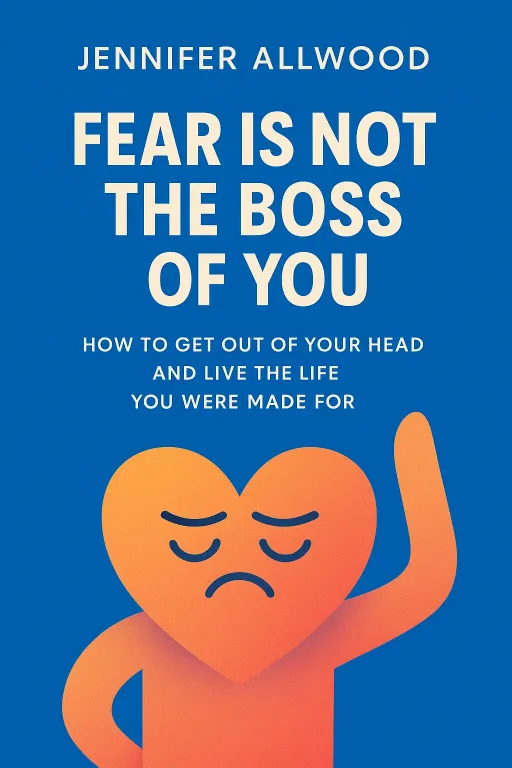
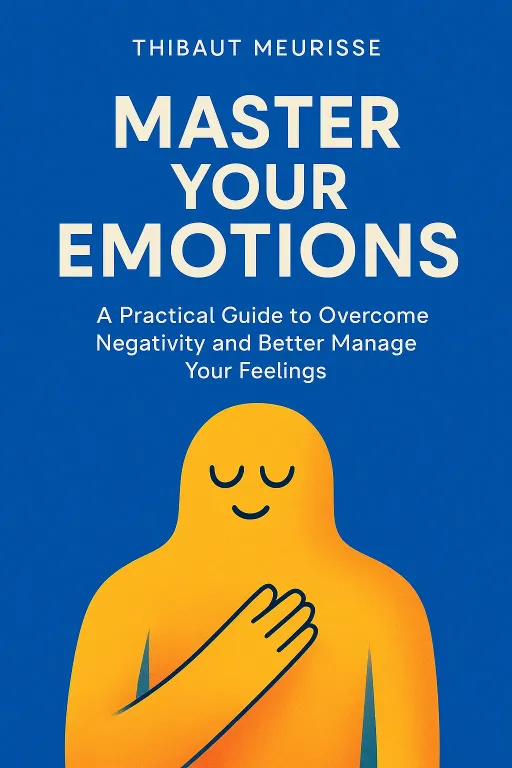
Nova: That is the exact trap we are dismantling today. We are looking at two powerhouse books that redefine this internal landscape. First, Master Your Emotions by Thibaut Meurisse, which treats emotions as temporary physiological data rather than objective truth. And second, How to Stop Feeling Like Shit by Andrea Owen, which pulls the curtain back on the self-sabotaging habits we use to avoid that very data.
Atlas: I love the pairing. Meurisse gives us the mechanics of how to handle the wave, and Owen shows us why we keep trying to surf it with a broken board. Meurisse is a productivity expert who writes with this clinical, systematic precision, while Andrea Owen brings this raw, unfiltered, no-nonsense coaching style that honestly feels like a reality check from a friend who actually wants you to succeed.
Nova: Exactly. And the cultural impact is fascinating because both authors are responding to a modern epidemic of emotional burnout. They are moving away from the old school "just suppress it" mentality and moving toward a model of emotional sovereignty.
Atlas: Let's get into the mechanics. If we are starting with Meurisse, I want to know how we can possibly view a surge of anger as just a physiological response when my blood pressure is spiking and I am ready to scream.
The Physiology of Emotion
SECTION
Nova: That is the perfect entry point. Meurisse argues that we are constantly misinterpreting our internal signals. When you feel that surge of frustration, your body is simply reacting. It is a chemical event. Your heart rate increases, your muscles tense, your cortisol spikes. That is just data. The problem starts when your mind takes that raw data and attaches a story to it.
Atlas: I am curious about the story part. My brain is a professional storyteller. If I get an email from a client that sounds slightly cold, my brain instantly writes a thriller about how I am about to lose the account, my reputation is ruined, and I will be living in a cardboard box next week.
Nova: That is exactly what Meurisse calls the cognitive focus. He suggests that the emotion itself is temporary. It is a wave. It crests, and then it recedes, provided you do not feed it with more stories. When you attach a narrative to the feeling, you are essentially pouring gasoline on the fire. You are extending the shelf life of a temporary chemical event.
Atlas: Hold on. Are you saying I can just decide not to feel the anger? Because that sounds like the classic "just be happy" advice, which never works in the real world.
Nova: Not at all. You cannot suppress the physiological response. That is biology. You cannot stop the cortisol from entering your bloodstream. The sovereignty comes from the gap between the feeling and the reaction. Meurisse suggests a practice of naming the sensation. When that anger hits, instead of saying "I am angry at this client," you say "I am feeling a sensation of heat in my chest and tension in my jaw."
Atlas: That sounds like a radical shift. It turns the emotion into an object of study rather than an identity.
Nova: Precisely. You are moving from "I am angry" to "I am experiencing anger." It is a subtle linguistic shift that creates massive psychological distance. When you name the physical sensation without judgment, you are acknowledging the data without validating the narrative. It is like being a scientist observing a reaction in a test tube. You are not the test tube; you are the researcher.
Atlas: That makes sense for a low-stakes situation, maybe like being stuck in traffic. But what about when the stakes are high? Say I am in a meeting and I feel that familiar sense of inadequacy. How do I apply this "naming" technique when my brain is screaming that I am a fraud?
Nova: In that high-stakes moment, the naming technique is even more critical. Because the "fraud" narrative is a heavy, complex story. When you strip it down to the physical sensation—a tightness in the throat, a shallow breath—you are short-circuiting the cognitive loop. You are bringing your focus back to the present moment, back to your body, rather than letting your mind spiral into the future.
Atlas: I can see how that would prevent the spiral. It is like hitting a pause button on the runaway train of thought. But I have to ask, does this mean we just ignore the underlying issues? If I am constantly feeling inadequate, naming the sensation doesn't fix the fact that I might be underprepared or in the wrong role.
Nova: That is a brilliant distinction. Naming the sensation is the first step to clear the fog. Once the fog is clear, you can address the issue from a place of logic, not a place of reactive panic. You cannot solve a complex problem when your amygdala is hijacked. By naming the sensation, you bring your prefrontal cortex back online. That is when you can ask, "Is this feeling of inadequacy based on evidence, or is it a habit?"
The Architecture of Self-Sabotage
SECTION
Atlas: That leads perfectly into Andrea Owen’s work. Because even if I am calm, I might still be running a background program of self-sabotage that I don't even notice. I am thinking about her take on catastrophizing and people-pleasing.
Nova: Owen is fantastic at exposing those invisible programs. She talks about how we develop these habits as survival mechanisms. Think about people-pleasing. It is often a strategy we learned in childhood to stay safe or to keep the peace. But in our adult lives, it becomes a cage. It blocks resilience because you are never actually present in your own life. You are constantly managing the emotional temperature of everyone around you.
Atlas: I have definitely been there. It is exhausting. You are basically walking around with an emotional barometer, trying to keep everyone else in the green zone while your own meter is redlining. But how does this relate to the idea of "emotional sovereignty"?
Nova: It is the other side of the coin. Meurisse teaches us how to handle the emotion when it arises. Owen teaches us how to stop creating the situations that trigger those difficult emotions in the first place. When you are a people-pleaser, you are constantly putting yourself in situations where you are overextended, unappreciated, and eventually, resentful. That resentment is a massive emotional drain.
Atlas: So, the self-sabotage is basically a recurring revenue stream for negative emotions.
Nova: That is exactly it. It is a self-fulfilling cycle. You people-please because you fear conflict. The people-pleasing leads to resentment and burnout. The burnout leads to more negative emotions. Then, you use catastrophizing to explain why you are so miserable. You tell yourself, "I am miserable because my boss is impossible," or "I am miserable because the world is unfair." You are externalizing the cause.
Atlas: That resonates deeply. It is much easier to blame the external environment than to look at the internal habit of saying yes when I mean no. But Owen doesn't just call us out; she provides a path forward. What is the core of her method for stopping this?
Nova: She focuses on radical ownership. It is about identifying the specific narrative you are telling yourself. For example, the catastrophizing habit. When you are in the middle of a "what if" loop—what if I get fired, what if I lose the house—Owen encourages you to challenge the evidence. She pushes you to ask, "Is this true? Can I know for 100% certainty that this is true?"
Atlas: That sounds a lot like cognitive behavioral therapy.
Nova: It is, but with a more personal, narrative-driven edge. Owen is very focused on the "why." She wants you to look at the origin of that narrative. Why do you feel the need to predict the worst-case scenario? Often, it is a misguided attempt to control the outcome. If I imagine the worst, I am prepared for it, right?
Atlas: Exactly. It is a weird form of armor. I think that if I predict the disaster, I am somehow protecting myself from the surprise of it. But all I am really doing is living through the disaster a thousand times before it ever happens.
Nova: And that is the cost. You are paying the price of the disaster in advance, with interest. Owen’s work is about reclaiming that energy. She wants you to recognize that these habits—catastrophizing, people-pleasing, perfectionism—are just strategies. And if they are strategies, they can be unlearned.
Atlas: I am thinking about the practical application for someone who is busy and focused. If I am in the middle of a workday and I catch myself in a people-pleasing loop, or I start catastrophizing about a project, I cannot exactly sit down for an hour of deep reflection. What is the "Tiny Step" here?
Synthesis & Takeaways
SECTION
Nova: This is where we bring both authors together for your daily practice. It is a two-part move. The first part is from Meurisse: The moment you feel that surge of tension, you stop. You name the sensation physically. "My chest is tight." You do not judge it. You do not analyze it. You just observe it.
Atlas: Okay, I can do that. It takes five seconds.
Nova: The second part is from Owen. You identify one self-sabotaging narrative that is driving that feeling. You write it down. Just one sentence. "I am telling myself that if I don't say yes to this request, I will be seen as incompetent."
Atlas: That is powerful. Because once you write it down, it looks different. It looks like a sentence, not a truth.
Nova: Exactly. When you write it down, you are externalizing it. You are taking it out of your head, where it has total control, and putting it on paper, where you can look at it and say, "Is this true?" That is the moment of sovereignty. You are no longer the victim of your own automated thoughts. You are the observer of them.
Atlas: This feels like a shift from being a passenger in my own life to being the driver. It is about the gap between the stimulus and the response. Meurisse gives me the tool to widen that gap, and Owen gives me the tool to inspect what I am doing inside that gap.
Nova: That is a perfect summary. Emotional sovereignty is not about being emotionless. It is about being fully human, but choosing which stories you allow to run your life. It is about recognizing that your emotions are temporary, but your agency is permanent.
Atlas: I think that is the takeaway for our listeners. Next time the pressure is on, don't run from the sensation. Name it. Then, call out the story you are telling yourself. It is a small shift, but it changes the entire trajectory of the day.
Nova: It really does. And remember, you do not have to be perfect at this. You just have to be observant. Start with one instance today. One surge, one narrative, one moment of choosing to let go.
Atlas: I am definitely going to try this with that next frustrating email. I am going to name the heat in my chest and write down the story I am telling myself about the sender.
Nova: I love that. And that is the beauty of this process. It is not a marathon; it is a series of small, intentional steps. Thank you for joining us in this exploration of the mind. This is Aibrary. Congratulations on your growth!