

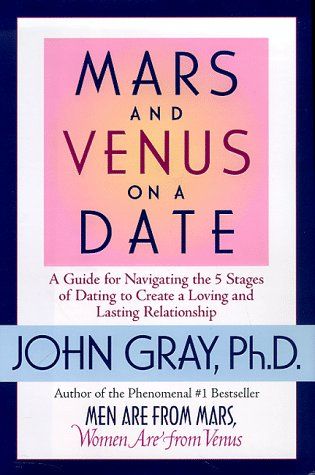
Mars and Venus on a Date
Introduction
Nova: Picture this. You're on a first date. The conversation is flowing, there's a spark, and you walk away thinking, this could be the one. Then, three days later, they go completely silent. What happened? Did you say something wrong? Or is there actually a predictable pattern to how dating unfolds — one that nobody ever taught us?
Nova: That's exactly what John Gray set out to map in his 1997 book Mars and Venus on a Date. And today, we're diving deep into it.
Nova: I'm Nova.
Nova: And I'm Orion. Welcome to Aibrary.
Nova: You're not alone. But here's what's fascinating — this book takes the core Mars-Venus framework and applies it specifically to the dating journey. Gray argues that most dating disasters happen not because two people are wrong for each other, but because they're moving through predictable stages without understanding what each stage requires. He maps out five distinct stages: Attraction, Uncertainty, Exclusivity, Intimacy, and Engagement.
Nova: That's exactly the promise. Gray says if you understand what each stage demands — and crucially, how men and women experience each stage differently — you can stop sabotaging relationships without even knowing it. And given that this book has been guiding singles for nearly three decades, there's clearly something here worth unpacking.
Why Men and Women Experience Dating Differently
The Mars-Venus Lens on Dating
Nova: Before we get to the five stages, we have to understand the lens Gray uses to view everything. His central argument is that men and women approach dating with fundamentally different operating systems. Not better or worse — just different.
Nova: That's a fair critique, and we'll get to it. But let's first understand what he actually says. Gray argues that men primarily measure their self-worth through accomplishment and competence. They're wired, as he puts it, to produce results, solve problems, and demonstrate capability. So when a man enters the dating world, he's essentially showcasing his resume — his achievements, his ability to provide, his competence.
Nova: Exactly. Gray says men often dominate conversation on early dates by recounting their accomplishments, not because they're self-absorbed, but because they genuinely believe this is how you demonstrate value. Meanwhile, women, according to Gray, are wired for connection. They derive fulfillment from emotional bonds, deep conversation, and being truly heard.
Nova: That's the core insight. Gray says a woman feels most supported when a man listens with genuine interest rather than talking about himself or offering solutions. But men often don't realize this. They think, if I solve her problems, she'll value me. And she's sitting there thinking, he's not even hearing me.
Nova: It is. And he gives this vivid example about apologies. On Mars, when someone apologizes, the discussion ends. You shake hands, grab a beer, and move on. But on Venus, when you apologize, the discussion begins. She wants to explore why you're sorry, what you learned, how it made her feel. If the man doesn't understand this, he gets frustrated — I already said sorry, why are we still talking about this? And she feels dismissed.
Nova: That's the most common criticism of Gray's work. Researchers have pointed out that he overemphasizes gender differences and presents them as biological inevitabilities rather than social constructs. A 2002 academic critique by Julia Wood argued that Gray's framework can actually harm relationships by making people think, well, he's just being a Martian, rather than addressing real communication issues.
Nova: I think the most generous reading is to treat it as a metaphor, not a manual. The value isn't in saying all men are X and all women are Y. It's in recognizing that your partner might have a completely different internal experience of the same situation — and that difference isn't a sign something's wrong. It's just difference.
Attraction and the Critical Uncertainty Phase
Stage One and Two
Nova: Let's walk through the first two stages. Stage one is Attraction. This seems obvious, but Gray has very specific advice for each gender here.
Nova: For men, the key is to make her feel special without expecting anything in return. Simple things — eye contact, a sincere compliment, asking open-ended questions about her life. Gray says a man becomes more attractive when he shows genuine curiosity about her, not when he talks about himself.
Nova: This is counterintuitive. Gray says women often make the mistake of listening too much on early dates, thinking that being a great listener will make him more interested. But Gray argues the opposite — the more a man talks, the more interested he becomes in what he's saying, not in her. So women should do more of the sharing, present their best selves, and let him pursue.
Nova: It does. And Gray is unapologetic about this dynamic. He says the man should initiate and the woman should respond positively. When this polarity is maintained, attraction deepens. But here's where it gets really interesting — stage two.
Nova: Yes. And this is where Gray says most relationships die. After the excitement of attraction, one or both people start having doubts. But here's the crucial insight: men and women experience uncertainty completely differently.
Nova: When a man hits uncertainty, he questions whether he wants to pursue the relationship at all. He pulls back. He might really like her, but he's asking himself: Can I be the right man for her? Do I truly care for her? Do I miss her when we're apart? Meanwhile, when a woman hits uncertainty, she's not questioning whether she wants the relationship — she's questioning where the relationship is going.
Nova: Exactly. And this mismatch creates a disaster. He pulls back to process. She senses him pulling away and panics. She might chase him, ask where things are going, or try to win him over by giving more. And Gray says all of these responses actually push him further away.
Nova: Right. Gray's advice to women in this stage is radical: do nothing. Don't chase. Don't ask for clarity. Lean on your friends for support. Give him space to miss you. And for men, his advice is equally direct: don't get stuck in a cycle of serial relationships. Recognize that uncertainty is normal and doesn't mean the relationship is wrong.
Nova: Gray says if a relationship survives the uncertainty stage — meaning he chooses to come back and she hasn't pushed him away by chasing — then both people are ready for stage three: Exclusivity.
Exclusivity, Intimacy, and the Wave and the Rubber Band
Stages Three and Four
Nova: Stage three, Exclusivity, begins with an actual conversation. Gray is very clear — exclusivity must never be assumed. Both people need to explicitly agree to stop seeing others.
Nova: They absolutely do. Especially if they've become physically intimate. People assume sex equals exclusivity, and Gray says that's a dangerous assumption. But once exclusivity is established, a new set of challenges emerges.
Nova: For men, the danger is complacency. He's won her over, so he stops doing the romantic things that attracted her in the first place. He thinks the work is done. But Gray says this is exactly when romance needs to continue — planning dates, pursuing her, making her feel special.
Nova: The challenge is learning to ask for what she needs. Gray says women often assume that once they're exclusive, the man will intuitively know what she wants. But he won't. And when she doesn't ask, she ends up giving more than she's receiving, which breeds resentment and kills her attraction.
Nova: Exactly. Now, stage four is Intimacy, and this is where Gray introduces two of his most memorable metaphors: the wave and the rubber band.
Nova: The wave describes how women experience emotional intimacy. Gray says a woman's emotions naturally rise and fall like a wave. She'll feel loving and connected for days, then suddenly crash — feeling overwhelmed, insecure, or resentful. This isn't a problem to be solved. It's a natural cycle. The man's job is not to fix it or talk her out of it, but to listen with empathy and not take it personally.
Nova: That's how men handle intimacy. The closer a man gets, the more he periodically needs to pull away — like a rubber band stretching. This isn't rejection. It's how he maintains his sense of autonomy. And here's the crucial part: each time he pulls away and returns, his love actually grows, because he experiences missing her.
Nova: That's exactly the danger. Gray says a man's need to pull away diminishes as emotional intimacy deepens over time. But if intimacy happens too fast — before chemistry exists on all four levels — the rubber band can break permanently.
Nova: This is one of Gray's most quoted ideas. He says there are four kinds of chemistry: physical chemistry generates desire, emotional chemistry generates affection, mental chemistry creates interest, and spiritual chemistry creates love. A soul mate, he says, includes all four.
Nova: And Gray warns that rushing physical or emotional intimacy before the other chemistries are established is one of the biggest mistakes daters make. He writes: "Too much intimacy, too quickly, can cause women to become needy and men to pull away."
Engagement, Marriage Preparation, and Finding The One
Stage Five and the Soul Mate Question
Nova: The final stage is Engagement. And Gray treats this as much more than just a waiting period before the wedding. He calls it a crucial preparation phase.
Nova: He says marriage is like a magnifying glass — everything becomes bigger. The love grows, but so do the problems. So engagement is the time to practice the skills you'll need: expressing remorse, offering forgiveness, navigating conflict, and building a solid foundation before making a lifelong commitment.
Nova: Right. Gray says this is the time to address lingering uncertainties and deepen intimacy. He emphasizes that learning how to apologize properly and how to forgive genuinely are the two most important skills for a lasting marriage. And remember that Mars-Venus apology dynamic we talked about? This is where you practice it.
Nova: It is. And Gray is clear that not every relationship should make it through all five stages. In fact, he says one of the most important skills in dating is recognizing when someone isn't right for you and ending things positively.
Nova: That's the one. And it leads to his concept of the soul mate. Gray doesn't believe there's only one perfect person out there. He says a soul mate is someone who has the unique ability to bring out the best in you. They're not perfect, but they're perfect for you. And when you meet them, he says, there's a simple recognition — like knowing the sun is shining. You just know.
Nova: Exactly. The stages are the container that allows soul mate love to develop and last. Skip a stage, and you risk building on an unstable foundation.
What Holds Up and What Doesn't
The Legacy and The Criticism
Nova: So let's zoom out. Mars and Venus on a Date was published in 1997. That's nearly thirty years ago. What's the legacy?
Nova: And on the other hand?
Nova: That's a serious charge. But I think there's a middle ground. The book's value isn't in its scientific rigor — it was never presented as a research paper. It's a metaphor. And metaphors can be useful without being literally true.
Nova: That's beautifully put. And the five-stage framework gives people something they desperately want in dating: a map. Even if the map isn't perfect, having any map reduces anxiety. It tells you that uncertainty is normal, that pulling away doesn't mean it's over, that intimacy takes time, and that not every relationship is meant to go the distance.
Nova: Absolutely. The book's core message, stripped of the Martian-Venusian metaphor, is actually quite wise: slow down, pay attention to stages, communicate with awareness of difference, and don't mistake intensity for intimacy.
Conclusion
Nova: So what do we take away from Mars and Venus on a Date? First, dating has a structure. The five stages — Attraction, Uncertainty, Exclusivity, Intimacy, and Engagement — aren't arbitrary. They're a natural progression, and skipping stages creates instability.
Nova: Second, uncertainty is not a red flag. It's a normal, necessary phase. How you handle it — giving space rather than chasing, reflecting rather than reacting — determines whether the relationship advances or collapses.
Nova: Third, chemistry has layers. Physical spark is just one dimension. Emotional, mental, and spiritual connection are equally important, and a soul mate relationship includes all four.
Nova: Gray writes that love is not enough. You also need understanding. You can love someone deeply and still misinterpret everything they do. The goal isn't just to find the right person — it's to become someone who can sustain love through all five stages.
Nova: Whether you're navigating the uncertainty stage right now, wondering if you've found your soul mate, or just trying to understand why dating feels so complicated — the roadmap exists. The question is whether you're willing to slow down and follow it.
Nova: This is Aibrary. Congratulations on your growth!