Stop Guessing, Start Shaping: The Guide to Future Marketing Trends.
Golden Hook & Introduction
SECTION
Nova: Alright, Atlas, quick game. I'll give you a marketing buzzword, and you give me a five-word review of its actual impact in the real world. Ready?
Atlas: Oh, I like that! My brain is already whirring. Hit me with your best shot, Nova.
Nova: "Artificial Intelligence in Marketing." Five words. Go.
Atlas: Hmm. "Promises much, delivers less often."
Nova: Ouch! But fair. Okay, "Influencer Marketing."
Atlas: "Authenticity: often bought, rarely felt."
Nova: Hilarious! You're really good at this. Mine for "Brand Purpose" would be: "Good intentions, execution often absent."
Atlas: Okay, my turn. "Predicting Future Trends in Marketing."
Nova: Ah, that's a tough one! "Crystal ball, mostly cloudy."
Atlas: Exactly! And that perfectly sets up our conversation today, because we're diving into a guide that aims to turn that cloudy crystal ball into something far more actionable.
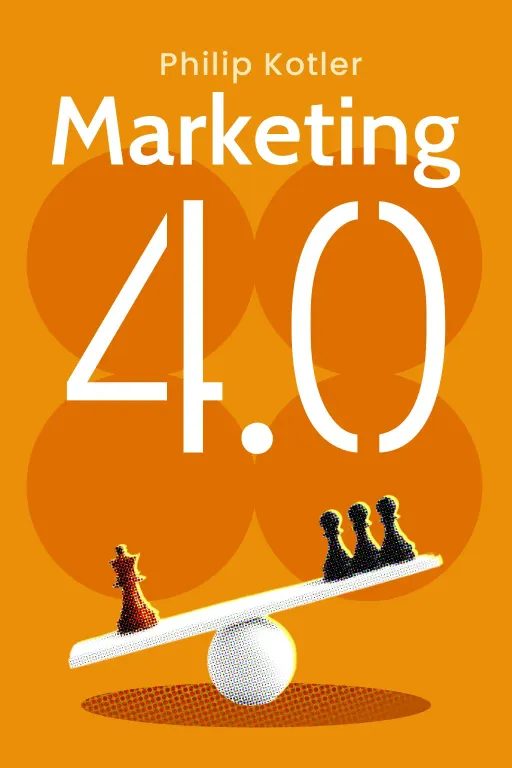
Nova: Absolutely. Today, we're exploring the core ideas from a guide called "Stop Guessing, Start Shaping: The Guide to Future Marketing Trends." It's a powerful synthesis drawing on the wisdom of true marketing titans: Philip Kotler, often called the father of modern marketing for his foundational theories, and Al Ries and Jack Trout, who are renowned for their sharp, often contrarian, and incredibly practical marketing laws that cut through the noise.
Atlas: Those are some heavy hitters. And the title itself is a challenge, isn't it? "Stop Guessing, Start Shaping." Because I imagine a lot of our listeners, the innovators and strategists out there, feel like they're constantly trying to guess what's next.
Nova: Precisely. And the cold, hard fact is, staying ahead in marketing isn't about luck. It's about understanding underlying shifts, and then actively shaping your response. The ability to predict and influence future trends directly impacts your influence and impact right now. So, how do we move from that guessing game to actually shaping the future?
The Evolution to Human-Centric Marketing (Kotler's Marketing 4.0)
SECTION
Nova: Well, Philip Kotler gives us a crucial framework for this with his concept of Marketing 4.0. He argues that marketing has to evolve. We've seen the shift from traditional, mass-media marketing to digital marketing, right? Websites, social media, all that.
Atlas: Yeah, that feels like ancient history now, but it was a massive leap at the time. I remember when having a website was considered cutting-edge.
Nova: Exactly! But Kotler says the next evolution, the one we're in now, is from digital to approaches. It's no longer enough to just be online. Customers now demand authenticity, deep engagement, and genuine connection. They're not just looking for transactions anymore.
Atlas: That makes sense. I see it in my own consumption habits. I'm much more likely to stick with a brand if I feel like they 'get' me, or if they stand for something I believe in. But what does 'human-centric' really look like for a brand that's, say, selling software, not a warm fuzzy blanket? How do they actually that?
Nova: That's a great question, and it's where the rubber meets the road. Think about the shift from a software company that just pushes out updates and features, hoping users will adopt them, to one that actively builds a community around its product. Take a platform like Figma, for instance, for graphic design. Instead of just being a tool, they've fostered a vibrant community where designers share files, tutorials, and even collaborate directly within the platform.
Atlas: Oh, I know Figma! It's not just a product; it’s an ecosystem. They've made it social.
Nova: Precisely. The cause was changing consumer expectations: designers wanted more than just software; they wanted connection and collaboration. The process was integrating social features, empowering users to share, and creating spaces for interaction. The outcome? Unprecedented loyalty and advocacy. Users aren't just buying a subscription; they're joining a movement. It's about moving beyond just 'digital presence' to 'digital connection.' It’s about building trust and empathy at scale.
Atlas: I like that distinction: 'digital presence' versus 'digital connection.' So, it’s not enough to just have a social media account. You have to actually, you know, on it.
Nova: Exactly! Or think about a direct-to-consumer brand that doesn't just sell clothes online but builds a storytelling narrative around its sustainable practices, or engages customers in co-creating new designs. They're not just selling a product; they're selling a philosophy, a lifestyle, a shared value. They're creating conversations, not just campaigns.
Atlas: So, for our listeners who are constantly seeking to build influence and make a mark, this means moving beyond just broadcasting messages. It's about opening a dialogue. It's about listening and responding, not just talking.
Nova: Absolutely. It's about understanding that customers are no longer passive recipients. They're active participants, and they expect to be treated as such. That's the essence of human-centric marketing – placing the human experience, not just the product, at the core of every interaction.
Timeless Principles for Enduring Brand Relevance (Ries & Trout's Immutable Laws)
SECTION
Atlas: That all sounds incredibly forward-thinking, Nova. But wait, does all this talk of human-centric, dynamic, community-driven marketing mean we just throw out all the old rulebooks? Like, are there still foundational principles that hold true, no matter how fast trends change?
Nova: Oh, absolutely! And that's where Al Ries and Jack Trout come in with their seminal work, "The 22 Immutable Laws of Marketing." These aren't just old ideas; they're the bedrock principles that anchor any successful strategy, even the most innovative ones. They're like the laws of physics for the marketing universe.
Atlas: Immutable laws. That sounds… comforting, actually, in a world that feels like it changes every five minutes. Give me an example.
Nova: One of my favorites is the Law of Leadership: "It's better to be first than better." Think about Coca-Cola. They weren't necessarily the tasting soda initially, but they were. They owned the category in the consumer's mind. Or Xerox, for photocopiers.
Atlas: Right, even though now we say 'copy' not 'Xerox,' that brand name became synonymous with the entire category.
Nova: Exactly. Now, compare that to a brand that tried to be "better" but wasn't first. Remember RC Cola? They arguably had a good product, maybe even in some ways than Coke or Pepsi, but they never truly captured that market leader position. They were always playing catch-up, trying to differentiate on taste or price, rather than owning a unique mental space. The cause was trying to compete head-on with an established leader; the process was focusing on "better" rather than "first," and the outcome was perpetual second-tier status.
Atlas: So, if you can't be first, what do you do? Because not everyone can invent a new category every day.
Nova: That leads us to the Law of Category: "If you can't be first in a category, set up a new one." Think about Porsche. They didn't try to beat Ford or Chevrolet at being the first mass-market car. Instead, they created and dominated the "first sports car" category. Or Red Bull. They didn't try to be the first soda or juice. They created the "energy drink" category and became synonymous with it.
Atlas: That’s brilliant! So, instead of fighting a losing battle, you carve out your own territory. So for the innovators listening, who are always looking for that next big thing, these laws provide a strategic compass. It's not just about finding a gap, but about that gap.
Nova: Precisely. These laws equip you with a framework to navigate the digital landscape while anchoring your strategy in proven, fundamental principles of market positioning. It’s about being smart about where you compete and how you define your space.
Atlas: But wait, how do these seemingly rigid 'laws' mesh with the fluidity of Kotler's human-centric approach? It almost sounds like a contradiction.
Nova: That’s the beautiful synergy! Human-centric marketing these laws. For example, if you're trying to be first in a new category, a human-centric approach helps you deeply understand your audience's unmet needs, allowing you to define that new category in a way that truly resonates with people. Or if you're already a leader, being human-centric helps you maintain that leadership by constantly engaging with and serving your community, making your brand irreplaceable in their lives, not just first on a list. It’s about building a human connection the strategic framework.
Synthesis & Takeaways
SECTION
Nova: So, what we really see here is that the future of marketing isn't about choosing between the cutting-edge and the foundational. It's about a powerful integration. It's about being agile enough to connect authentically and deeply with your audience, to truly be human-centric as Kotler advocates, yet disciplined enough to own a clear, defined space in the consumer's mind, as Ries and Trout's immutable laws teach us.
Atlas: It's about that dance between innovation and timeless wisdom. For anyone driven by growth and looking to make a significant mark, understanding these underlying shifts and principles is crucial. It’s not about waiting to see what happens; it’s about proactively shaping your influence and impact.
Nova: Exactly. Your ability to predict and shape future trends directly impacts your influence and impact in the market right now.
Atlas: So, here's a tiny step for our listeners this week: identify one marketing trend you're observing right now. Maybe it's short-form video, or AI-generated content, or something niche in your industry. Now, analyze it. How does it align with Kotler's human-centric approach? And how can you apply one of Ries & Trout's Laws – like the Law of Leadership or the Law of Category – to truly own a piece of that trend?
Nova: Brilliant challenge, Atlas. That's how we move from just observing to actively shaping.
Atlas: This is Aibrary. Congratulations on your growth!