

The Psychology of Profit: Trading with Emotional Intelligence
Golden Hook & Introduction
SECTION
Nova: Think about this: you've got all the data, the charts, the algorithms… and still, your trade goes sideways. Why? Because the market isn't just numbers; it's a mirror reflecting our deepest fears and wildest hopes.
Atlas: Whoa. That’s actually a pretty profound way to put it. So, you’re saying it’s not the market that’s irrational, it’s us?
Nova: Exactly! Today, we're cracking open "The Psychology of Profit: Trading with Emotional Intelligence." We're not just talking about P/E ratios; we're talking about the human element, the squishy, unpredictable part of the equation that often dictates success or failure.
Atlas: Oh, I've been there. I totally know that feeling of making a perfectly logical decision, only to have my gut or some sudden panic take over. So, the book is about taming that beast within?
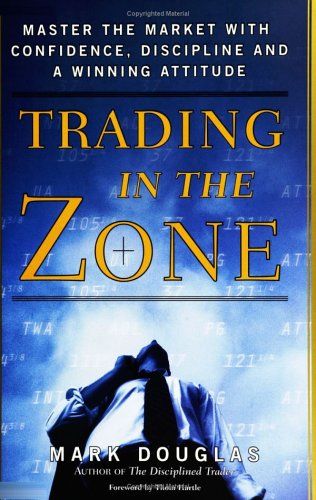
Nova: Precisely. We're drawing insights from titans like Mark Douglas's "Trading in the Zone," Morgan Housel's "The Psychology of Money," and Jack D. Schwager's "Market Wizards." It’s an exploration of how true trading mastery comes from understanding and controlling one's own psychology as much as market mechanics. And what's interesting is how many of these authors, like Douglas, started their careers far from psychology, often in commodities or as stockbrokers, only to realize that the biggest variable wasn't the market, but the mind of the trader.
Atlas: That makes sense. It’s like they were forced to become accidental psychologists because the market kept exposing human nature.
The Inevitable Psychology of Trading
SECTION
Nova: They absolutely were. And that brings us to our first core idea: the inevitable psychology of trading. Douglas, in "Trading in the Zone," really drills into this. He argues that most traders operate from a place of fear and greed, which are completely antithetical to consistent, objective trading. He saw firsthand how even brilliant market analysts would crumble under pressure.
Atlas: So you're saying that even with a perfect strategy, if your mind isn't right, you're doomed?
Nova: Essentially. He observed that many traders treat each trade as a singular event with an uncertain outcome, which triggers fear of loss or the exhilaration of a win, leading to impulsive decisions. What he advocated for was adopting a probabilistic mindset – seeing a series of trades as a distribution of outcomes, not individual wins or losses.
Atlas: That’s a great way to put it. It’s like a gambler at a casino, right? They focus on the next spin, not the house's long-term edge. But how do you actually that when real money is on the line? Fear is a pretty primal emotion.
Nova: It is. And Housel, in "The Psychology of Money," reinforces this by showing how irrational we are with money, even when we think we're being logical. He beautifully illustrates how our personal experiences, our upbringing, our unique 'money scripts,' shape our financial decisions in ways we often don't even recognize. He has this fantastic way of weaving historical anecdotes and relatable stories to show that what seems rational to one person, given their experiences, might seem completely insane to another.
Atlas: Right, like that story about the janitor who died a multi-millionaire by simply being frugal and investing consistently, while brilliant finance executives went bankrupt. It’s not about IQ; it’s about behavior.
Nova: Exactly! Housel’s book is filled with these little parables that highlight how wealth is built more by consistent, boring behavior than by flashy, high-risk moves. And it's often the emotional side that derails us. Take the example of long-term investing. The logical choice is to stay invested, but when the market tanks, fear takes over, and people sell at the bottom, locking in losses.
Atlas: That’s going to resonate with anyone who’s watched their portfolio drop during a correction. It feels like you to do something, even if that something is the wrong thing.
Nova: It’s the human desire for control, or the illusion of it. Schwager's "Market Wizards" further illustrates this, but from a different angle. He interviews dozens of legendary traders, and what emerges isn't a secret formula, but a common thread of psychological resilience and disciplined risk management. These aren't necessarily the smartest people in the room, but they are masters of their own minds.
Atlas: So, it’s less about predicting the market and more about predicting your own reaction to the market?
Nova: You've hit the nail on the head. One recurring theme in "Market Wizards" is how these top traders all have a profound understanding of their own psychological make-up. They know their weaknesses, their biases, and they've built systems to counteract them. They're not immune to fear or greed, but they don't let it drive their decisions.
Atlas: That sounds like an almost Zen-like approach to trading. Like, you know the waves are coming, but you learn how to surf them instead of fighting them.
Building an Emotionally Intelligent Trading System
SECTION
Nova: That's a perfect analogy, Atlas. And it leads us directly to our second core idea: building an emotionally intelligent trading system. It’s about taking those psychological insights and turning them into actionable strategies. Douglas, for instance, talks about creating a "mental environment" that supports consistent trading. This means letting go of the need to be right on every trade and accepting risk as an inherent part of the game.
Atlas: Okay, but how do you actually train your brain to do that? It sounds simple, but it’s incredibly hard in practice. How do you flip that switch from "I need to win this trade" to "This is one of a hundred trades"?
Nova: It starts with self-awareness. Douglas suggests techniques like journaling your emotional state before and after trades, identifying your personal triggers for fear or euphoria. By understanding and you deviate from your plan, you can begin to build mechanisms to prevent it. It’s not about suppressing emotions, but understanding their influence.
Atlas: Oh, I like that. So it’s not about being a robot, but about being a more self-aware human. For our listeners who are managing high-pressure situations or making crucial decisions, this concept might feel incredibly relevant, even outside of trading.
Nova: Absolutely. Housel's work complements this beautifully by encouraging us to understand our unique financial histories and biases. If you grew up during a recession, your relationship with risk might be entirely different from someone who grew up during a boom. Recognizing these personal narratives helps you detach from them and make more objective decisions. He often talks about how the most important financial skill isn't about what you know, but how you behave, and behavior is deeply rooted in our emotional and psychological makeup.
Atlas: Right, like the idea that money doesn't buy happiness, but financial independence can buy peace of mind. That’s a psychological benefit, not just a monetary one.
Nova: Precisely. And the Market Wizards, through Schwager's interviews, provide countless real-world examples of this emotional intelligence in action. Many of them practice rigorous risk management, not just as a mathematical exercise, but as a psychological safeguard. They define their maximum loss per trade, or per day, and stick to it religiously. It’s a way of pre-committing to emotional discipline.
Atlas: So, they're essentially building a psychological firewall around their capital. It’s like, 'I know I’m going to feel greedy or scared, so I'm putting these rules in place those emotions hit.'
Nova: That’s it. It’s about creating a structured environment that forces you to act rationally, even when your emotions are screaming otherwise. It’s the ultimate form of self-control. And the tiny step we suggest from "The Psychology of Profit" is so simple, yet so powerful: before your next trading session, spend five minutes journaling about your emotional state and any biases you might be carrying.
Atlas: I can see how that would help. It’s like a quick mental check-in, an emotional temperature gauge before you step into the arena. It forces you to acknowledge those feelings instead of letting them run wild.
Nova: It’s a way of building that crucial self-awareness. Because ultimately, the market will always be the market. The only variable you can truly control is yourself.
Synthesis & Takeaways
SECTION
Nova: So, what we've really explored today is that the path to profit isn't paved with perfect predictions, but with profound self-awareness and emotional discipline. It's understanding that the biggest battle isn't with the market, but with the person looking back from the screen.
Atlas: That’s actually really inspiring. It means that the tools for success aren't some secret algorithm, but are already within us, just waiting to be honed. It’s about cultivating that inner edge.
Nova: Precisely. Trading, or any high-stakes decision-making, becomes a journey of self-mastery. The insights from these books arm you with that crucial self-awareness, allowing you to approach your decisions with a clear mind, not clouded by the noise of fear or the allure of greed.
Atlas: And honestly, that applies to so much more than just trading. It’s about making rational decisions in any part of life where emotions can hijack your judgment. So, taking that five minutes to journal before a big decision, not just a trade, can make all the difference.
Nova: Absolutely. It's about consciously engaging with your emotional landscape. This isn't just about making money; it’s about making smarter choices, living with more intention, and cultivating a resilient mindset that serves you far beyond the trading screen. This is Aibrary. Congratulations on your growth!