

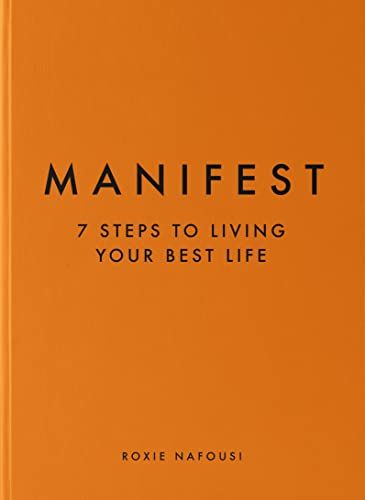
Manifest
7 Steps to Living Your Best Life
Introduction
Nova: Picture this: It's 2018. A woman in London is at rock bottom. She's been battling addiction, crippling self-doubt, and what she describes as a hedonistic party lifestyle that's left her feeling empty. Fast forward just four years, and that same woman is a Sunday Times bestselling author, has sold over a million books, and is being called the Queen of Manifesting by Forbes. Her name is Roxie Nafousi, and her book Manifest: 7 Steps to Living Your Best Life has become nothing short of a cultural phenomenon.
Nova: : A million copies? That's wild. But I have to ask, Nova — isn't manifesting just wishful thinking dressed up in a fancy orange book cover? I mean, we've all seen the Instagram posts. Someone buys a new handbag and says they manifested it. It feels a little... fluffy.
Nova: That's exactly the skepticism Nafousi anticipates, and honestly, it's what makes this book so interesting. She doesn't position manifesting as magic. She calls it a self-development practice — a meeting of science and wisdom. And whether you're a believer or a cynic, the book's impact is undeniable. Cambridge Dictionary even named manifest the word of the year. Bella Hadid was photographed carrying it. It's been called the millennial answer to The Secret.
Nova: : Okay, I'm intrigued. But also a little suspicious. What makes this book different from every other self-help book promising to transform my life in seven easy steps?
Nova: That's exactly what we're going to unpack today. We'll walk through Nafousi's seven-step framework, explore her remarkable personal story, and also look at the criticisms — because this book has sparked some real debate. Let's dive in.
The Story Behind the Book
From Rock Bottom to Bestseller
Nova: Before we get into the seven steps, we need to understand who Roxie Nafousi is, because her personal story is inseparable from the book's message. She was born Rawan Nafousi in 1990, the daughter of a wealthy Iraqi businessman. Her family moved from Saudi Arabia to Oxford when she was six months old.
Nova: : So she grew up with privilege. That's an important context.
Nova: Absolutely, and she's been candid about it. But privilege didn't shield her from struggle. After the Iraq War broke out in 2003, she felt increasingly isolated as a young Muslim woman in the UK. She actually changed her name from Rawan to Roxie just to try to fit in. An eating disorder followed. Then at university — she studied psychology at Goldsmiths in London — she spiraled into heavy partying, alcohol, and drugs.
Nova: : That's a pretty dramatic arc. How did she go from that to becoming a self-development guru?
Nova: There were a few turning points. She dated the artist Damien Hirst for a couple of years, which kept her in that high-profile party scene. But she was miserable. She told Prospect magazine that she was terrible at being an influencer because she hated her face and body and was always either on drugs or coming down from them. Yoga retreats gave her glimpses of balance, but she'd always slip back.
Nova: : So when did manifestation enter the picture?
Nova: In 2018, a friend introduced her to the concept. She became obsessed — not with the superficial version of manifesting, but with the self-development work underneath it. She started hosting self-love workshops online. When 700 people started showing up to her virtual sessions, she found an editor's email at Penguin, pitched the book, and within weeks had a deal. She says she came up with the seven steps in about five minutes.
Nova: : Wait — she just emailed a Penguin editor cold and got a book deal? That sounds almost too easy.
Nova: This is where the criticism gets valid. Nafousi has acknowledged she already knew someone at a talent agency who made the introduction. She admits, quote, there's no denying I'm privileged. She went to private school. Her father could afford it. But she also argues that not everyone with privilege turns their life around, and that doesn't diminish how hard she worked on herself.
Nova: : I appreciate that honesty. It's refreshing when a self-help author doesn't pretend they pulled themselves up by their bootstraps from nothing.
Nova: Exactly. And her transparency about her past — the addiction, the self-loathing, the eating disorder — that's part of why readers connect with her. She's not preaching from a pedestal. She's saying, I was in the darkest place, and here's what helped me climb out.
A Practical Framework for Manifestation
The Seven Steps Unpacked
Nova: Let's walk through the seven steps. They're deceptively simple, but Nafousi layers them with exercises, journaling prompts, and personal anecdotes. Step one: Be clear in your vision.
Nova: : So this is the vision board stuff, right? Cut out pictures of your dream house and paste them on a corkboard?
Nova: That's part of it, but Nafousi goes deeper. She says you need to visualize with such detail that your brain responds as if it's already real. Don't just picture a nice house — imagine the texture of the front door, the way the light hits the kitchen in the morning, how you feel walking through it. She argues that our brains don't distinguish well between vivid imagination and actual experience, so this visualization literally rewires your neural pathways.
Nova: : Okay, that's more concrete than I expected. What's step two?
Nova: Remove fear and doubt. Nafousi calls these the greatest enemies of manifestation. She recommends positive affirmations — but not the generic I am enough kind. She says you need to identify your specific limiting beliefs and craft affirmations that directly counter them. If your inner voice says you're not qualified for that promotion, your affirmation becomes something like I am skilled, experienced, and ready for this opportunity.
Nova: : That feels practical. But also, isn't it normal to have doubts? We can't just positive-think our way out of everything.
Nova: She doesn't claim you eliminate doubt entirely. The goal is to manage your thoughts so they work for you rather than against you. She also emphasizes curating your environment — surrounding yourself with people who uplift you, not those who reinforce your insecurities.
Nova: : Step three?
Nova: Align your behavior. This is where Nafousi separates herself from the wishful-thinking crowd. She's emphatic that you cannot just visualize and affirm and then do nothing. You have to take action. Come out of your comfort zone. Remove excuses. Create habits that support your goals. She calls it faking it until you make it, but with genuine effort behind it.
Nova: : So it's not just think positive and the universe delivers. You actually have to do the work.
Nova: Exactly. Step four is overcome tests from the universe. Nafousi says challenges will come — they're not signs that manifestation isn't working, they're tests of your commitment. She reframes failure as learning. When things fall apart, she argues, that's often when they're actually falling into place. The universe might have something better in mind than what you originally wanted.
Nova: : I can see how that reframing would be powerful. Instead of getting derailed by setbacks, you see them as part of the process.
Nova: Step five is embrace gratitude without caveats. This is one of her most distinctive teachings. She says gratitude is one of the highest vibrational frequencies — but you can't dilute it. Don't say I'm grateful for my job but I wish I earned more. That but cancels out the gratitude. Pure, unconditional appreciation for what you already have.
Nova: : That's actually really challenging when you think about it. We're so conditioned to always want more.
Nova: Step six: turn envy into inspiration. Nafousi is particularly sharp on social media here. She calls it a playground for comparison and a fertile land for envy. Her advice is to curate your feed ruthlessly — unfollow people who trigger comparison and follow those who genuinely inspire you. When you feel envy, interrogate it. What is that person doing that you could learn from?
Nova: : And step seven?
Nova: Trust in the universe. This is the surrender step. Nafousi says impatience is the enemy of manifestation. You have to trust in divine timing — that things will happen when they're meant to, not necessarily when you want them to. It's about releasing control while maintaining faith.
Nova: : I have to say, that's the step I'd struggle with most. Surrendering control is not my strong suit.
Nova: You're not alone. Nafousi acknowledges this is the hardest step for most people. But she argues it's also the most liberating — because constantly trying to force outcomes is exhausting.
What Critics Say About Manifestation
The Science and the Skepticism
Nova: Now, let's talk about the elephant in the room. Nafousi grounds her framework in the Law of Attraction — the idea that like attracts like, that our thoughts emit vibrational frequencies that draw similar energy back to us. She ties this to quantum physics, arguing that everything in the universe is made of vibrating atoms and similar frequencies attract.
Nova: : I'm going to be honest, Nova — the moment someone starts talking about vibrational frequencies and quantum physics in a self-help book, my skepticism alarm goes off. Most physicists would say this is a pretty loose interpretation of quantum mechanics.
Nova: You're not wrong. The scientific community has been largely dubious about these claims. There's no peer-reviewed evidence that thoughts emit measurable frequencies that attract corresponding outcomes. But here's where it gets nuanced — some of the individual practices Nafousi recommends do have scientific backing.
Nova: : Like what?
Nova: Visualization, for instance. Sports psychologists have studied this for decades. Athletes who mentally rehearse their performances show measurable improvements. Gratitude journaling has been linked in multiple studies to improved mental health and well-being. Positive affirmations can help rewire negative thought patterns, which is a principle of cognitive behavioral therapy. And taking aligned action toward your goals — well, that's just good goal-setting strategy.
Nova: : So you could argue the book works not because of cosmic vibrations, but because it's packaging proven psychological techniques in a more spiritual wrapper.
Nova: That's one reading, and it's probably why the book appeals even to skeptics. British Vogue noted that the practical approach means even readers who dismiss such things as woo-woo might be persuaded to reconsider.
Nova: : What about the criticism around toxic positivity?
Nova: This is a significant critique. Some reviewers argue the book implies that if bad things happen to you, it's because you weren't vibrating high enough — which can feel victim-blaming. One reviewer pointed out that the book's framing can make manifestation feel slightly toxic, especially when applied to relationships. If you visualize a perfect partner and then real people don't measure up, you might reject good connections because they don't match your vision board.
Nova: : That's a real concern. And what about the privilege question?
Nova: Nafousi has addressed this directly. In her Prospect magazine interview, she acknowledged that money can be a barrier from a manifesting point of view. She admits she's privileged. But she also argues that privilege alone doesn't explain her transformation — plenty of privileged people stay stuck. Her point is that the inner work she did was real and hard, regardless of her circumstances.
Nova: : I think that's fair. But it's also worth noting that having a safety net makes it a lot easier to take risks like quitting your job or starting a business.
Nova: Absolutely. And that's a nuance readers should hold in mind. The book's tools might be genuinely useful, but the starting line isn't the same for everyone.
Why Manifest Resonates Now
The Cultural Moment
Nova: Let's zoom out and ask the bigger question: why has this book struck such a chord? It's not just selling well — it's become a cultural accessory. People post photos of it with their chic outfits. It sits on coffee tables like a design object. The blazing orange cover was apparently inspired by Prada's neon kitten-heel slingback pumps.
Nova: : That's such a specific detail. A self-help book as a fashion accessory — that feels very 2020s.
Nova: Nafousi has said her aim was always to make self-development as mainstream as fashion. And she's succeeded. The book spent nearly six months on bestseller lists. It spawned two sequels — Manifest: Dive Deeper and Manifest in Action. She's sold over a million copies across the series. Cambridge Dictionary named manifest the word of the year.
Nova: : What's driving this? Is it post-pandemic hunger for control?
Nova: That's definitely part of it. After two years of a pandemic where everything felt unpredictable, a book that says you can take control of your life through your mindset is incredibly appealing. Nafousi herself told Vogue that manifesting allows you to go through the highs and lows of life with greater ease — things won't always be hunky-dory, but you'll always be able to navigate a way forward.
Nova: : There's also the social media factor. Manifestation content has had billions of views on TikTok. The hashtag has been used millions of times on Instagram.
Nova: Exactly. Nafousi rode that wave but also distinguished herself from it. She's been critical of how social media trivializes manifestation — reducing it to I manifested a new iPhone when you literally just went to the store and bought one. Her book tries to reclaim the concept as something deeper and more demanding.
Nova: : It's interesting how she positions herself between two worlds — the spiritual woo-woo of The Secret and the practical, action-oriented world of traditional self-help. She's trying to have it both ways.
Nova: And that might be exactly why it works. For readers who want a little magic but also want concrete steps, Manifest delivers both. You get the cosmic language of vibrations and universal tests, but you also get journaling prompts and action plans. It's spirituality with a to-do list.
Nova: : So who is this book actually for?
Nova: Nafousi says it's for anyone — but especially people going through a hard time who need a helping hand. The book seems to resonate most with women in their twenties and thirties who are navigating career changes, relationship questions, or periods of self-doubt. It's less about manifesting a Ferrari and more about manifesting self-worth.
Nova: : That's actually a much more compelling pitch than I expected. I came in thinking this was just The Secret 2.0, but it sounds like there's more substance here.
Nova: There is. Whether you buy the metaphysical framework or not, the underlying practices — clarity of vision, removing self-sabotaging beliefs, taking aligned action, practicing gratitude, reframing envy — those are genuinely useful life skills. The book just wraps them in a more glamorous package.
Conclusion
Nova: So where does this leave us? Roxie Nafousi's Manifest is many things at once. It's a personal redemption story — a woman climbing out of addiction and self-loathing to build a life she's proud of. It's a practical self-development framework disguised as a spiritual guide. It's a cultural phenomenon that turned a bright orange book into a must-have accessory. And it's a lightning rod for debates about privilege, toxic positivity, and whether the universe really cares about your vision board.
Nova: : What I'm taking away is that the value of this book doesn't depend on whether you believe in vibrational frequencies. The seven steps — getting clear on what you want, confronting your fears, taking action, reframing setbacks, practicing gratitude, transforming envy, and cultivating patience — those are solid principles whether you call it manifesting or just good life strategy.
Nova: That's beautifully put. And I think the book's real gift is that it makes self-development feel aspirational rather than remedial. You're not broken and in need of fixing. You're powerful and in the process of becoming. That shift in framing matters.
Nova: : At the same time, I think it's important to hold the critiques. Not everyone starts from the same place. Not every setback is a test from the universe — sometimes life is just hard. And no amount of positive thinking replaces systemic barriers or material realities.
Nova: Absolutely. Nafousi herself seems to be evolving on this. In her follow-up book Manifest: Dive Deeper, she addresses toxic positivity more directly and emphasizes that manifesting isn't about pretending everything is fine. It's about building the resilience to navigate life's inevitable difficulties without losing sight of your goals.
Nova: : So if someone's curious about this book, what's your advice?
Nova: Read it with an open mind and a critical eye. Take what serves you. The visualization exercises, the gratitude practices, the envy-to-inspiration reframe — those are genuinely useful tools. You don't have to believe the universe is conspiring in your favor to benefit from getting clear about what you want and taking steps toward it.
Nova: : And maybe don't expect to manifest a million-dollar book deal in five minutes like Roxie did. But you might just find yourself thinking a little more intentionally about the life you want to build.
Nova: And that, in itself, is a pretty good place to start. This is Aibrary. Congratulations on your growth!