

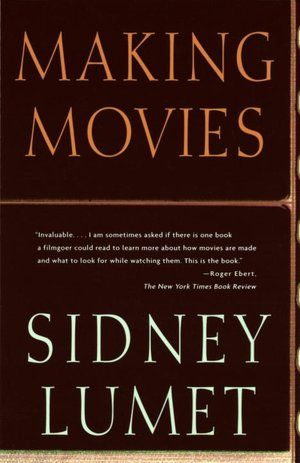
Making movies
Introduction
Nova: Imagine you are stuck in a single, sweltering room with twelve angry men for ninety minutes. There are no car chases, no explosions, and no special effects. Just twelve guys talking. On paper, it sounds like a recipe for a very long nap, right?
Nova: It was a bold move, and it became one of the greatest films ever made. That movie is 12 Angry Men, and the man behind it was Sidney Lumet. But here is the kicker: Lumet did not just get lucky. He had a meticulous, almost scientific approach to how movies are built, which he eventually poured into his legendary book, Making Movies.
Nova: Exactly. It is not just a memoir; it is a manual. Lumet takes us from the very first script reading to the final sound mix. Today, we are diving into his brain to see how he turned the chaotic mess of a film set into high art. We are talking about the man who directed Al Pacino, Paul Newman, and Marlon Brando, and who managed to make the camera itself a character in the room.
Key Insight 1: The What vs. The How
The Foundation of Everything
Nova: Lumet starts the book with a question that seems simple but is actually the hardest part of the job. Before he even looks at a camera, he asks: What is this movie about?
Nova: See, that is where most people get it wrong. Lumet says those are just the plots. The theme is something deeper. For 12 Angry Men, he decided the theme was Listen. That is it. One word. Every decision he made from that point on—the acting, the lighting, the camera angles—was designed to serve the idea of listening.
Nova: Precisely. He calls this the What vs. the How. The What is the theme. The How is the style. Lumet was famous for saying that style should be invisible. If the audience is sitting there thinking, Wow, what a cool camera angle, then the director has failed because they have pulled the viewer out of the story.
Nova: He was a craftsman first. He believed that if you know your theme, the style will find itself. For his movie The Verdict, which stars Paul Newman as a washed-up lawyer, the theme was redemption. So, he chose a visual style that looked like old, dark oil paintings—lots of browns and deep shadows—to reflect a man who is stuck in the past and trying to find a spark of light.
Nova: That is where his technical genius comes in. He uses tools that most of us don't even realize are being used on us. It is like a form of emotional manipulation, but in the best way possible.
Key Insight 2: Visual Storytelling
The Lens Plot
Nova: This is probably the most famous part of the book. Lumet introduces the concept of a lens plot. Most people think a camera is just a camera, but the focal length of a lens changes how you perceive space and emotion.
Nova: Right, but it goes deeper. In 12 Angry Men, Lumet wanted the audience to feel the same claustrophobia as the jurors. So, as the movie progresses and the heat in the room rises, he slowly changed the lenses. He started with wide-angle lenses that showed the whole room and the ceiling, making it feel like a normal space.
Nova: Not just zooming, he switched to longer and longer lenses. Long lenses compress the image. They make the background look closer to the person in the foreground. By the end of the movie, the walls literally look like they are closing in on the actors' heads. You feel trapped because the camera is physically changing the geometry of the room.
Nova: He did! He started the movie with the camera above eye level, looking down on the men. It makes them look smaller, more manageable. By the end, the camera is below eye level, looking up at them. It makes the conflict feel massive and overwhelming. It is a total shift in power dynamics, all done through the placement of a tripod.
Nova: For Network, he did something even more subtle with the lighting. The movie is about the corruption of television. So, at the beginning, the lighting is naturalistic. But as the characters become more obsessed with ratings and the TV circus takes over, the lighting becomes flatter and more commercial. By the end, the characters look like they are living inside a television advertisement. They lose their humanity as the light becomes more artificial.
Nova: Lumet believed that these details are what make a movie feel true. If you get the technical stuff right, the audience will believe the emotional stuff.
Key Insight 3: Performance and Rehearsal
The Actor's Director
Nova: Lumet was known as an actor's director. He directed seventeen different actors to Oscar-nominated performances. That is a staggering number. And his secret weapon was something most movie directors actually hate: rehearsal.
Nova: Lumet insisted on it. He would spend two weeks in a room with the actors before a single frame was shot. They would sit around a table, talk about the characters, and block out the scenes. By the time they got to the set, the actors knew exactly where to stand and what they were feeling. This allowed them to be free and spontaneous when the cameras were rolling.
Nova: Exactly. And he had these incredible stories about working with legends. Take Marlon Brando, for example. Lumet worked with him on The Fugitive Kind. Brando was notoriously difficult, but Lumet figured out his game. Brando would often give two completely different takes. One would be brilliant and emotional, and the other would be flat and weird.
Nova: Exactly! He wanted to see if the director knew the difference. If the director picked the bad take, Brando would lose all respect for them and basically stop trying. Lumet realized he had to be on his toes every second to keep Brando's trust.
Nova: There is a scene where Pacino's character is on the phone, and it is a long, grueling emotional breakdown. Lumet actually had Pacino do the scene over and over until he was physically and mentally exhausted. He wanted the real fatigue to show. He didn't want Pacino to act tired; he wanted him to be tired.
Nova: Lumet also understood the power of silence. He tells a story about Paul Newman in The Verdict. There is a moment where Newman's character realizes he has made a huge mistake. Most directors would want a big monologue there. Lumet just let the camera stay on Newman's face. He trusted the actor to tell the story without saying a word.
Key Insight 4: Editing and Sound
The Final Polish
Nova: Once the filming is done, Lumet moves into the editing room, which he calls the final rewrite of the movie. He had a very specific philosophy about editing: it should have a rhythm, like music.
Nova: Lumet agreed. He believed that the editor's job is to find the heartbeat of the film. But he was also very disciplined. He didn't like flashy editing for the sake of it. If a scene worked in one long shot, he would leave it alone. He didn't feel the need to cut every three seconds to keep people's attention.
Nova: Lumet was obsessed with sound. In Dog Day Afternoon, he made a radical choice: there is almost no music in the entire movie. No score, no dramatic violins, nothing.
Nova: It was a genius move. He realized that if he added music, it would tell the audience how to feel. It would make it feel like a movie. By taking the music out, it felt like a documentary. It felt like real life happening in real time. The only music you hear is what the characters hear on the radio. It makes the tension so much more visceral because there is no safety net for the audience.
Nova: He also talked about the importance of the mix. He would spend days making sure the sound of a city street or the hum of an air conditioner was at the perfect volume to create a sense of place. He believed that sound is fifty percent of the experience, even if you are only looking at the screen.
Nova: That is exactly how he describes it. He says that making a movie is like making a mosaic. You spend all day focused on one tiny little tile, and you just have to hope that when you step back at the end, it forms a beautiful picture.
Conclusion
Nova: We have covered the theme, the lenses, the actors, and the editing. But the real takeaway from Sidney Lumet's Making Movies is his work ethic. He directed over forty movies in fifty years. He didn't wait for inspiration to strike; he went to work every single day like a craftsman.
Nova: Lumet's legacy isn't just his films, though they are masterpieces. His legacy is this book, which continues to teach new generations that the most important tool a filmmaker has isn't a fancy camera or a big budget—it is the clarity of their own vision.
Nova: You will never look at a movie the same way again. Whether you are a filmmaker or just someone who loves stories, Lumet reminds us that greatness is found in the details.
Nova: Any time. This is Aibrary. Congratulations on your growth!