

The Power of Story: Crafting Compelling Narratives
Golden Hook & Introduction
SECTION
Nova: Atlas, quick game. I'm going to say a type of communication, and you tell me the first thing that comes to mind that makes it instantly forgettable. Ready?
Atlas: Oh, I like this. Hit me with your best shot, Nova.
Nova: Alright. A corporate earnings report.
Atlas: Ugh. Bullet points that go on for pages, acronyms nobody understands, and a voiceover that sounds like it's actively trying to induce sleep.
Nova: Exactly! And a philosophical treatise?
Atlas: Long, dense sentences that loop back on themselves, abstract concepts that float in the ether, and zero connection to anything I experience day-to-day. It's like intellectual quicksand.
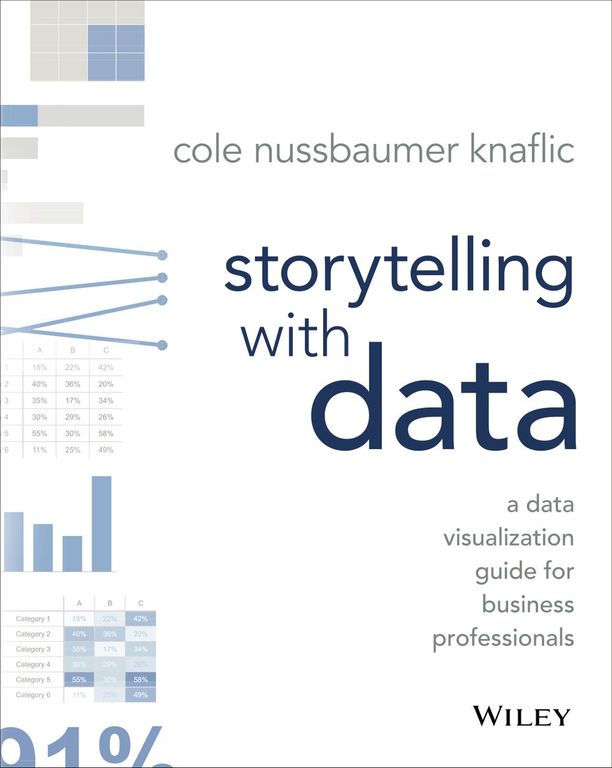
Nova: Beautifully put. And that's precisely what we're tackling today – the antidote to forgettable communication. We're diving into the profound power of story, drawing heavily from two incredible books: "Storytelling with Data: A Data Visualization Guide for Business Professionals" by Cole Nussbaumer Knaflic, and the absolute classic, "Made to Stick: Why Some Ideas Survive and Others Die" by Chip and Dan Heath.
Atlas: Oh, I love that second one! "Made to Stick" is such a cornerstone for anyone trying to get a message across. The Heath brothers have this incredible knack for dissecting why some ideas just… stick, while others evaporate the moment they're uttered. What’s fascinating is that Chip Heath, one half of the duo, actually started his career as a management consultant before moving into academia, which gives him this really grounded, practical perspective on communication challenges in the real world.
Nova: Absolutely. And Knaflic's book, while focused on data, is equally revolutionary in showing how even the driest numbers can sing if you frame them with a narrative. Both of these works, in their own ways, are challenging this pervasive myth that information alone is enough. They argue that whether you're presenting quarterly results or explaining the meaning of life, if it doesn't have a story, it's just noise.
Atlas: That resonates so much. I imagine a lot of our listeners, especially those grappling with complex ideas or trying to communicate insights in their own fields, have felt the frustration of having a brilliant point fall flat. It's like, you know the information is valuable, but it just doesn't land. So, what’s the secret, Nova? What makes a message ‘sticky’ or 'unforgettable'?
The 'Sticky' Principles of Narrative
SECTION
Nova: Well, according to Chip and Dan Heath, it boils down to six core principles they call SUCCESs: Simple, Unexpected, Concrete, Credible, Emotional, and Stories. And Knaflic, in her data visualization work, essentially applies many of these same principles to make data narratives compelling.
Atlas: Okay, so SUCCESs. That's a great acronym. But let's break that down, because 'simple' sounds, well, simple, but it's often the hardest thing to achieve, isn't it?
Nova: It truly is. Simple doesn't mean dumbing down. It means finding the core, irreducible idea. It's about stripping away the layers of complexity to reveal the single, most important message. Think about a proverb – "Don't count your chickens before they hatch." It’s simple, profound, and instantly understandable. Knaflic would say, when you're showing data, don't overwhelm with too many charts or metrics. Focus on the one or two key insights you want your audience to take away.
Atlas: Right, like trying to explain a complex societal trend, you could drown people in statistics, or you could find that one compelling, almost poetic summary that just clicks. But isn’t there a risk of oversimplifying and losing nuance?
Nova: That’s a fair point, and it's where the other principles come in. 'Unexpected' grabs attention. It's about breaking patterns, creating a "knowledge gap" that makes people curious. Think about a good mystery novel. It sets up an expectation, then shatters it. For data, it might be showing a trend that defies common wisdom. "Everyone thinks sales are up, but actually, this specific segment is plummeting." That unexpected twist makes you lean in.
Atlas: That makes me wonder, how does that apply to, say, communicating a philosophical concept? Because philosophy is often about challenging assumptions, so the 'unexpected' seems baked in.
Nova: Exactly. A philosopher might start with a commonly held belief and then, through a series of logical steps, show you why it's flawed, leading to an unexpected conclusion. It creates that "aha!" moment. Then we move to 'Concrete.' This is crucial. Abstract ideas are hard to grasp. Concrete details make them real. Instead of saying "our customer service improved," say "our average call wait time dropped from ten minutes to thirty seconds." Knaflic’s whole book is about making data concrete – turning abstract numbers into visual stories you can literally see and point to.
Atlas: So it's like, don't tell me about the concept of 'justice,' tell me about a specific person who was unjustly treated, or a system that failed them. That makes total sense. Because my brain immediately starts trying to find an image, a reference point. If you don't give me one, I'll just float.
Nova: Precisely. And then 'Credibility' is next. Why should we believe you? This can come from experts, statistics, or even anti-authorities – someone who defies expectations. Or, it can come from vivid detail, making the story so real it feels true. The Heath brothers talk about the "Tale of the $200 Hammer" in government spending – it became a rallying cry because it was so concrete and specific, instantly signaling a lack of credibility.
Atlas: That’s a great example. For our listeners who are deep into understanding societal trends, credibility is paramount. Without it, any analysis, no matter how brilliant, is just another opinion. So, you need to ground it in reliable sources, or demonstrate a deep understanding through tangible examples.
Nova: Exactly. And then we have 'Emotional.' People don't just act on facts; they act on feelings. Stories that evoke emotion – joy, anger, surprise, empathy – are far more memorable and motivating. This doesn't mean being manipulative, but connecting to what people truly care about.
Atlas: That's actually really inspiring. Because a lot of the time, especially when dealing with complex or data-driven topics, there's this unspoken rule that you have to be purely rational, purely objective. But that's not how humans work, is it? We are driven by connection, by emotion.
Nova: Not at all. We are storytelling creatures. Which brings us to the final principle: 'Stories.' Stories are powerful because they provide simulation and inspiration. They naturally incorporate many of the other sticky principles. They have a plot, characters, a challenge, and a resolution. They're how we make sense of the world.
Atlas: So basically, instead of just presenting the facts, you're weaving them into a narrative tapestry that engages all these different parts of our brain. It’s not just about conveying information, it’s about creating an experience.
Building the Narrative Arc: From Data Points to Insight
SECTION
Nova: That's the core of it. And this leads us perfectly into our second core topic: how to actively build that narrative arc, transforming even the most complex data or abstract idea into a compelling story. Knaflic, in particular, offers a fantastic framework for this, urging us to think of our message as having a 'character,' a 'plot,' and a 'resolution.'
Atlas: Okay, so how do you turn, say, a quarterly revenue report into something with a 'character' and a 'plot'? Because that sounds like a stretch for most business professionals.
Nova: It’s not about anthropomorphizing numbers, though sometimes that can be effective. The 'character' is your focal point. What is the central element your story is about? In data, it might be a specific data point, a trend, or a particular segment of your audience. For a philosophical concept, the 'character' could be the core idea itself, or the individual whose experience best illustrates it.
Atlas: So, if I'm talking about societal trends, my 'character' could be the gig economy worker, or the rising cost of housing in a specific city, rather than just 'economic indicators.' That makes it immediately more relatable, more human.
Nova: Exactly. The 'plot' is the trend, the change over time, the challenge, or the trajectory. What's happening to your 'character'? Is it growing, declining, stabilizing, or facing an obstacle? This is where you introduce tension, conflict, or a journey. With data, it's the movement of the numbers. With an idea, it's how that idea evolves or encounters resistance.
Atlas: That’s a really helpful way to frame it. Because often when we're presenting data, we just show a graph, and expect people to infer the 'plot.' But we should be guiding them through that journey, highlighting the ups and downs, the turning points. Like, "Here was the challenge, here's how it unfolded."
Nova: Precisely. And finally, the 'resolution' is the insight, the 'so what?' What do we learn from this story? What action should be taken? What does it mean for the future? This is the payoff, the reason you told the story in the first place. It’s not just about showing the data; it’s about explaining its significance.
Atlas: So it's not enough to say, "Here's the data; you figure it out." It's, "Here's the journey this data took us on, and here's the profound implication for how we should think or act." That’s a huge shift in mindset for a lot of people who are used to just presenting facts. It's about moving from information dissemination to insight generation.
Nova: Absolutely. And this is vital for anyone trying to ground their inner compass, as our user profile suggests. Understanding the world's pulse, societal trends, or even purpose and existence, becomes so much clearer when we frame them as narratives. It helps us process complexity, remember details, and connect emotionally to the implications.
Atlas: I mean, Knaflic's entire approach to data visualization is built on this. She advocates for stripping away chart junk, using pre-attentive attributes like color and size to direct attention, and always, always having a clear message, a story behind the visuals. It's about making your audience see what want them to see, and understand it matters.
Nova: And it makes your message unforgettable. Whether you're a business professional trying to get buy-in for a new project, or a philosopher trying to convey a profound truth, the principles are the same. It's about crafting that compelling narrative arc. It’s about understanding that our brains are wired for stories, not spreadsheets.
Atlas: That’s a powerful distinction. Because if your goal is effective communication, to share your insights clearly, then you have to speak the language the brain understands best. And that language is story. It’s the difference between hearing a list of ingredients and tasting a delicious meal.
Synthesis & Takeaways
SECTION
Nova: So, whether your message is a complex data set or a deep philosophical inquiry, the takeaway is clear: don't just present information. Build a narrative arc. Define your 'character' – what’s the focus? What’s the 'plot' – what’s the journey or trend? And what’s the 'resolution' – the insight, the call to action, the profound understanding?
Atlas: That makes so much sense. Because the alternative is just adding to the noise, and in our information-saturated world, that’s the last thing anyone needs. This isn’t just about making presentations better; it's about making connections deeper, making understanding more profound. It's about honoring the human desire for meaning.
Nova: Exactly. The next time you need to explain a complex idea, take that tiny step. Don't just list facts. Think about it as a story. What's the human element? What's the journey? What's the ultimate insight you want to leave your audience with? Because that's how you cut through the noise and create lasting impact.
Atlas: And honestly, it simplifies the communication process for the sender too, because it forces you to distill your message down to its absolute essence. It’s a powerful framework for clarity, connection, and ultimately, influence.
Nova: This is Aibrary. Congratulations on your growth!