

Strategic Communication: Bridging Divides & Conveying Clarity
Golden Hook & Introduction
SECTION
Nova: Atlas, I was reading this wild story about a negotiator who convinced a hostage-taker to surrender by talking about his favorite sports team. Not the demands, not the threats, just... sports.
Atlas: Oh, I love that! Like, 'Wait, are you saying your life is on the line, but first, let's discuss the merits of the '98 Bulls?' That's peak human connection right there.
Nova: Exactly! It makes you wonder, what if we all had that kind of superpower to connect and communicate, especially when things get intense? Because let's face it, most of us just freeze or fumble.
Atlas: Honestly, that sounds like my Monday mornings trying to explain a new project to a team that's already overwhelmed. The stakes might not be life-or-death, but the project's success definitely feels like it sometimes.
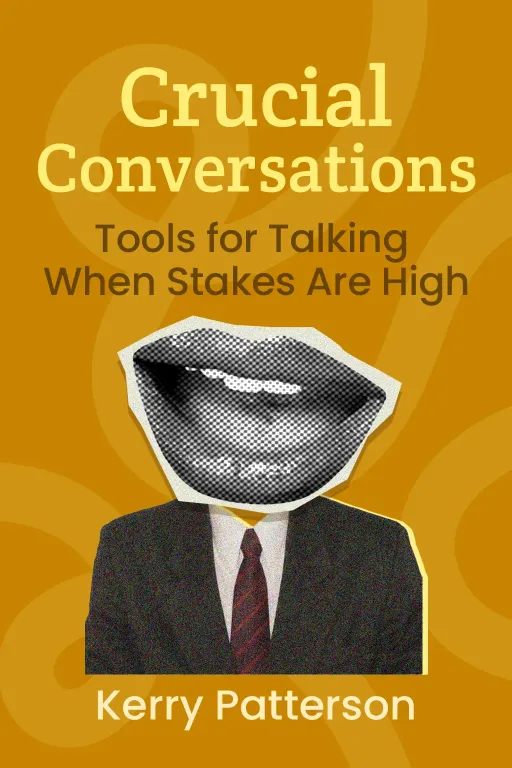
Nova: Well, today, we're diving into that superpower with two incredible books: "Crucial Conversations: Tools for Talking When Stakes Are High" by Kerry Patterson, Joseph Grenny, Ron McMillan, and Al Switzler, and "Made to Stick: Why Some Ideas Survive and Others Die" by Chip Heath and Dan Heath. What's fascinating about 'Crucial Conversations' is that it came out of decades of research by these four authors, who observed thousands of real-life interactions to pinpoint what actually works when communication feels like walking a tightrope. It's not just theory; it's battle-tested.
Atlas: That's reassuring. Because 'talking when stakes are high' often feels like an oxymoron. My brain just scrambles. And 'Made to Stick' feels like the perfect companion, because what's the point of having a crucial conversation if your message just evaporates into thin air?
Nova: Precisely. The core of our podcast today is really an exploration of how to communicate with profound impact, bridging divides, and ensuring clarity when it matters most. We'll start with those high-stakes moments, and then move on to making sure our ideas actually land and resonate.
The Art of High-Stakes Dialogue: Navigating Crucial Conversations
SECTION
Nova: So, let's kick off with 'Crucial Conversations.' The premise is simple, but the execution is incredibly challenging: when opinions vary, stakes are high, and emotions run strong, most people handle these conversations poorly. They either clam up, leading to resentment, or blow up, leading to conflict.
Atlas: That sounds painfully familiar. And it's not just personal relationships; think about giving tough feedback at work, or telling someone their dream project isn't viable. How do these authors suggest we navigate that minefield?
Nova: Their core insight is about creating what they call a 'pool of shared meaning.' Imagine a conversation where instead of two people throwing rocks at each other, they're both contributing to a central pool of information, facts, and feelings. The bigger that pool, the better the decisions, and the stronger the relationships.
Atlas: So, it's not about winning, it's about mutual understanding? That really shifts the perspective. But how do you even begin to build that 'pool' when someone's already defensive or you're feeling intimidated?
Nova: That’s where their framework shines. One of the most powerful tools they offer is 'Start with Heart.' This means before you even open your mouth, you get clear on what you really want for yourself, for the other person, and for the relationship. Not just what you want, but what you want.
Atlas: Oh, I see. So, instead of thinking, 'I don't want to get yelled at,' you're thinking, 'I want to calmly explain my perspective and find a solution that works for both of us.' That immediately changes your internal state.
Nova: Exactly. And then, once you're clear on your desired outcome, they introduce the concept of 'Make it Safe.' This is about creating psychological safety. If someone feels unsafe, their brain goes into fight or flight. They either attack or withdraw. You can't have a productive conversation in that state.
Atlas: So, how do you make it safe? Is it just saying, 'Hey, it's safe to talk to me'? Because that feels a little… forced.
Nova: It's much more nuanced. One technique is 'Mutual Purpose.' You explicitly state that you both care about the same thing. For example, 'I know we both want this project to succeed, and I have some concerns I want to share because I believe it will help us achieve that goal.'
Atlas: That's smart. It frames the conversation not as an attack, but as a collaboration towards a shared objective. It immediately disarms some of that initial defensiveness.
Nova: And another critical element is 'Mutual Respect.' Even if you disagree with someone's actions, you need to convey that you respect them as a person. They suggest using 'contrasting statements.' For example, 'I don't mean to imply you don't care about this project; I know you've put in a lot of effort. What I am concerned about is the timeline.'
Atlas: Ah, so it's clarifying your intent. You're saying what you mean, then what you mean. That’s a subtle but powerful way to prevent misunderstandings from escalating. I can imagine that being incredibly useful when communicating sensitive financial information, for instance, where people might immediately assume you're questioning their competence.
Nova: Absolutely. The book really emphasizes that these aren't just 'soft skills'; they're crucial for hard results. Successful leaders, effective parents, and thriving relationships all hinge on the ability to master these crucial conversations. It's about speaking persuasively, not abrasively, and ensuring your message is heard and understood, even when it's challenging.
Atlas: It makes me wonder, how often do we avoid these conversations, thinking we're preserving peace, but actually just letting problems fester? The book suggests this avoidance is a major problem, right?
Nova: It’s a huge problem. They argue that the health of any relationship, organization, or even society, can be predicted by how quickly and effectively people step into crucial conversations. Ignoring them is a slow poison.
Atlas: So, this isn't just about conflict resolution; it's about proactive relationship building and problem-solving, by creating that 'pool of shared meaning.' I can totally see how mastering this could transform how I approach those complex explanations with diverse stakeholders.
Crafting 'Sticky' Messages: Ensuring Ideas Resonate and Endure
SECTION
Nova: And that naturally leads us to our second cornerstone: once you've created the safety and purpose for dialogue, how do you ensure your message isn't just heard, but remembered and acted upon? That's where 'Made to Stick' by the Heath brothers comes in. The book, which became a bestseller and is widely acclaimed in business and marketing circles, really cracks the code on why some ideas just…stick.
Atlas: I've always been fascinated by that. Why do some urban legends spread like wildfire, while brilliant scientific discoveries sometimes struggle to get traction? Is it just luck?
Nova: The Heath brothers argue it's not luck but design. They distilled six principles into the acronym SUCCESs: Simple, Unexpected, Concrete, Credible, Emotional, and Stories. Apply these, and your ideas become 'sticky.'
Atlas: SUCCESs. I like that. Let's break it down. Simple seems straightforward, but I imagine it's harder than it looks.
Nova: It's about finding the 'core' of your message. Like a proverb: short, deep, and memorable. Think about Southwest Airlines' 'The low-fare airline.' Not 'We have excellent customer service, on-time departures, and affordable tickets.' Just 'The low-fare airline.' That's their core.
Atlas: So, for me, explaining a complex financial report, it's not about listing every data point, but finding the one or two core insights that truly matter. Like, 'Our investment strategy is designed for long-term stability, not short-term gains.'
Nova: Precisely. Then we have 'Unexpected.' This is about grabbing attention by violating people's expectations. Think about what seems obvious, then contradict it.
Atlas: Oh, like the classic 'dog bites man' isn't news, but 'man bites dog' is. So, if I'm presenting a forecast that's unexpectedly positive or negative, I lean into that surprise.
Nova: Exactly. But surprise alone isn't enough; it needs to lead to interest and curiosity. The Heath brothers talk about opening 'knowledge gaps.' You present something unexpected, then immediately offer to fill in the 'why.'
Atlas: That’s clever. It’s like a narrative hook for information. And 'Concrete'? I imagine that means avoiding jargon.
Nova: More than that. It's about describing ideas in terms of sensory information. Something you can see, hear, taste, touch, or smell. Consider the difference between 'effective safety procedures' and 'if you can't describe it, you can't do it.' The latter is concrete. You can picture someone trying to describe a procedure.
Atlas: Right, so instead of saying 'we need to improve our team's communication,' I could say, 'we need fewer emails that say 'per my last email' and more five-minute huddles.' That paints a much clearer picture.
Nova: Absolutely. And 'Credible' is next. How do you make people believe you? It could be through an expert, statistics, or even anti-authority figures. But a powerful way is through 'testable credentials'—something the audience can verify for themselves.
Atlas: Like a 'try before you buy' for ideas. Or showing a small, easily verifiable success story that implies a larger truth.
Nova: Then comes 'Emotional.' People don't act on facts alone; they act on feelings. You need to connect your ideas to something people care about. The anti-smoking campaigns that showed images of diseased lungs were incredibly emotional and effective.
Atlas: So, it's about finding the human element in the data. How does this financial report impact someone's ability to save for their kid's college, or retire comfortably? That's the emotional hook.
Nova: And finally, 'Stories.' Stories are powerful because they're simulations. They provide knowledge in a context that's more realistic than abstract rules. They engage us, make us remember, and often inspire us to act.
Atlas: So, if I'm talking about the importance of diversification, instead of just showing numbers, I could tell a story about someone who lost everything because they put all their eggs in one basket. That resonates.
Nova: Precisely. The Heath brothers really drive home that understanding these principles can transform how we educate, lead, and connect. It's about moving from simply transmitting information to truly inspiring understanding and action.
Atlas: It’s interesting how both books, in their own way, are about making communication more human. 'Crucial Conversations' is about creating the human space for dialogue, and 'Made to Stick' is about crafting human-centric messages.
Synthesis & Takeaways
SECTION
Nova: When you put these two books together, you realize that effective communication isn't just a skill; it's an art and a science of connection. It's about having the courage to step into those difficult dialogues, and then having the wisdom to craft your message so it truly lands.
Atlas: That makes perfect sense. What's the use of having the perfect message if you can't deliver it in a way that fosters understanding, or if the environment isn't safe enough for it to be heard? And conversely, what's the point of a safe conversation if your message is so convoluted it just confuses everyone?
Nova: Exactly. For anyone who struggles with bridging divides, or conveying clarity in complex situations—which, let's be honest, is all of us—these frameworks offer a roadmap. They show us how to speak persuasively, not abrasively, and how to create an environment of psychological safety for open dialogue.
Atlas: I think the biggest takeaway for me is that clarity isn't just about what you say, but how you say it, and the space you create for it to be heard. It's a holistic process. And the tiny step of simplifying a core message into a single, concrete sentence feels like a powerful start.
Nova: Absolutely. Imagine the impact if we all took that tiny step. The world would be a much clearer, more connected place. What's your deep question, Atlas, after diving into these two?
Atlas: My deep question is: How can we apply the 'SUCCESs' principles to make complex financial reports not just understood, but truly compelling and memorable for diverse stakeholders? Because getting people to care about a balance sheet? That's the ultimate 'sticky' challenge.
Nova: That’s a brilliant challenge. It’s about turning data into a story, numbers into human impact. And it all starts with those crucial conversations where we dare to be clear and empathetic.
Atlas: I'm inspired. This is Aibrary. Congratulations on your growth!