

Mastering the Art of Persuasion: Public Speaking for Future Lawyers
Golden Hook & Introduction
SECTION
Nova: You know, Atlas, I was recently having a conversation with a friend who's a lawyer, and she was telling me about how much of her job isn't just knowing the law, but actually, you know, in the courtroom. It's about convincing people.
Atlas: Oh man, that's a whole different skill set, isn't it? It’s not just about facts, it’s about making those facts land. So, what’s the secret sauce for that?
Nova: Well, it turns out, there are some pretty incredible minds who've broken down exactly how to do it. Today, we're diving into a collection of insights that are essential for anyone who needs to argue their case, whether that's in a courtroom, a boardroom, or even just at the dinner table. We're looking at "Mastering the Art of Persuasion: Public Speaking for Future Lawyers," specifically drawing from giants like Chris Voss, Chip and Dan Heath, and William Zinsser.
Atlas: Nova, that's a fascinating connection. Because I imagine a lot of our listeners, especially those aspiring advocates, might think it's all about legal precedent and memorizing statutes. But you're saying it's the that often seals the deal?
The Advocate's Voice: Crafting Your Message
SECTION
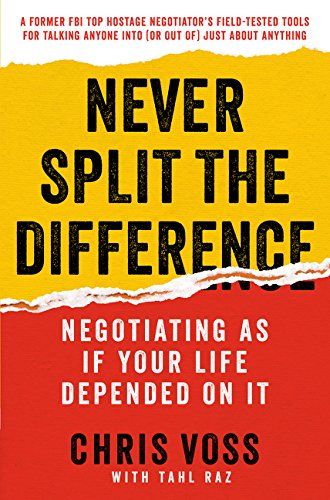
Nova: Absolutely. And the first book we have to talk about, the one that truly redefines high-stakes communication, is "Never Split the Difference: Negotiating As If Your Life Depended On It" by Chris Voss. Now, Voss isn't your typical academic. He's a former FBI hostage negotiator.
Atlas: Wait, a hostage negotiator? That's definitely not the kind of background I'd expect for a book on public speaking or legal arguments. What could a lawyer possibly learn from someone talking down a bank robber?
Nova: That’s the genius of it! Voss didn't just write a book; he distilled decades of life-or-death negotiation into actionable principles. He argues that the key to influencing outcomes isn't about logical debate, or even compromise, it's about understanding the other person's perspective so deeply that you can effectively guide their decisions. He calls it "tactical empathy."
Atlas: Tactical empathy. That sounds almost manipulative. So, you’re not trying to win an argument, you're trying to get inside their head?
Nova: Precisely. It’s not about trickery, but about profound understanding. Voss teaches techniques like mirroring, where you subtly repeat the last few words someone said to encourage them to elaborate. Or labeling, where you identify and validate their emotions, saying things like, "It sounds like you're feeling frustrated." The goal is to disarm, to build rapport, and to get them to say, "That's right." That phrase, "That's right," is the holy grail for Voss, because it signifies genuine agreement and understanding, far more powerful than a simple "yes."
Atlas: Oh, I like that. I can definitely see how that would be useful in a legal setting, especially during cross-examination or even client intake. Instead of immediately refuting a point, you're creating a space for them to feel heard. But how does this apply to, say, a formal public speech or a closing argument? It's not exactly a one-on-one negotiation.
Nova: That's a great question, and it's where the "tactical empathy" extends. When crafting an argument, whether written or spoken, you have to anticipate the jury's doubts, the judge's concerns, or your opponent's counter-arguments. Voss's principles push you to actively listen to the objections, to understand the emotional landscape of your audience, and to frame your message in a way that addresses those underlying concerns before they even fully form. It's about preemptive empathy.
Atlas: So, it's like you're negotiating with an entire room, not just one person. You're trying to understand their biases, their fears, their hopes, and then speak directly to those. That’s a fundamentally different approach than just presenting facts.
Nova: Exactly. It moves beyond just stating your case to the environment in which your case is received. And this dovetails perfectly with our next set of insights from "Made to Stick: Why Some Ideas Survive and Others Die" by Chip and Dan Heath.
Atlas: Oh, I’ve heard about this one. It's about why some messages just click and others fade away, right?
Speak Your Truth: Practice and Refine
SECTION
Nova: That's right. The Heath brothers identified six principles, which they conveniently acronymized as SUCCESs: Simplicity, Unexpectedness, Concreteness, Credibility, Emotions, and Stories. For an aspiring lawyer, these aren't just good marketing tips; they're vital tools for making legal arguments resonate.
Atlas: Okay, so let's break that down. Simplicity, I get. No one wants a convoluted legal brief. But Unexpectedness? How do you make a legal argument without being sensationalist?
Nova: The unexpectedness isn't about shock value; it's about breaking a pattern, about surprising the audience in a way that grabs their attention and forces them to re-evaluate. Think of a lawyer opening a case not with dry facts, but with a counter-intuitive statement that makes the jury lean forward. Or presenting a piece of evidence in a context that totally reframes its meaning. It’s about creating a "knowledge gap" that the audience then wants to fill.
Atlas: That makes me wonder, how does "concreteness" fit in? Legal concepts can be incredibly abstract.
Nova: That’s where the Heath brothers are brilliant. They argue that abstract ideas are forgotten, but concrete ones stick. Instead of talking about "justice," tell a story about a specific person who was denied justice and what that like. Instead of discussing "due process," describe the exact steps, the actual room, the faces involved. Lawyers often use hypotheticals; the Heath brothers would say make those hypotheticals as vivid and tangible as possible.
Atlas: So, it's about painting a picture, even with complex legal theory. Moving from the abstract to the immediate. And then there's "credibility." How do you build that beyond just being a lawyer?
Nova: Credibility can come from many places. It can be the expert witness, but it can also be the details you provide, the statistics, or even what the Heath brothers call "anti-authority" figures – someone who seems unlikely to support your argument but does. And then, of course, there are "emotions" and "stories." These are the bedrock of human connection.
Atlas: I can definitely see how stories are powerful. Juries remember stories, not just bullet points. But emotions? Isn't a lawyer supposed to be objective and dispassionate?
Nova: Ah, that's a common misconception. While you must remain professional, ignoring the emotional landscape of your audience is a huge mistake. The Heath brothers emphasize that emotions drive action. A compelling legal argument doesn't just appeal to logic; it also appeals to a sense of fairness, outrage, empathy, or hope. It's not about being overly dramatic, but about connecting your logical points to what truly matters to people. You weave the facts into a narrative that evokes a justified emotional response.
Atlas: So, it’s about making the audience the justice or injustice, not just understand it rationally. That’s a powerful combination. It sounds like these books are really pushing us to think about communication as a holistic experience.
Nova: Precisely. And for that holistic experience, we can't forget the fundamental craft of language itself. That brings us to "On Writing Well" by William Zinsser. Zinsser's advice on clarity, simplicity, and humanity in writing might seem basic, but it's often overlooked, especially in fields prone to jargon like law.
Atlas: Oh, I totally get that. Legal writing can be so dense, full of legalese. I imagine the temptation to sound "smart" by using complex vocabulary is huge.
Nova: It is. But Zinsser argues that good writing is about stripping away the clutter. It's about making every word count, being direct, and writing for the reader, not for your ego. He famously said, "Clutter is the disease of American writing." For a lawyer, this means crafting briefs and oral arguments that are not just legally sound, but also clear, concise, and compelling. Imagine a judge or jury trying to untangle a convoluted sentence when they could be absorbing your argument.
Atlas: That's a huge point. Because if you can't articulate your argument clearly, all the tactical empathy and sticky ideas in the world won't matter. It’s like having a brilliant strategy but not being able to speak.
Nova: Exactly. Zinsser champions the idea that writing is thinking. Clear writing is clear thinking. And in law, where precision is paramount, but clarity is often sacrificed for perceived formality, his lessons are invaluable. It’s about ensuring your message is not just heard, but understood, and then. These three books together create a powerful trifecta for any aspiring advocate. They provide the tools to articulate your arguments with clarity, conviction, and persuasive flair, moving beyond just knowing the law to truly communicating it powerfully.
Synthesis & Takeaways
SECTION
Atlas: Wow, that’s actually really inspiring. It completely reframes how I think about legal communication. It's not just about winning on paper or in the courtroom, but about genuinely connecting with people and guiding them to your conclusion. It’s about building a narrative that resonates on multiple levels.
Nova: That’s the profound insight here. Nova’s Take is that effective advocacy isn't just about knowing the law; it's about communicating it powerfully. It’s about integrating the FBI negotiator’s tactical empathy, the Heath brothers' principles for sticky ideas, and Zinsser’s timeless advice on clarity and humanity in communication.
Atlas: It’s a call to embrace the journey of communication, to master the art of persuasion not just as a lawyer, but as a human being who seeks to connect and influence. For anyone listening who needed to persuade someone recently, just imagine how these principles might have altered your approach or improved your outcome. It's about practicing and refining your voice, your truth.
Nova: Absolutely. It's about building that strong foundation, mastering one small concept at a time, and always, always remembering that at the heart of every legal principle, there's a human story that needs to be told with conviction and clarity.
Atlas: This is Aibrary. Congratulations on your growth!