

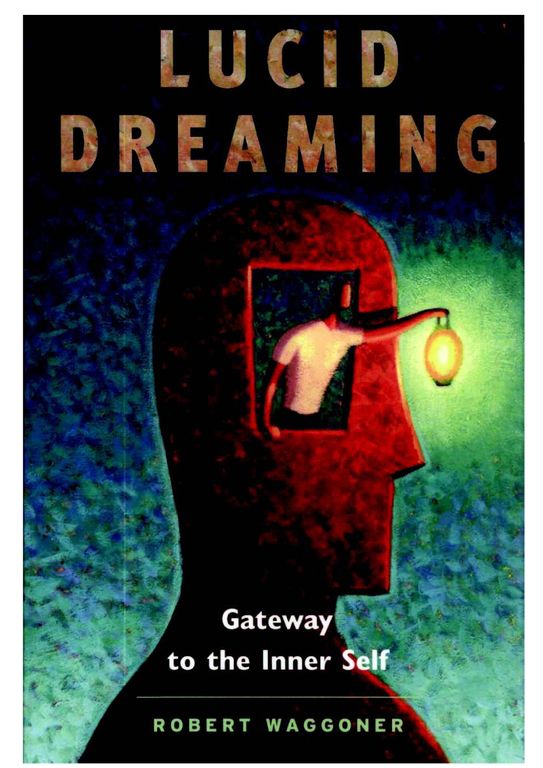
Lucid dreaming
Gateway to the Inner Self
Introduction
Nova: What if I told you that while you sleep tonight, you could step into a world where you are fully conscious, where you can fly across galaxies, speak with figures that seem to possess their own independent awareness, and ask questions to a mysterious intelligence that knows more than you do? What if that world could help you heal your body, solve creative problems, and even reshape your understanding of reality itself?
Nova: : That sounds like science fiction, Nova. Or maybe a very vivid movie pitch. You're talking about lucid dreaming, right? Becoming aware that you're dreaming while you're still in the dream?
Nova: Exactly. And today we're diving deep into one of the most extraordinary books on the subject: Lucid Dreaming: Gateway to the Inner Self by Robert Waggoner. This isn't your typical beginner's guide. Waggoner has logged over a thousand lucid dreams since 1975. He's a past president of the International Association for the Study of Dreams, and his book has gone through sixteen printings and been translated into seven languages.
Nova: : A thousand lucid dreams. That's not just dabbling. That's a life's work. What makes his approach so different from, say, all those "learn to lucid dream in seven days" books out there?
Nova: That's the thing. Waggoner calls it Lucid Dreaming 2.0. He's not just teaching techniques. He's mapping the deeper journey: what happens after you learn to become lucid. And the discoveries he shares are genuinely mind-bending. A Buddhist abbot once wrote to him saying that after three years in a dream yoga monastery, reading Waggoner's book finally helped him understand what the monks had been trying to teach him.
Nova: : Okay, I'm intrigued. Let's open this gateway.
Rethinking Dream Control
The Sailor and the Sea
Nova: Let's start with the central metaphor of Waggoner's entire philosophy, and it comes from the chapter title: Does the Sailor Control the Sea? The answer, of course, is no. A sailor navigates the sea, directs their vessel through it, but no sailor controls the ocean.
Nova: : That's a pretty humbling reframe. Most people think lucid dreaming is all about control. You know, I'm in the dream, I'm the boss, I can do whatever I want.
Nova: And that assumption, Waggoner argues, is the biggest trap that keeps lucid dreamers from going deeper. Think about it logically. If lucid dreamers truly controlled the dream, they could stay lucid for hours. Instead, most lucid dreams collapse within minutes. If they controlled everything, they'd have to consciously generate every detail when they fly through a wall into a new room. But they don't. The new room just appears, fully formed, without any conscious effort.
Nova: : So something else is generating the dream environment. Something beyond our conscious awareness.
Nova: Exactly. And once you accept that you're directing your focus rather than controlling the dream, a whole new world of investigation opens up. You stop being a tyrant in your dream and start becoming an explorer. Waggoner writes that those who maintain the assumption of control limit their experience and understanding. They're locked inside, as he puts it, the prison of their own assumptions.
Nova: : That reminds me of what you sometimes hear from experienced meditators. It's not about controlling your thoughts, it's about observing them and understanding the mind that produces them.
Nova: Beautiful parallel. And Waggoner's book is filled with case studies of what happens when lucid dreamers drop the control mindset. One woman became lucid in a university setting and tried to command dream figures to disappear. Nothing happened. She felt deflated. But then, when she stopped trying to control things, a stunning image emerged spontaneously: a stained-glass-like relief of herself surrounded by professors and colorful butterflies. Waggoner interpreted this as the deeper dream intelligence showing her something genuinely meaningful about her journey into graduate school and personal transformation.
Nova: : So the dream itself has wisdom to offer, if we're willing to listen instead of command.
The Awareness Behind the Dream
Knocking on the Door of the Inner Self
Nova: This brings us to what is probably the most startling concept in the book: the awareness behind the dream. In the mid-1980s, Waggoner was part of a lucid dreaming explorers group. Each month they had experimental goals. One month the goal was to find out what dream figures represent.
Nova: : So he's in a lucid dream, walks up to a dream figure, and asks, what do you represent?
Nova: That's exactly what he did. He became lucid, followed a woman into an office, and politely asked an older gentleman sitting there, "Excuse me, but what do you represent?" And something completely unexpected happened. A Voice, not from the dream figure, but from above him, boomed out a partial answer. He asked again, and the Voice gave a complete response.
Nova: : A disembodied voice from above the dream. That's genuinely chilling and fascinating.
Nova: It shook Waggoner to his core. He started wondering: is there an awareness behind the dream? So over the years, he began actively calling out questions to this unseen awareness in his lucid dreams. Sometimes it would answer verbally. Other times it would restructure the entire dream to show him the answer visually.
Nova: : What kinds of things would he ask?
Nova: He asked to experience abstract spiritual concepts. He asked for precognitive information. He asked about the nature of reality. And here's the wild part: he would later encounter these same concepts in ancient or obscure texts, confirming what he had already experienced firsthand. He stumbled into what the 11th-century Buddhist yogi Naropa called dream yoga, one of the six paths to enlightenment, without even knowing that tradition existed.
Nova: : So he basically bushwhacked his way into an ancient spiritual practice through sheer curiosity.
Nova: Precisely. And Waggoner is careful to note that this awareness seems to meet all of Carl Jung's criteria for a second inner psychic system. Jung called the discovery of such a system "of revolutionary importance in that it could radically alter our view of the world." Waggoner believes this is the larger Self that Jung hypothesized: something that knows vastly more than our waking ego.
Nova: : This really challenges the modern Western assumption that the unconscious is just a basement full of repressed memories and Freudian impulses.
Nova: Right. Waggoner's experience suggests the unconscious isn't just a storage room. It's an intelligent, responsive, creative force. And lucid dreaming gives you a direct line to it.
The Social World of Lucid Dreams
Not All Dream Figures Are Created Equal
Nova: One of the most practical and surprising sections of the book deals with dream figures. Waggoner deliberately uses the term dream figures instead of dream characters, because calling them characters predisposes us to think of them as fictions, like actors in a play.
Nova: : That's a subtle but important shift. A figure has more substance, more mystery to it.
Nova: And Waggoner discovered something remarkable: dream figures exist on a spectrum of awareness. Some are like cardboard cutouts. They barely respond when you try to interact with them. Others are surprisingly responsive. And then there are dream figures that seem more conscious than the lucid dreamer themselves.
Nova: : Wait, more conscious than the person who knows they're dreaming? How is that possible?
Nova: The German gestalt psychologist Paul Tholey observed this over fifteen years ago. He noticed that some dream figures appear to be conscious before the lucid dreamer becomes conscious, and they display knowledge that the dreamer's waking self simply doesn't possess. Waggoner tells stories of lucid dreamers who told dream figures, "I'm dreaming you, you're just a projection of my mind," only to have the figure calmly respond, "How do you know I'm not dreaming you?"
Nova: : That would stop me in my tracks. That's a genuinely philosophical challenge coming from inside your own mind.
Nova: And Waggoner has a fascinating framework for this. He suggests dream figures might be like cells in your body. A cell in your kidney has its own function, its own awareness at its level, responding to its environment. But the kidney cell's environment isn't the same as your conscious environment. Similarly, dream figures may have their own kind of awareness within the unconscious, operating according to rules we don't fully grasp from the waking perspective.
Nova: : So judging them by waking standards would be like a cell in your toe trying to understand what your brain does.
Nova: Exactly. And there's a practical side to this too. Some lucid dreamers report hostile dream figures that try to distract them or convince them the dream is real. Waggoner's advice? Send them thoughts of love and compassion. When dreamers do this, these figures often shrink or transform. This demonstrates they're projected mental energy. Your change of mind about them causes them to change form.
Nova: : That's both a psychological insight and a practical technique rolled into one. Your inner state directly shapes the dream reality.
A Developmental Roadmap
The Five Stages of the Lucid Dreamer
Nova: One of Waggoner's major contributions in the book is his developmental model of lucid dreaming. Borrowing from Jean Piaget's stages of cognitive development in children, he proposes five stages that lucid dreamers tend to progress through.
Nova: : I love that he's bringing developmental psychology into this. What are the stages?
Nova: The first stage is all about pleasure and play. This is where most beginners live. Flying through the sky, creating adventures, using the dream as a personal magic kingdom. It's thrilling, it's liberating, and it's where most people stop.
Nova: : Because why would you go further when you can fly?
Nova: Right? But eventually, the novelty fades a bit and dreamers enter the second stage: technique and control. They get fascinated with mastering dream manipulation. How do I stabilize the dream? How do I fly more effectively? How do I conjure objects? This is the skill-building phase.
Nova: : That sounds like where most how-to books leave off.
Nova: Exactly. But Waggoner pushes into stage three: psychological integration. Dreamers start using lucidity to confront fears, integrate shadow aspects of themselves, and heal emotional wounds. He describes a dream where he encountered a figure representing a discarded part of himself, and the interaction brought genuine psychological integration and renewed energy.
Nova: : That's Jungian shadow work happening in real time, inside a dream.
Nova: Stage four is where things get transpersonal. Dreamers begin interacting with the awareness behind the dream, seeking wisdom, exploring spiritual concepts, and having experiences that transcend personal psychology. And stage five, the deepest level, involves what Waggoner calls going beyond lucid dreaming: non-dual experiences where the dreamer, the dream, and the awareness behind it all seem to merge into a unified field. These experiences parallel what advanced meditators report and what dream yoga practitioners seek.
Nova: : So this is a genuine spiritual path mapped out in developmental stages, based on decades of firsthand experience.
Nova: And here's what I find humbling about Waggoner. After over forty years and more than a thousand lucid dreams, he still considers himself a student. He writes that lucid dreaming is a nearly infinite platform for personal growth, creativity, and spiritual wisdom. There's always more to discover.
Healing, Creativity, and the Frontiers of Science
Beyond Entertainment
Nova: Let's talk about the practical applications, because they're genuinely staggering. A 2012 survey found that over eighty percent of lucid dreamers use the state primarily for fun. Only about twenty-eight percent use it for solving problems or getting creative insights.
Nova: : Which means the vast majority are barely scratching the surface.
Nova: Waggoner documents case after case of people going much deeper. Stephen LaBerge reported a computer programmer who solved difficult coding problems in lucid dreams and wrote them down upon waking. The solutions worked ninety-nine percent of the time. Waggoner shares the story of an artist who calls out in his lucid dreams to see artwork he can recreate. Paintings appear on dream walls. He examines them, paints them when awake, and they sell exceptionally well.
Nova: : So the dream isn't just generating random imagery. It's producing genuinely useful creative output.
Nova: And then there's healing. A 1987 OMNI magazine survey by LaBerge and Jayne Gackenbach found that seventy-seven percent of lucid dreamers who attempted to heal themselves reported some success. LaBerge's earlier research had already proven that commands given in lucid dreams produce measurable changes in the physical body: respiration rate shifts, specific muscle patterns activate. That's the proof of concept that mind-body healing in the dream state is physiologically real.
Nova: : And what about the psychological side? You mentioned nightmare treatment earlier.
Nova: In 1982, psychotherapist Gordon Halliday taught two PTSD clients to become lucid in their recurring nightmares and change one thing. Both succeeded. Their nightmares essentially stopped. This was so effective that the American Academy of Sleep Medicine now recommends lucid dreaming for nightmare disorder. Waggoner's book goes deep into the mechanics of how to approach this.
Nova: : What about the really far-out stuff? Precognition, mutual dreaming, that kind of thing?
Nova: Waggoner devotes entire chapters to these topics. He recounts a personal experience where he met a friend named Moe in a lucid dream. He tried to convince her they were dreaming by levitating with her, but she seemed unfocused. Frustrated, he shoved a peace sign in front of her face and said, "Every time you see this, it can make you become lucid." Months later, they met for lunch. Moe walked up to him and shoved a peace sign right in front of his face. When he asked why, she said, "I don't know. Just felt like it."
Nova: : That's eerie. It suggests information transferred from his dream to her waking behavior without any verbal communication.
Nova: And Waggoner's point isn't to prove these phenomena. It's to invite rigorous experimentation. He argues that lucid dreaming could revolutionize parapsychology because, unlike ordinary dream reports that come after the fact, lucid dreamers and researchers can design experiments beforehand, seek out specific information in the dream state, and report it before the predicted event occurs.
Conclusion
Nova: So here's what I'm taking away from Robert Waggoner's Lucid Dreaming: Gateway to the Inner Self. First, lucid dreaming is far more than a late-night amusement park. It's a developmental path that can take you from simple dream play all the way to experiences that resemble advanced meditation and spiritual awakening.
Nova: : The sailor and the sea metaphor really stayed with me. The idea that we're not controlling the dream, we're learning to navigate it skillfully. And that when we stop trying to dominate, we discover there's an intelligence in the dream that knows more than we do.
Nova: Second, Waggoner's concept of the awareness behind the dream changes everything. If there truly is a responsive, intelligent dimension of the psyche accessible through lucid dreaming, then every night of sleep becomes an opportunity for genuine discovery. Creative breakthroughs, emotional healing, physical healing, spiritual insight: all potentially available if you know how to ask.
Nova: : And third, the book is ultimately an invitation to experiment. Waggoner spent three years in a lucid dreaming explorers group, testing hypotheses month after month. He's not asking readers to believe him. He's asking them to try it themselves.
Nova: That's what makes the book special. It's grounded in decades of direct experience but remains intellectually humble. Waggoner writes that he's just a guy from Kansas, far from the centers of world power. Yet through lucid dreaming, he stumbled into insights that have been confirmed by Tibetan dream yoga practitioners, by Jungian analysts, and by cutting-edge consciousness researchers.
Nova: : It makes you wonder: what would happen if more people took their dreams seriously? Not just as random neural noise, but as a genuine gateway to a larger self?
Nova: That's the question Waggoner leaves us with. Every night, we all close our eyes and enter an alternate reality. Most of us forget it by morning. But what if we learned to wake up inside the dream? What would we discover about ourselves, about consciousness, about the nature of reality itself? The gate is there. The question is whether we'll step through.
Nova: : This is Aibrary. Congratulations on your growth!