Thriving in the Era of Extended Lifespans and Continuous Learning
Golden Hook & Introduction
SECTION
Nova: Atlas, quick, first word that comes to mind when I say "retirement"!
Atlas: Oh, man. Golf. Definitely golf. And maybe a very, very long nap. A well-deserved one, I hope.
Nova: Exactly! Golf and naps. The classic, idyllic endpoint. But what if I told you that entire mental model of life – education, then work, then a long, blissful nap – is rapidly becoming an antique?
Atlas: Wait, hold on. Are you saying my future doesn't involve me perfecting my swing on a sunny course? Because that sounds... alarming.
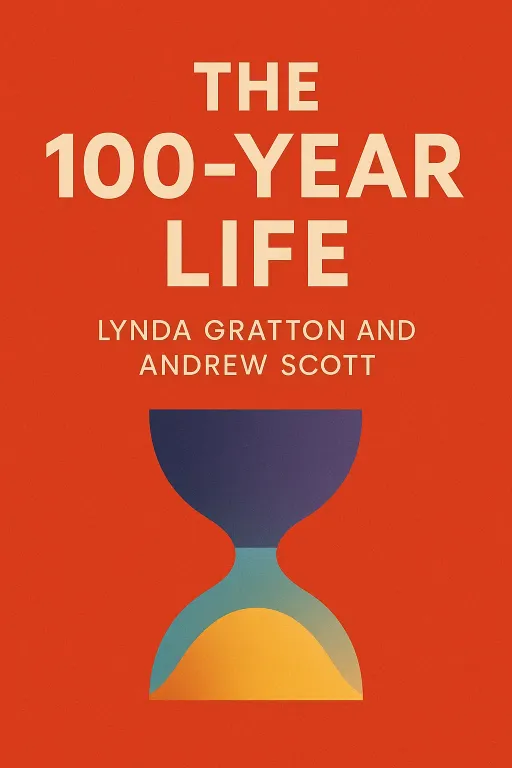
Nova: Well, it might involve more than just that. Today, we're diving into two absolutely pivotal books that completely upend that traditional idea: "The 100-Year Life" by Lynda Gratton and Andrew Scott, both distinguished professors from London Business School and Oxford, and Michelle R. Weise's "Long-Life Learning," a groundbreaking work from a former innovation officer in higher education.
Atlas: That makes me wonder, Nova, are we talking about simply working longer, or something fundamentally different about how we approach our entire existence? Because I imagine a lot of our listeners, especially those who've been exploring new fields and ideas later in life, are grappling with this exact question.
Nova: That’s the perfect entry point, Atlas. Because it's not just about adding years; it's about fundamentally redesigning the blueprint of those years. The old three-stage life is crumbling, and in its place, a multi-stage life is emerging.
The Multi-Stage Life: Beyond the Traditional Three
SECTION
Nova: Gratton and Scott in "The 100-Year Life" articulate this so clearly. For generations, life was a fairly predictable three-act play: Act One, you learn and educate; Act Two, you work and earn; Act Three, you retire and relax. The curtain fell, and that was that. It was neat, it was tidy, and for many, it was the ultimate goal.
Atlas: Yeah, I can definitely relate to that. It’s the narrative we grew up with. You put in your time, you save up, and then you get to enjoy the fruits of your labor without the daily grind. It feels almost pre-programmed into our societal DNA.
Nova: Absolutely. But here’s the rub: we're living longer. Significantly longer. A baby born today in many developed countries has a decent chance of living to 100 or even beyond. That's fantastic, right? More time! But the three-stage model wasn't built for that kind of longevity. If you spend 30 years learning, 40 years working, and then you're expected to somehow fund 30, 40, or even 50 years of "retirement," the math simply doesn't add up.
Atlas: That’s a great way to put it. The math doesn't add up. So, the "golf and naps" scenario becomes financially untenable, or perhaps even psychologically unfulfilling, if it stretches on for too long. What does Gratton and Scott propose instead?
Nova: They propose the multi-stage life. Instead of three fixed acts, imagine a life with many more stages, many more transitions. It’s less like a linear train journey with fixed stops and more like an open-world game where you can choose different quests, pause, level up, and even change your avatar entirely. You might have periods of intense work, then a period of sabbatical or re-education, then a new career, then perhaps a period of entrepreneurship, and then another learning phase.
Atlas: That sounds rough, but also kind of exhilarating. For someone like me, and many of our listeners, who are explorers and innovators, the idea of continuous reinvention is appealing. But isn’t there a huge psychological hurdle there? The stability of a fixed path is comforting. The unknown, the frequent transitions... that can be terrifying. How do you even begin to conceive of that?
Nova: That’s the core challenge, and it's where the book truly shines. They emphasize that this isn't about simply having more of the same, but about cultivating "intangible assets." These are things like your relationships, your health, your knowledge, your skills, and your personal identity. In a multi-stage life, these assets become your currency. You invest in them continuously, and they allow you the flexibility and resilience to navigate those transitions.
Atlas: So, it's not just about financial capital anymore. It's about building this internal reservoir of adaptable capabilities and connections. That makes me wonder, how do you manage that transition? Like, if someone has been in a very specific career for decades, the idea of frequent pivots might feel impossible. It’s almost like shedding an old skin and growing a new one, over and over.
Nova: Exactly. They offer a powerful hypothetical case study of a woman named Jane. In her twenties, she's a marketing manager. In her thirties, she takes a career break to raise a family, but uses that time to develop new digital skills. In her forties, she re-enters the workforce in a completely different sector, perhaps tech. In her fifties, she might become a consultant, leveraging her diverse experiences, and in her sixties, she might even start a social enterprise. Her life is a series of reinventions, not a single, unbroken line.
Atlas: That’s actually really inspiring. It frames the latter half of life not as a winding down, but as a potential for exponential growth and impact. It’s a complete reframing of what "age" means in a career context. But that kind of flexibility... it demands a new kind of preparation, doesn't it? It means traditional education, which usually ends in your early twenties, isn't enough.
Navigating the Learning Labyrinth: Strategies for Continuous Reinvention
SECTION
Nova: You've hit on the perfect segue, Atlas, because that's precisely where Michelle R. Weise's "Long-Life Learning" picks up the baton. If we're living multi-stage lives, then learning can no longer be a front-loaded, one-and-done event. It has to be continuous, accessible, and adaptable.
Atlas: That makes sense, but the reality is, traditional educational institutions often feel slow, expensive, and not always connected to the immediate needs of a rapidly changing job market. For someone who's 55-plus, thinking about going back to a four-year degree might feel like a non-starter.
Nova: You’re absolutely right, and Weise doesn't pull any punches there. She argues that traditional higher education, while excellent for foundational knowledge, often falls short in preparing individuals for the fluid, skills-based economy of the multi-stage life. It's not agile enough. Her book focuses on the practicalities: how do we actually acquire those new skills and knowledge throughout an extended career?
Atlas: So, what does "accessible and adaptable learning pathways" actually look like? What are the practical steps or strategies that someone, say, looking to pivot into a tech-related field, could take?
Nova: Weise points to a whole new ecosystem of learning. Think beyond traditional degrees. We're talking about micro-credentials, bootcamps, online courses, apprenticeships, and employer-led training programs. The key is that these pathways are often shorter, more focused on specific, in-demand skills, and designed to fit into a working professional's life. They're about "just-in-time" learning, not "just-in-case" learning.
Atlas: I like that, "just-in-time" learning. That sounds like it feeds directly into the "explorer" mindset, where you're learning what you need, when you need it, for the next adventure. Can you give an example of someone who's successfully navigated this kind of learning labyrinth?
Nova: Absolutely. Consider the story of someone like Sarah, who spent 25 years in traditional manufacturing. As the industry shifted, she saw the writing on the wall. Instead of retiring or becoming obsolete, she enrolled in a six-month online coding bootcamp specializing in data analytics, a skill she realized was becoming crucial across industries, even her old one. She didn't get another four-year degree. She strategically invested in a targeted, high-demand skill.
Atlas: That’s a perfect example. It shows how adaptability isn't just a buzzword; it's a survival strategy. But beyond the actual courses, Weise must also talk about the mindset, right? How do you cultivate that continuous learning spirit when you’re used to being the expert in your field?
Nova: Definitely. She stresses the importance of what she calls "metacognition" – learning how to learn. It’s about developing curiosity, resilience, and a willingness to embrace imperfection and even failure. It’s about seeing every challenge as a learning opportunity, rather than a threat. For the innovator, it’s about constantly experimenting with new ideas and approaches, and being okay if some of them don't pan out.
Atlas: That’s such a hopeful way to look at it. It transforms the daunting prospect of continuous change into an exciting journey of growth and discovery. It's about moving from a fixed mindset to a growth mindset, not just for personal development, but for career longevity and societal relevance.
Synthesis & Takeaways
SECTION
Nova: So, bringing these two powerful books together, what we see is a future where longevity is a gift, but one that demands a proactive, intentional design of our lives. The 100-Year Life isn't just a longer version of the old one; it's an entirely new paradigm.
Atlas: And Long-Life Learning provides the essential toolkit for navigating that paradigm. It’s not about finding a single, static answer, but about cultivating the curiosity, adaptability, and practical skills to continually ask new questions and find new paths. It’s about viewing every stage as an opportunity for growth and reinvention.
Nova: Exactly. It’s about understanding that our identities, skills, and even our purpose can evolve dramatically over a lifetime, and that’s not something to fear, but to embrace. The greatest asset we can build is our capacity for transformation.
Atlas: That’s a profound thought, Nova. It really makes you rethink what a "successful" life looks like. It’s no longer about reaching a finish line, but about perpetually enjoying the journey of discovery itself.
Nova: It sure is. So, to all our listeners, as you contemplate your own extended journey, what’s one new skill or idea you’re ready to explore that could unlock your next chapter?
Atlas: What a fantastic question to leave everyone with.
Nova: This is Aibrary. Congratulations on your growth!