

Thinking Like a Lawyer: Analytical Reasoning and Logic
Golden Hook & Introduction
SECTION
Nova: Imagine building a skyscraper without understanding physics. Seems absurd, right? But how many of us try to navigate complex arguments, high-stakes decisions, or even daily disagreements without a firm grasp of the underlying architecture of thought?
Atlas: Huh, that’s a powerful image. I’ve definitely felt like I’m in a logical freefall sometimes, trying to make sense of a really convoluted debate or a legal brief that just doesn’t quite click. It’s like there's a hidden language everyone else understands.
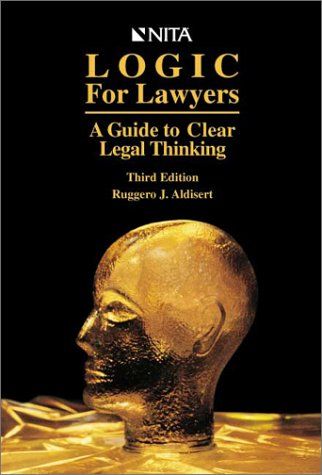
Nova: Exactly! And that hidden language is precisely what we’re dissecting today. We’re stepping into the intellectual courtroom, if you will, to explore the profound insights from Ruggero J. Aldisert’s seminal work, "Logic for Lawyers: A Guide to Clear Legal Thinking." This isn't just a textbook; it's a masterclass in analytical reasoning that has shaped generations of legal minds, revered for its practical, no-nonsense approach to applying formal and informal logic directly to legal analysis. It really demystifies how truly sharp legal minds operate.
Atlas: So, it’s about more than just knowing the law; it’s about knowing how to the law. For anyone who's ever felt overwhelmed by dense legal texts or wanted to argue their point more effectively, this sounds like a foundational roadmap.
Nova: Absolutely. Aldisert, a distinguished federal judge, didn't just write logic; he wrote from a place of deep experience, observing where legal arguments succeeded and, more importantly, where they failed due to flawed reasoning. His perspective was always rooted in the courtroom, making his guidance incredibly practical.
The Unseen Architecture: Formal & Informal Logic in Law
SECTION
Nova: Let’s dive into our first key idea, which Aldisert really emphasizes: the unseen architecture of legal logic. He argues that legal thinking isn't some mystical art; it's a rigorous application of both formal and informal logic.
Atlas: Okay, so what exactly is the difference? When I hear "logic," I usually think of those "if A then B" statements. Is that formal logic, then?
Nova: That’s a great starting point, Atlas. Yes, "if A then B" is often the domain of formal logic, or deductive reasoning. It’s about structure. If your premises are true and your argument's form is valid, your conclusion be true. Think of it like a mathematical equation. "All men are mortal. Socrates is a man. Therefore, Socrates is mortal." In law, this might translate to: "All contracts require consideration. This agreement lacks consideration. Therefore, this agreement is not a valid contract." It’s airtight, assuming the premises hold.
Atlas: That makes sense. It’s about certainty, in a way. You’re building an argument brick by brick, and if each brick is solid and placed correctly, the whole structure can’t fall.
Nova: Precisely. And this is crucial for establishing clear legal principles and applying statutes. But Aldisert also introduces informal logic, which is where things get really interesting and, frankly, where most real-world legal arguments play out.
Atlas: I’m curious. What does informal logic look like in a courtroom? Because I imagine most trials aren't just a series of neat "if-then" statements.
Nova: You're right. Informal logic deals with inductive and abductive reasoning. It's about probability and plausibility, not absolute certainty. Inductive reasoning moves from specific observations to general conclusions. For example, if you see ten white swans, you might induce that all swans are white. In law, it’s about gathering evidence, witness testimony, and precedents to build a case that a certain event happened, or that a particular legal principle apply in a new context.
Atlas: Ah, so that’s where the art of persuasion comes in, right? Because you’re not dealing with absolutes; you’re dealing with what’s most probable or reasonable.
Nova: Exactly. And then there's abductive reasoning, which is often called "inference to the best explanation." It’s what detectives use: given a set of facts, what’s the most likely explanation for those facts? In law, a jury might use abductive reasoning to decide if a defendant's actions are the most plausible explanation for the crime, given all the evidence. Aldisert argues that lawyers need to be masters of all three, understanding when to deploy each, and how they intertwine.
Atlas: That’s a lot to juggle. I can see how someone aspiring to understand legal principles or even just improve their daily analytical thinking would need to grasp this. It’s like understanding the different gears in a complex machine.
Nova: It truly is. Consider a landmark case like. The formal logic might be: "If a suspect is interrogated while in custody and not informed of their rights, then any statements made are inadmissible." But the informal logic—the reasoning that rule—involved inductive observations about police interrogation tactics leading to coerced confessions, and abductive reasoning to determine that informing suspects of their rights was the "best explanation" for ensuring fairness and preventing self-incrimination.
Atlas: That’s a brilliant example. It shows how what seems like a simple rule is built on layers of very sophisticated, often unstated, logical processes. For someone trying to build a strong foundation in law, or even just make better decisions, seeing this framework laid bare is incredibly valuable. It’s not just about memorizing rules; it’s about understanding their DNA.
Nova: Precisely. Aldisert’s core message here is that true legal prowess comes from consciously understanding and applying these logical structures, rather than just instinctively stumbling upon them. It sharpens your mind in a way that mere rote learning never could.
The Fallacy Detectives: Identifying Weakness and Building Unbreakable Arguments
SECTION
Nova: Now, moving from the foundational structures, let’s talk about the practical application. Aldisert is relentless in his focus on identifying logical fallacies. This is where you become a "fallacy detective," spotting weaknesses in arguments, both your own and those of your opponents.
Atlas: Oh, I love that! So, not just building good arguments, but also dismantling bad ones. It’s like learning the secret codes to unlock, or rather,, an argument’s encryption. What are some of the most common ones he highlights that we should be looking out for?
Nova: He covers a vast array, but some of the most prevalent and insidious in legal and everyday discourse are the attack, the straw man fallacy, and the appeal to emotion. Let’s take. This is when you attack the person making the argument, rather than the argument itself.
Atlas: I see that everywhere! In political debates, online arguments… "You can't trust her economic plan; she's never run a business!"
Nova: Exactly. It completely sidesteps the substance of the economic plan. Aldisert would say this instantly weakens the argument because it’s logically irrelevant. The validity of an idea doesn't depend on who proposes it. A brilliant idea from a flawed person is still a brilliant idea.
Atlas: That’s such a crucial distinction. It helps you cut through the noise and focus on what truly matters. What about the straw man? I’ve heard that one mentioned a lot.
Nova: The straw man fallacy is equally common and frustrating. It involves misrepresenting an opponent's argument to make it easier to attack. Instead of engaging with their actual position, you create a weaker, distorted version—a "straw man"—and then knock it down triumphantly, making it seem like you've defeated their real argument.
Atlas: Oh, I know this one! It’s like someone saying, "We should invest more in public transportation," and their opponent responds, "So you want everyone to get rid of their cars and walk everywhere? That's ridiculous!"
Nova: Precisely! The "public transportation" argument was never about banning cars; it was about increasing options. But by distorting it into an extreme, easily refutable position, the opponent avoids addressing the actual, more nuanced proposal. Aldisert emphasizes that recognizing this fallacy is vital, not just to defend your own arguments, but to ensure that discussions remain productive and focused on truth, rather than cheap victories.
Atlas: That’s so important for justice, for fairness. If you’re constantly fighting a phantom argument, you can never actually get to the core issues. It feels like a disservice to everyone involved.
Nova: It absolutely is. And then there's the appeal to emotion, which is perhaps the most difficult to counter because it taps into our deepest human responses. This fallacy uses emotional manipulation instead of logical reasoning to persuade. Think of a lawyer showing graphic images of a victim to a jury, not necessarily to prove a point of fact, but to elicit sympathy or outrage.
Atlas: That’s a tough one, because emotions are so powerful. It’s hard to stay purely logical when you’re facing something that tugs at your heartstrings. For our listeners who are aspiring advocates or just want to be more analytical, how do you even begin to counter that?
Nova: Aldisert’s advice isn’t to ignore emotion entirely—it's part of the human experience—but to recognize when it's being used logic. The counter is to gently, but firmly, bring the conversation back to facts, evidence, and logical connections. You might say, "While that story is deeply moving, let's look at the specific evidence presented regarding the defendant's actions." It's about distinguishing between a compelling narrative and a logically sound argument.
Atlas: That’s a powerful tool. It’s about saying, "I hear your feelings, but let’s also engage our minds." It helps maintain integrity in the discussion. For our listeners who want to apply this daily, Aldisert suggests consciously trying to identify the underlying logical structure of arguments in legal texts or even news articles. Can you spot fallacies? What’s the tiny step there?
Nova: The tiny step is indeed to become a conscious observer. When you read a news article, a social media post, or even listen to a conversation, don't just absorb the conclusion. Ask yourself: What are the premises? What kind of reasoning is being used? And most importantly, are there any logical shortcuts or evasions happening? Is someone attacking the speaker instead of the speech? Is an argument being distorted? This daily mental drill, even for just a few minutes, hones your analytical eye faster than you might imagine. It transforms you from a passive receiver of information into an active, critical thinker.
Synthesis & Takeaways
SECTION
Nova: What Aldisert ultimately teaches us is that thinking like a lawyer isn't about being cold or unfeeling; it's about bringing ruthless precision and clarity to complex situations. It’s about understanding the rules of the intellectual game so you can play it ethically and effectively.
Atlas: Absolutely. For anyone driven by justice and seeking real impact, mastering these logical tools isn't just an academic exercise. It's about ensuring fairness, challenging misinformation, and building arguments that can genuinely stand up to scrutiny, whether in a courtroom or in the everyday pursuit of truth. It's about equipping yourself to cut through the noise and get to the heart of the matter.
Nova: And that’s a skill that translates far beyond the legal profession. It’s fundamental to clear communication, ethical decision-making, and truly understanding the world around us. It empowers you to not just consume information, but to critically engage with it and contribute meaningfully.
Atlas: It’s a call to elevate our discourse, to demand more from arguments, and to build that foundation of logical rigor, one tiny step at a time. It's a journey, but a deeply rewarding one for anyone who values clarity and impact.
Nova: This is Aibrary. Congratulations on your growth!