

Ancient Wisdom for Modern Peace
Golden Hook & Introduction
SECTION
Atlas: Forget everything you think you know about ancient philosophy. Seriously. Today, we’re busting myths about peace, pleasure, and purpose that have been circulating for centuries.
Nova: Exactly, Atlas! We're diving deep into some truly timeless wisdom that, surprisingly, feels more relevant than ever for navigating our complex modern lives. We’re talking about two philosophies often seen as diametrically opposed, but which, when brought together, offer a powerful blueprint for living well.
Atlas: Oh, I love that – a blueprint for living well. Because sometimes it feels like we’re just winging it, right?
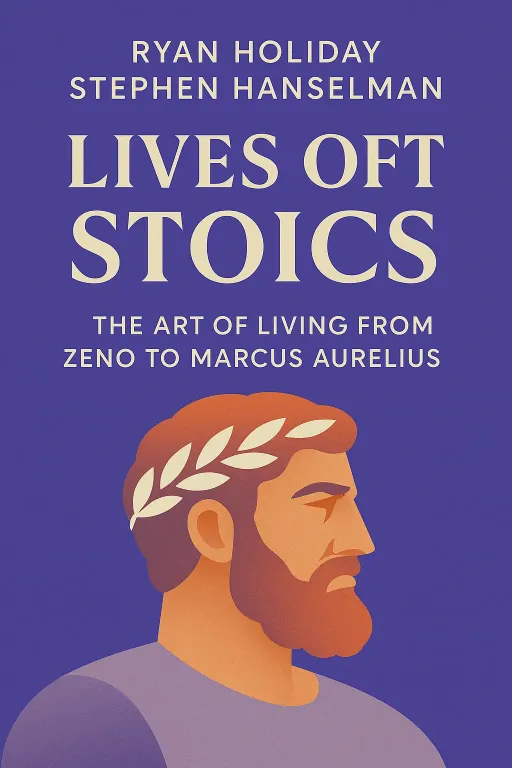
Nova: Absolutely. And at the heart of our discussion are two incredible books. First, "Lives of the Stoics" by Ryan Holiday and Stephen Hanselman. Holiday, as many know, has almost single-handedly made Stoicism a mainstream topic, accessible to millions. He’s shown us that these ancient thinkers weren't just dusty academics, but people who faced real, brutal challenges.
Atlas: Right, like real people, with real problems. Not just, you know, toga-wearing statues.
Nova: Precisely. And then we have Catherine Wilson's "How to Be an Epicurean." Wilson’s work is fascinating because she’s on a mission to correct centuries of misunderstanding about Epicurus, pulling back the curtain on what his philosophy meant.
Atlas: That makes me wonder, because I always thought Epicureanism was just about, well, living it up. Eating too much, drinking too much. Is that wrong?
Nova: That’s the myth! And that's exactly what Wilson clarifies. Today, we’ll explore the Stoic emphasis on resilience and duty, then we’ll discuss the Epicurean pursuit of tranquility and simple joys, and finally, we’ll focus on how to integrate these powerful ideas into your own life to build that resilient inner compass we all need.
The Stoic Path to Resilience
SECTION
Nova: So, let's start with the Stoics then, and these incredible "Lives" that Holiday and Hanselman bring to life. Stoicism, at its core, is about distinguishing what's within your control from what isn't, and then focusing all your energy on that inner sphere. It’s about virtue, reason, and an unwavering inner fortitude.
Atlas: Okay, so it’s about controlling your reactions, not the events themselves. That sounds… exhausting, sometimes. For someone trying to navigate a chaotic career or just daily life, how is that actually actionable?
Nova: It’s not about suppressing emotions, Atlas. It's about recognizing that while you can't always choose your circumstances, you can always choose your response. Think of, the Roman Emperor. Holiday and Hanselman paint a vivid picture of a man who, despite sitting on the most powerful throne in the world, faced unimaginable adversity.
Atlas: The Antonine Plague, right? I remember reading about that. A devastating pandemic.
Nova: Exactly. Imagine leading an empire during a plague that decimated the population, constant border wars, and betrayals from within his own ranks. He was the most powerful man, yet he couldn’t control any of these external forces. What he control was his mind, his judgments, his duty. His personal writings, his "Meditations," are a testament to this daily practice of cultivating inner peace amidst external chaos.
Atlas: Wow. That’s a bit like trying to run a Fortune 500 company while the world is literally falling apart around you. How did he keep it together? What was his secret sauce?
Nova: His "secret sauce" was a relentless focus on virtue—wisdom, justice, courage, and temperance—and an acceptance of what he couldn't change. He would remind himself daily that things happen the universe, not personally. And if he could fulfill his duty, act with reason, and treat others justly, then he was living well, regardless of the outcome.
Atlas: But wait, isn't that just emotional suppression? For many, embracing emotions, even negative ones, is part of being human.
Nova: That’s a common misconception. Stoicism isn't about; it's about your feelings, especially destructive ones. It’s about acknowledging an emotion but then choosing how you respond to it, rather than letting it dictate your actions. It’s about inner discipline, not outward impassiveness. Consider, another figure from "Lives of the Stoics." He was a philosopher, playwright, and advisor to Emperor Nero. He faced exile, political intrigue, and ultimately, was ordered by Nero to take his own life.
Atlas: That sounds rough. How did he apply these ideas in such an extreme situation?
Nova: Seneca’s letters and essays reveal a man who, even in exile or facing death, reflected on the impermanence of life and the importance of reason. He saw these adversities as opportunities to practice his philosophy, to demonstrate that his inner freedom could not be taken away, even if his physical freedom was. He met his end with a remarkable calm, choosing how he would depart, embodying the ultimate control over what was truly within his power: his judgment and his dignity.
Atlas: That’s actually really inspiring. It’s like, even when everything external is taken from you, you still have this inner sanctuary. For anyone feeling overwhelmed by things outside their control, that’s a powerful thought.
The Epicurean Pursuit of Tranquility
SECTION
Nova: Now, if Stoicism sounds a bit like an emotional workout, let's pivot to something often misunderstood as the opposite: Epicureanism. Thanks to Catherine Wilson's "How to Be an Epicurean," we can finally set the record straight. Epicurus wasn't about hedonism in the modern sense of wild indulgence.
Atlas: Okay, so it’s not about gorging on feasts and endless parties? Because that's definitely the vibe I always got.
Nova: Not at all! In fact, Epicurus advocated for a life of – profound tranquility, and – the absence of physical pain. He believed true pleasure came from simplicity, moderation, and the absence of disturbance. He famously lived in a garden with his friends, valuing good conversation and simple meals over luxury.
Atlas: That’s a complete flip from what I imagined. So what does "simple pleasures" even mean in our hyper-connected, always-on world? Give me some examples.
Nova: It’s about appreciating the easily accessible, often overlooked joys. A good conversation with a friend, a quiet evening reflecting, the taste of fresh water when you’re thirsty, the warmth of the sun on your skin. These are things that don't require immense effort or wealth, but bring deep, sustainable contentment. Friendship, for Epicurus, was paramount – a source of security and joy.
Atlas: I guess that makes sense. It’s like, the things that truly make us happy are often free or very cheap. But what about freedom from fear? How do you achieve that when there are genuine modern fears, like economic uncertainty or health crises?
Nova: Epicurus approached fear with reason. He believed many of our fears were irrational, especially the fear of death. He famously said, "Death is nothing to us; for that which is dissolved is without sensation, and that which lacks sensation is nothing to us." He argued that while we are alive, death is not present, and when death is present, we are not. It’s a very rational way to dismantle one of humanity’s oldest fears.
Atlas: That makes me wonder, how does this mesh with Stoicism's embrace of hardship? One seems to be about minimizing pain, the other about accepting it.
Nova: That’s the fascinating part, Atlas. They appear contradictory, but they are actually complementary. Stoicism teaches us resilience hardship, building an inner fortress that can withstand external blows. Epicureanism, when properly understood, teaches us how to peace and joy in the everyday, to appreciate what is good and simple, and to avoid unnecessary pain or distress.
Atlas: So, it's not about avoiding challenges, but about finding joy in the moments between them, and having the right perspective when they hit?
Synthesis & Takeaways
SECTION
Nova: Exactly! We have the Stoic's iron will and the Epicurean's gentle peace. The real magic happens when you integrate them. Stoicism helps you endure the unavoidable difficulties and fulfill your duties with integrity. Epicureanism helps you identify and cultivate genuine, sustainable happiness in the things that within your control—your friendships, your simple joys, your peace of mind.
Atlas: For our listeners, especially those trying to build a resilient inner compass and find peace in a complex world, what's a practical way to start weaving these two philosophies together? Is it about picking and choosing, or is there a way to blend them daily?
Nova: It's about blending. Think of it this way: a Stoic might accept a difficult task with courage and duty, understanding it’s part of their role in the world. An Epicurean would then ensure they have strong friendships and moments of simple, genuine pleasure to recharge and find contentment amidst their efforts. You can practice gratitude for what you have while simultaneously preparing your mind for potential challenges.
Atlas: That’s a great way to put it. It’s not either/or, it’s a powerful blend. It sounds like the true balance isn't about avoiding pain or chasing excess pleasure, but mastering the art of living well by distinguishing what truly matters and what's within our power to influence, fostering both inner strength and profound contentment.
Nova: Precisely. It’s about building a life where you are robust enough to handle the inevitable storms, and wise enough to savor the sunshine. It’s about cultivating both inner fortitude and deep, sustainable joy.
Atlas: That gives me chills. It’s such a hopeful way to look at life's challenges and pleasures. So, for anyone listening who feels pulled between the demands of life and the desire for peace, perhaps the question is: how can you embrace your duties with Stoic strength, while also consciously cultivating the simple, profound joys of an Epicurean life?
Nova: A powerful question to ponder. This is Aibrary. Congratulations on your growth!









