

Reigniting Your Learning & Daily Flow
Golden Hook & Introduction
SECTION
Nova: Your brain is not a hard drive, it's a garden. And if you're just dumping information in, hoping it sticks, you're probably growing weeds, not wisdom. Today, we're talking about how to cultivate true knowledge, not just collect it.
Atlas: Oh, I like that analogy, Nova. My garden often feels less like a blossoming intellectual paradise and more like a tangled mess of half-remembered facts and forgotten concepts. Especially with how fast things are moving in the world right now, it can feel impossible to keep up.
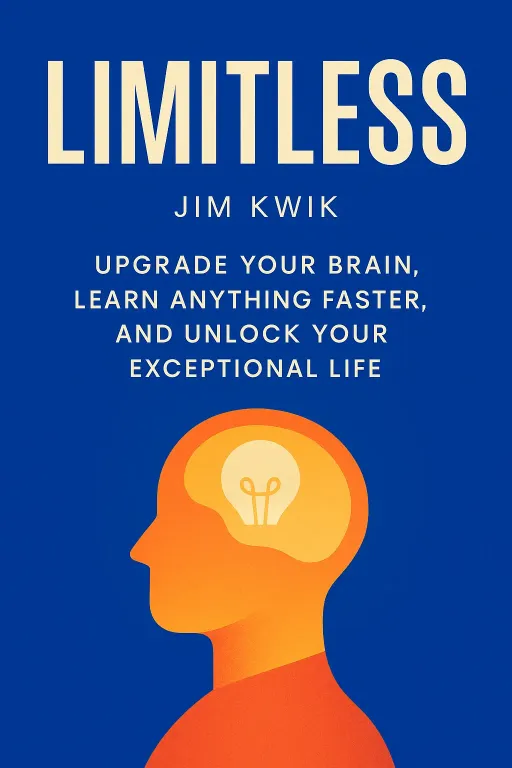
Nova: Absolutely. That feeling of being overwhelmed, or worse, "out of touch," is exactly what we're tackling. We're diving into two phenomenal books that don't just promise better learning, they deliver the blueprint. First up, we have "Limitless" by the incredible Jim Kwik.
Atlas: Jim Kwik, the guy who's practically a real-life superhero, right?
Nova: He truly is. What's so compelling about Jim's story, and why "Limitless" resonates so deeply, is his own journey. As a child, he suffered a severe brain injury that left him with significant learning challenges. Doctors told him he'd struggle for the rest of his life. But instead of accepting that, he dedicated himself to understanding how the brain works, how to unlock its potential, and how to overcome those perceived limitations. He literally rewired his own brain, and now teaches others to do the same. It’s a powerful testament to neuroplasticity.
Atlas: That’s actually really inspiring. Because for a lot of our listeners, especially those grappling with rapidly evolving fields like AI, the challenge isn't just to learn, but to even begin when you feel like you're already behind. It's easy to feel stuck.
Nova: Precisely. And complementing Kwik's insights, we're also pulling from "Learn Like a Pro" by Olav Schewe and Barbara Oakley. Barbara Oakley is another fascinating example of someone who fundamentally changed her learning trajectory. She started her academic career focusing on Russian language, struggling significantly with math and science. But through sheer determination and by applying specific learning techniques, she taught herself to master complex technical subjects, eventually becoming a distinguished engineering professor. Her perspective is invaluable because she's walked the path from a "math-averse" humanities student to a STEM expert.
Atlas: Wow, that’s a powerful combination. So, we have someone who overcame a brain injury to become a learning expert, and someone who transformed their own academic aptitude through technique. This sounds less like generic self-help and more like practical brain science. So, how do these two powerhouses help our listeners, the pragmatic innovators out there, who are driven by progress but often feel like they're just skimming the surface of new knowledge?
Reigniting Learning Agility: The M.P.S. Framework & Mental Flow
SECTION
Nova: That's the perfect question, Atlas. Because the first hurdle isn't usually intelligence; it's often inertia. We know we learn, but getting started feels like pushing a boulder uphill. Jim Kwik offers a brilliant framework in "Limitless" for this exact problem: the M. P. S. framework. It stands for Motivation, Purpose, and Small Simple Steps.
Atlas: Okay, I’m listening. Motivation and purpose sound great in theory, but for someone trying to assimilate something as vast and complex as AI into their daily work, it can feel like a massive, abstract goal. How do you even find that initial spark of motivation?
Nova: That’s where Kwik’s insight is so valuable. He argues that motivation isn't just some ethereal feeling you wait for. It's often a cycle, and you can it. The key to Motivation, in the M. P. S. framework, is often linked to the next letter: Purpose. When you tie your learning directly to a compelling "why," that spark ignites. It’s about understanding the personal relevance. For our pragmatic innovators, it's not just about "learning AI." It's about "learning AI to streamline my workflow, to lead my team more effectively, to innovate in my industry, to stay ahead in a rapidly changing career landscape."
Atlas: So, it's about shifting from a vague "I should learn this" to a concrete "I to learn this because it directly impacts X, Y, and Z aspects of my life or career." That makes sense. It reframes learning from a chore to a tool for progress. But what if that purpose still feels too big, too distant? Let's say someone AI is important for their career, but the sheer volume of information makes them freeze up.
Nova: That's where the "Small Simple Steps" come in, which is arguably the most powerful part of M. P. S. This is about breaking down that overwhelming goal into incredibly tiny, manageable actions. Kwik emphasizes that consistency, not intensity, is the secret to mastery. If your goal is to "learn AI," that's too big. A small, simple step might be "read one article about AI applications in my industry for 15 minutes each morning." Or "watch one 10-minute explainer video on a new AI concept."
Atlas: That’s a bit like micro-dosing your learning, isn't it? It sounds almost too simple. I mean, we’re often conditioned to think that significant progress requires significant, grueling effort. Is 15 minutes really enough to make a dent in something like AI?
Nova: It’s not about making a dent immediately, Atlas, it's about building momentum and overcoming resistance. The initial goal isn't to master AI in a week; it's to make the effortless. Think of it like starting a car. You don't need to floor it to get to top speed; you just need to turn the ignition. Those small steps build a habit. They reduce the friction of starting. And once you start, and you see even tiny progress, that fuels your Motivation, which clarifies your Purpose, and makes the next Small Simple Step even easier. It creates a positive feedback loop.
Atlas: I can definitely relate to that. The hardest part is often just getting started. So, the M. P. S. framework from "Limitless" is essentially a way to trick your brain into consistent action by making the barrier to entry incredibly low, and then reinforcing that action with a strong "why."
Nova: Exactly. It's about building that mental agility, getting into a flow where learning isn't a struggle but a natural part of your day. It’s about creating an unbreakable chain of tiny wins. And this is perfectly aligned with our "Tiny Step" takeaway: dedicating 15 minutes each morning to a "learning sprint." But how do you make those 15 minutes count? How do you ensure you're not just passively consuming, but truly assimilating that knowledge? That leads us to our next core idea.
Optimizing Knowledge Acquisition: Active Recall, Spaced Repetition & Focused/Diffuse Thinking
SECTION
Nova: Now that M. P. S. has us motivated and taking those small, consistent steps, the next challenge is making sure that learning actually. This is where "Learn Like a Pro" by Olav Schewe and Barbara Oakley becomes absolutely indispensable. They dive deep into the science of we learn best.
Atlas: That makes me wonder, what are the most common mistakes people make when they're trying to learn something new, especially when they feel pressured to absorb a lot of information quickly? Is it just reading a chapter and hoping for the best?
Nova: Precisely. Passive consumption is the enemy of effective learning. Many people read, highlight, re-read their notes, and feel like they're learning. But the science shows this is largely ineffective. It creates an illusion of competence. The brain confuses familiarity with actual understanding. That's why Schewe and Oakley champion techniques like active recall.
Atlas: Active recall. What exactly does that mean in practice? Like, for someone trying to grasp a new AI algorithm, how would they actively recall it?
Nova: Imagine you just finished reading about a new AI concept, let’s say, "Generative Adversarial Networks," or GANs. Instead of re-reading the section, you'd close the book or turn away from the screen. Then, you'd try to explain it out loud, in your own words, as if you were teaching it to someone else. Or you'd try to write down everything you remember about GANs without looking at your notes. You could even draw a diagram. The act of that information from memory, rather than just passively re-exposing yourself to it, is what truly strengthens the neural connections.
Atlas: So, it's about forcing your brain to work to pull the information out, rather than just letting it flow in. That sounds like a workout for the brain. A "HIIT of learning," as our user profile put it.
Nova: It absolutely is! And that workout is incredibly efficient. It immediately highlights what you know, allowing you to go back and focus your study on those specific gaps, rather than re-reading everything. This is where active recall pairs perfectly with another powerful technique: spaced repetition.
Atlas: Spaced repetition. That’s like flashcards, right? But what’s the science behind it? Why is it more effective than just cramming everything the night before a presentation?
Nova: It's far more sophisticated than just flashcards, though flashcards are a great tool for it. Spaced repetition leverages the "forgetting curve." Our brains naturally forget information over time. Instead of fighting this, spaced repetition uses it to its advantage. The idea is to review information at increasing intervals, right before you're about to forget it. So, you might review a concept after a day, then three days, then a week, then a month, and so on. Each successful recall strengthens the memory and extends the time until the next review is needed.
Atlas: So, you're essentially optimizing the timing of your brain workouts. It’s like a personal trainer for your memory, scheduling just enough stress to build strength, but not so much that you burn out. That’s brilliant for managing a continuous stream of new information, like keeping up with AI developments.
Nova: Exactly! It makes learning incredibly efficient. But beyond just recall and repetition, Schewe and Oakley also delve into the modes of thinking: focused and diffuse. Focused thinking is what we typically associate with learning – intense concentration on a specific problem or concept. It's like using a laser pointer to illuminate a specific detail.
Atlas: And diffuse thinking, I'm guessing, is the opposite? Letting your mind wander? That sounds counter-intuitive for productivity.
Nova: It can seem that way, but it's crucial for problem-solving and creativity. Diffuse thinking is when your mind relaxes, steps back, and allows different neural pathways to connect. It’s like turning on a floodlight, allowing you to see the bigger picture, make connections between seemingly disparate ideas, and solve problems you were stuck on with focused thinking. Think about how often you've had a breakthrough idea while showering, walking, or doing something completely unrelated to the problem. That's diffuse thinking at work.
Atlas: That’s a powerful distinction. So, for tackling a complex AI problem, you might spend an hour in focused mode, really digging into the code or the theory. But then, to truly understand it or find a creative solution, you need to step away, let your mind wander, and allow that diffuse mode to kick in.
Nova: Precisely. The "HIIT of learning" isn't just about intensity; it's about intelligent alternation. It’s about leveraging both modes. You focus intensely using active recall and spaced repetition for retention, then you consciously step away, engage in diffuse thinking, to foster creativity and deeper understanding. This combination is how you truly assimilate complex information like AI, not just memorize it. You move from being "out of touch" to being deeply integrated and innovative. You understand the evolving landscape, as our user profile describes, and can even begin to shape what's next.
Synthesis & Takeaways
SECTION
Nova: So, bringing it all together, we've got Jim Kwik's M. P. S. framework – Motivation, Purpose, Small Simple Steps – to get you started and keep you consistent. And then, from Olav Schewe and Barbara Oakley, we have the powerful techniques of active recall, spaced repetition, and the intelligent use of focused and diffuse thinking to make that learning truly stick and foster creativity.
Atlas: It’s a complete system. M. P. S. gets you in the door and keeps you coming back, ensuring that growth mindset. And then active recall and spaced repetition make every minute you spend learning incredibly effective. It means you're not just consuming information; you're actively building a robust, interconnected knowledge base.
Nova: Exactly. It directly addresses that deep question from our listener profile: How can you consciously integrate micro-learning moments throughout your day to build momentum and combat the feeling of being "out of touch" while embracing ambitious goals like AI assimilation? The answer is a 15-minute daily "learning sprint" – powered by M. P. S. for consistency and active recall for efficacy.
Atlas: Right, like starting your day by taking 15 minutes to actively recall a new AI concept, maybe explaining it out loud to yourself, then immediately connecting that concept to its personal relevance using your M. P. S. purpose. It's efficient, it's impactful, and it's building momentum, not just filling time. It’s about seeking impact, not just skimming.
Nova: And it makes learning feel less like a daunting task and more like a strategic advantage. It shifts you from feeling overwhelmed to feeling empowered. It’s about taking control of your learning journey, shaping what's next for yourself, and sharing your insights effectively.
Atlas: That's actually really inspiring. It feels like a genuine path to mastering new domains without feeling constantly behind. So, for our listeners, we want to challenge you: try that 15-minute learning sprint. Pick one small AI concept, actively recall it, and connect it to your personal purpose. Let us know what you discover!
Nova: We'd love to hear how these techniques transform your daily flow and help you feel more connected to the evolving landscape. Share your tiny steps and big breakthroughs with us.
Atlas: This is Aibrary. Congratulations on your growth!









