

Personalized Podcast
Golden Hook & Introduction
SECTION
Atlas: Imagine it's 2005. You just shot a funny video of your cat, and you want to show your friends. What do you do? You could try to email it, but the file is too big. You could try to upload it to your personal website, but that's a technical nightmare. The simple act of sharing a video was fundamentally broken. And into that frustration, a startup launched with a fuzzy, 18-second clip of one of its founders at the zoo. That startup was YouTube.
alan: It's such a perfect startup story. It wasn't born from some grand vision to create a new form of global media. It was born from a simple, relatable frustration. "This is too hard. We can make it easier."
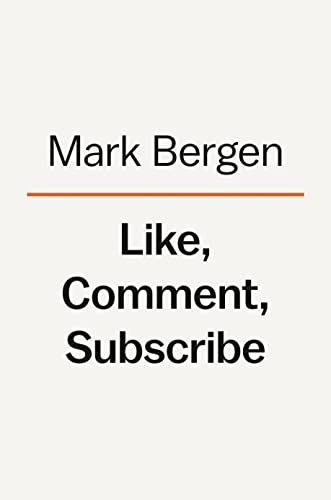
Atlas: Exactly. And today, joined by tech founder and product manager Alan, we're deconstructing the blueprint from Mark Bergen's fantastic book,. We're going to treat YouTube's rise as a masterclass for anyone building... well, anything in tech today.
alan: I'm excited. It's a story I think every founder and product person should know.
Atlas: We'll dive deep into this from two perspectives. First, we'll explore the 'Genesis Engine': how YouTube solved one simple problem so perfectly it became unstoppable. Then, we'll dissect the 'Watch Time Revolution,' the critical moment YouTube changed its core metric and, in doing so, changed the internet forever. Alan, as someone building a tech product today, that origin story has to resonate, right? The sheer simplicity of it.
alan: It absolutely does. We often get caught up in complex feature sets and AI-driven roadmaps, but the most powerful products, the ones that truly get traction, often start by just fixing one single, infuriatingly simple problem that everyone else is overlooking.
Deep Dive into Core Topic 1: The Genesis Engine
SECTION
Atlas: Let's dig into that. What did they actually that was so different? Because they weren't the first video site. Get this: in 2005, you had competitors like Vimeo, which was for serious filmmakers, and even Google had its own product, Google Video, which was reportedly clunky and slow.
alan: The classic case of a saturated market that isn't actually serving the user. Everyone had a video product, but no one had made it effortless for the average person.
Atlas: Precisely. And Bergen's book highlights that YouTube’s founders—Chad Hurley, Steve Chen, and Jawed Karim—obsessed over one thing: speed and simplicity. The upload process was dead simple. You didn't need to know about codecs or file formats. You just pointed to a file, and it worked. But that wasn't the real secret weapon. The real genius was a tiny box of HTML code. The embed code.
alan: Ah, the embed code. It's legendary in product growth circles.
Atlas: Tell us why. From your perspective as a product manager, what was so magical about that little snippet of code?
alan: It's a masterstroke of product-led growth. They essentially offloaded their entire distribution and marketing cost onto their users, and made the users to do it. Think about it. Before, if you wanted to show someone a video, you had to send them a link and hope they clicked. With the embed code, you could put the video player on your own territory—your MySpace page, your blog.
Atlas: And MySpace was the key. At the time, it was the center of the social internet. YouTube didn't need to build its own social network; it just plugged into the biggest one on the planet.
alan: Exactly. Every time a user embedded a YouTube video on their MySpace profile, they were planting a flag for YouTube. They were doing the marketing. It wasn't just "Hey, check out this video," it was "Hey, check out this video on this cool platform called YouTube," with the branding right there on the player. It created a viral loop that was almost impossible to stop.
Atlas: And the book points to the moment this strategy went nuclear: the "Lazy Sunday" digital short from Saturday Night Live. It wasn't an official upload. Someone ripped it and put it on YouTube. Within days, it was everywhere. Not because people were linking to YouTube's homepage, but because hundreds of thousands of MySpace pages and blogs had the video embedded directly on them. YouTube became the default plumbing of the internet for video.
alan: And that creates a network effect that becomes a competitive moat. More embeds lead to more viewers, which attracts more creators to upload content, which leads to more great videos to embed. It's a self-perpetuating engine. For any startup founder listening, the question isn't just "what's my product," it's "what's my embed code?" What's the mechanism that allows my users to spread my product for me, within their own existing workflows? That's the holy grail of early-stage growth.
Atlas: A perfect summary. They didn't just build a library; they built a distribution network powered by their own users. But that explosive, chaotic growth created a brand new problem. A monster, really.
Deep Dive into Core Topic 2: The Watch Time Revolution
SECTION
Atlas: So, fast forward a few years. Google has bought YouTube for a staggering 1.65 billion dollars. The platform is a global phenomenon. But by around 2011, 2012, it was a mess. The primary metric for success, the thing the algorithm promoted, was simply 'views'. One click equals one view.
alan: And whenever you have a simple metric like that, people will game it. It's human nature.
Atlas: They gamed it into the ground. This was the gangster era of clickbait. You'd see a thumbnail of a shark jumping out of the water to eat a helicopter, with a title like "OMG YOU WON'T BELIEVE THIS." You'd click, and it would be a 30-second video of a plastic shark in a bathtub. You got the view, the creator got the ad revenue, and the user felt tricked and annoyed.
alan: That's a terrible user experience. It erodes trust. As a product manager, that's a red alert. Your core metrics are encouraging behavior that makes your users hate your product. You're optimizing for short-term gain at the cost of long-term health.
Atlas: And the engineers at YouTube saw this in the data. Bergen describes how they realized people were clicking on these videos in droves, but they were also leaving immediately. The "bounce rate" was enormous. They were rewarding empty calories. This led to a huge, soul-searching internal debate and a massive product pivot. This is our second big idea: The Watch Time Revolution.
alan: This is such a critical moment. It's the transition from measuring to measuring. A click is just an activity. It doesn't tell you if the user got anything out of it.
Atlas: Exactly. So the engineers proposed a radical shift. Forget views. The new North Star, the metric that would define everything, would be 'watch time'. The recommendation algorithm—the videos on the homepage, the "Up Next" sidebar—would no longer prioritize what was most likely to be clicked. It would prioritize videos that led to the longest overall viewing sessions.
alan: That's a profound change. It completely realigns the incentives for creators.
Atlas: Completely. Suddenly, your 30-second clickbait video was poison. The algorithm would bury it. But if you made a compelling, 15-minute documentary that kept people glued to the screen, and then they watched another video after that, the algorithm would treat you like a king. It would push your content to millions of people. This shift, as the book details, is what created the modern YouTuber. It favored longer, more substantive, more engaging content.
alan: This is a direct parallel to so many challenges in tech today. In my world, EdTech, it's the core question. Does a student clicking on ten different micro-lessons in five minutes mean they're engaged? Or does it mean they're confused and hopping around, not learning anything? A student who completes one 20-minute, in-depth lesson is giving you a much stronger signal of value. That's our 'watch time'.
Atlas: That's a perfect analogy. But you're an analytical thinker, Alan, so you must see the other side of this. The algorithm is just a machine optimizing for a metric. It doesn't know people are watching.
alan: And that's the dark side, isn't it? As a product builder, this is the ethical tightrope you walk. The algorithm, in its relentless quest for more watch time, can inadvertently lead people down rabbit holes. It learns that inflammatory content, conspiracy theories, or outrage-inducing videos are effective at keeping people watching. It doesn't distinguish between 'quality' watch time spent learning a new skill and 'morbid curiosity' watch time spent watching a car crash.
Atlas: The machine just knows that the user is still watching.
alan: Right. So you've defined this powerful metric for success, 'watch time', but you have to constantly ask if that metric is creating the holistic user experience you actually want. You have to build in checks and balances. It's not enough to define the metric; you have to be accountable for its second- and third-order consequences. That's the burden of building platforms at scale.
Synthesis & Takeaways
SECTION
Atlas: So let's tie this all together. When you deconstruct YouTube's journey using Bergen's book as a guide, you really see a two-act play for building a platform.
alan: It's incredibly clear. Act One is about friction removal. Find a simple, painful problem and solve it so elegantly that your users become your distribution channel. That was the embed code.
Atlas: Act One: Build a simple tool that solves a painful problem and let your users distribute it for you. Then, Act Two.
alan: Act Two is about value alignment. Once you have scale, you have to get brutally honest about your metrics. You have to shift from measuring superficial activity, like clicks and views, to a metric that is a true proxy for user value and satisfaction. For YouTube, that was watch time.
Atlas: It’s a powerful lesson. First, get them in the door by being the simplest solution. Then, keep them there by delivering real, sustained value.
alan: Exactly. And for everyone listening, whether you're a founder, a product manager, or just someone curious about how the digital world is built, the question to take away from this is a simple one. First, what's the 'view count' in your world—the vanity metric that feels good on a dashboard but doesn't actually mean much?
Atlas: And the follow-up?
alan: And more importantly, what's your 'watch time'? What is the single metric that proves you are delivering real, sustained value to your users? Finding that, and having the courage to re-orient your entire product around it, is everything.