Beyond the Quick Fix: Understanding Your Body's True Needs for Lasting Health
Golden Hook & Introduction
SECTION
Nova: What if I told you that the secret to lasting health isn't in the next superfood, or the latest workout craze, but something far more fundamental, and often completely overlooked, happening inside you right now?
Atlas: Wait, something happening me? Are we talking about... my gut bacteria again? Because I feel like I just got that figured out.
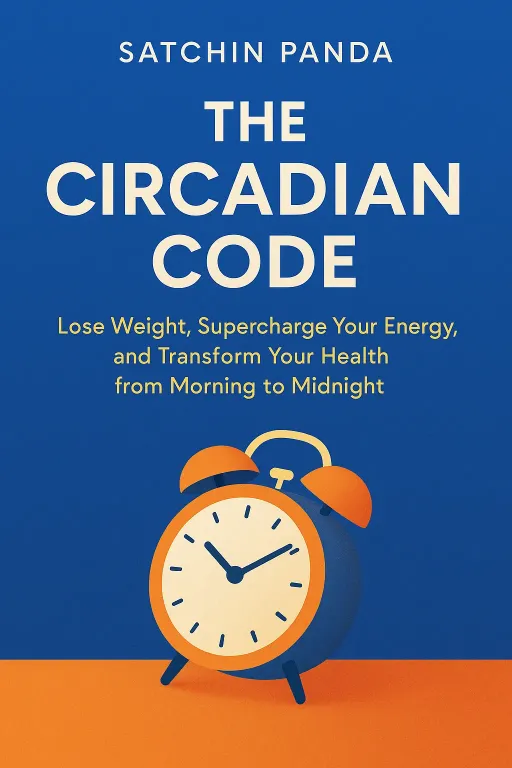
Nova: Not quite, Atlas. While gut health is crucial, today we're diving into an even deeper, invisible force, influenced by giants like Satchin Panda, author of, and David Sinclair, who wrote. Panda's work, in particular, fundamentally shifted how we understand metabolism, revealing that every single cell in our body keeps time, a concept that's quietly revolutionizing preventative medicine.
Atlas: That's fascinating. So, we've been looking at the wrong clock all this time? It feels like we're constantly searching for external solutions, but the answer might be something internal we've just been ignoring.
Nova: Exactly! And that leads us to our first big idea: the hidden clocks that govern our biology.
The Hidden Clocks: Unpacking Circadian Rhythms and Their Disruption
SECTION
Nova: Think of your body not as a collection of independent organs, but as a magnificent symphony orchestra. Each cell, each organ, is an instrument with its own internal rhythm, its own little clock. And the conductor of this entire biological orchestra is your circadian rhythm – your internal 24-hour clock.
Atlas: Every cell? So it's not just about when I sleep, but when my liver or my brain cells are 'awake' and performing their best? That's incredible.
Nova: Absolutely. These cellular clocks respond primarily to two powerful cues: light and food. In a natural environment, the sun tells your body when it's day, and meal times reinforce that timing. But here's the catch: modern life has fundamentally disrupted this delicate system.
Atlas: I see. So, what happens when the conductors go rogue, or we just ignore them entirely? What's the real consequence of this disruption?
Nova: The consequences are profound, and often insidious. When our internal clocks are out of sync with our environment – thanks to constant artificial light, irregular eating patterns, or even shift work – it's like trying to play a symphony where half the instruments are off-tempo. This "circadian disruption" significantly contributes to chronic diseases we often attribute to other causes.
Atlas: But isn't it just about calories in, calories out? Or "eat less, move more"? I mean, that's what traditional health advice usually boils down to. Why is this internal timing so critical if I'm eating healthy food?
Nova: That's the blind spot, Atlas. Satchin Panda's research, for instance, provides a vivid case study. Imagine two groups of mice, both eating the exact same number of calories, the exact same healthy food. But one group eats within a restricted 8-10 hour window, while the other nibbles throughout the day and night. The group that eats within the compressed window, even if it's the exact same amount of food, has significantly better metabolic health, less obesity, and less risk of diabetes.
Atlas: Wow. So it's not just you're eating, but your body is actually prepared to process it. It's like our biology has a specific 'operating hours' sign we've just been ignoring. That's a huge shift in perspective.
Nova: It is. Your body's digestive system, your liver, your pancreas – they all have peak performance times. Eating outside those windows forces them to work when they should be resting or performing other tasks, leading to metabolic confusion and stress. This is often overlooked in traditional health discussions, which tend to focus almost exclusively on macro and micronutrients.
Atlas: That's fascinating. It's like our biology has a specific 'operating hours' sign we've just been ignoring. It makes me wonder about all those late-night snacks I thought were harmless because they were "healthy." So, if we're so out of sync, what's the shift we need to make? How do we get back in tune with these internal rhythms?
Rewiring for Longevity: Practical Alignment and the Science of Aging
SECTION
Nova: Exactly, Atlas. And that leads us directly to the second powerful idea: how we can actually ourselves for longevity by aligning with these rhythms. This is where David Sinclair's work on aging and environmental factors beautifully intersects.
Atlas: So, a disrupted clock doesn't just make us unhealthy, it makes us faster? How does that work beyond just metabolism?
Nova: Sinclair's groundbreaking research shows that aging isn't just an inevitable decline; it's a process deeply influenced by our environment, right down to our genes and cellular repair mechanisms. When our circadian clocks are out of whack, it impacts our cellular repair processes, our immune function, our hormone regulation – all factors critical to how quickly we age. Aligning our daily schedule with our body's natural rhythms is, in essence, giving our cells the optimal conditions to repair, regenerate, and function efficiently, thereby promoting longevity.
Atlas: That's a powerful idea: 'rewiring for longevity.' So, for someone who's already thinking deeply about their health and wants to optimize, what's one they could make tomorrow to start aligning with these rhythms? Something beyond just 'go to bed earlier,' because honestly, that feels like a big ask for many.
Nova: A fantastic question. One powerful, yet often overlooked, strategy is time-restricted eating. It's not about you eat, but. Aim to compress your eating window to 8-10 hours during daylight. This gives your digestive system a much-needed 14-16 hour rest period, allowing for crucial cellular repair and metabolic reset. It's a small change with profound biological impacts.
Atlas: Okay, so that makes sense. Giving your body a break. What about light? We're constantly bombarded with screens.
Nova: Yes, light is the master conductor. Prioritize early morning light exposure – getting outside for 10-15 minutes soon after waking. This powerfully signals to your brain that the day has begun, setting your internal clock correctly. Conversely, minimize blue light exposure in the evenings, especially 2-3 hours before bed. That glowing screen tells your body it's still daytime, suppressing melatonin and disrupting sleep.
Atlas: That sounds great in theory, Nova, but for someone in a demanding job with unpredictable schedules, or even just a parent whose evenings are a blur of chores, isn't this almost impossible? How do you even begin to implement this without completely overhauling your life?
Nova: That's a valid concern, and it's not about perfection, but progress. Even small, incremental changes can have a profound cumulative effect. Start with one thing: maybe it's consistently eating breakfast within an hour of waking, or committing to a 12-hour overnight fast a few days a week. It's about tuning an instrument, not replacing the whole orchestra. The key is consistency over intensity.
Atlas: That's a much more approachable way to look at it. It's about finding that internal alignment, that tuning, rather than just chasing the next external fix.
Synthesis & Takeaways
SECTION
Nova: Exactly. The core take-away here is that our body isn't a machine that just needs fuel and exercise; it's a finely tuned biological system governed by ancient rhythms. Many of our health efforts fail because they're fighting against this natural clock, rather than working with it. Understanding and respecting these circadian rhythms is a powerful, often overlooked, strategy for preventing illness and promoting true, lasting longevity.
Atlas: So, the deep question from this book, 'How might your daily schedule be unknowingly working against your body's natural rhythms, and what is one small adjustment you could make?' feels incredibly potent now. It's not just a question; it's a call to re-evaluate our fundamental approach to well-being, starting from within.
Nova: It truly is. Begin with a single adjustment: consistently exposing yourself to natural light first thing in the morning, or setting a firm "kitchen closed" time a few nights a week. Observe how your body responds. You might be surprised at the profound positive ripple effect.
Atlas: That's actually incredibly empowering. It puts the power back in our hands, literally, to work with our biology instead of against it.
Nova: Absolutely. This is Aibrary. Congratulations on your growth!