

Reclaiming Your Life from Digital Overload
Golden Hook & Introduction
SECTION
Nova: Alright, Atlas, quick thought experiment for you. If I told you there was a hidden cost to every notification, every "quick check," every endless scroll, a cost that wasn't just your time, but your very ability to think clearly and live purposefully… what would you say?
Atlas: Oh man, I’d say you just described my average Tuesday. Honestly, I’m pretty sure my brain has a permanent "buffering" icon spinning somewhere above it. It’s like, I I’m supposed to be more productive with all this tech, but I often feel… less so. More scattered.
Nova: Exactly! That feeling, that pervasive sense of digital overwhelm and fragmented focus, is precisely what we’re dissecting today. We're diving into two brilliant minds who tackle this modern dilemma from profoundly complementary angles. We're talking about and
Atlas: Oh, I like that. The digital hangover is real. So, Solis first, right? He’s the futurist, the one who looks at how technology reshapes our lives.
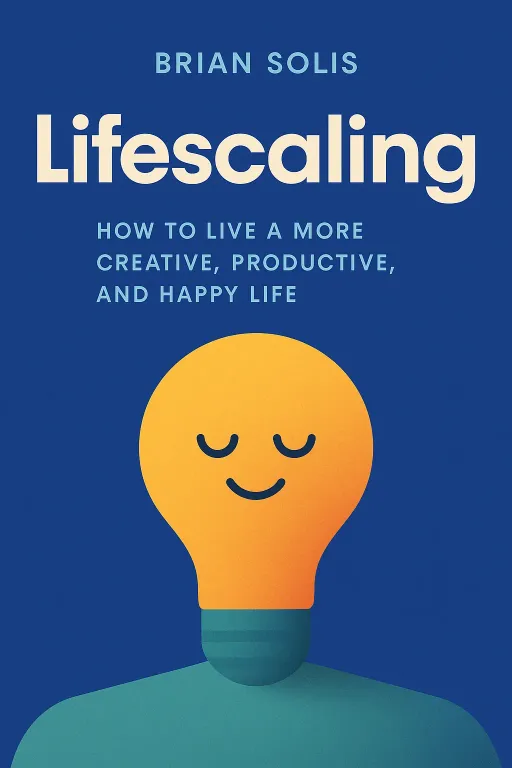
Nova: That’s right. Brian Solis is renowned for his work on digital transformation and innovation, often seen as a humanist within the tech sphere. He’s spent his career observing how technology impacts human behavior and society. "Lifescale" is essentially his magnum opus on how to intentionally design your life in this hyper-connected world. It’s about becoming the architect of your own well-being. And then, Gazzaley and Rosen, they come in with the hard science. Adam Gazzaley, a neuroscientist, is a leading researcher in cognitive control and attention, and Larry D. Rosen is a psychologist specializing in the psychology of technology. Their combined expertise gives "The Distracted Mind" an incredibly robust, science-backed foundation for understanding we get distracted and to fight back.
Atlas: So, Solis gives us the philosophical roadmap and the "why," and Gazzaley and Rosen give us the neuroscientific "how-to" guide. That's a powerful combination.
Nova: It truly is. Together, they empower us to thoughtfully integrate technology, ensuring it serves our well-being rather than detracting from it. So, let’s start with Solis and that fundamental "why."
The 'Why': Reclaiming Purpose and Redesigning Our Digital Lives
SECTION
Nova: Solis argues that we've essentially outsourced our mental operating system to algorithms and platforms. We're constantly reacting, not creating. He calls for a process of "lifescaling," which is about intentionally redesigning your relationship with technology to discover renewed purpose.
Atlas: "Outsourced our mental operating system"—that’s a potent phrase. I imagine a lot of our listeners feel like their attention is constantly being pulled by external forces. But wait, "redesigning your life" sounds like a massive undertaking. For someone already drowning in digital noise, that could feel like just another thing to manage. Isn't that just more work?
Nova: It’s a great question, and it’s precisely where Solis’s human-centered design approach comes in. He's not suggesting you add more to your to-do list; he's suggesting you your existence. Think of it like this: your digital life, right now, is probably a cluttered attic. You've got old hobbies you never touch, notifications for things you don't care about, apps you downloaded once and forgot. It’s chaotic, and every time you step into that attic, you feel overwhelmed.
Atlas: Oh, I've got that attic. And it’s full of digital dust bunnies and forgotten passwords.
Nova: Right! Solis challenges us to become the interior designers of that attic. Lifescaling is about auditing your digital habits, identifying what truly serves your purpose and well-being, and ruthlessly decluttering the rest. It's about creating a personal operating system for well-being, not one dictated by endless feeds. He asks: what are your values? What gives you meaning? And how can technology be a to amplify those, rather than a distraction from them?
Atlas: So it's less about a digital detox and more about a digital. Instead of just turning off my phone, it’s about understanding I pick it up in the first place, and then designing a system that supports my actual goals.
Nova: Exactly. Solis emphasizes friction points. Where does your tech create friction in your life? Is it a notification that pulls you away from deep work? Is it the endless comparison on social media that erodes your self-worth? He wants us to identify those points and then design solutions. For example, if your value is deep focus, your "personal operating system" might involve dedicated "focus blocks" with all notifications off, or using specific apps only for specific, high-value tasks. It’s a philosophical re-evaluation, asking: "Is this technology truly enhancing my life, or is it merely consuming it?"
Atlas: That makes sense. It’s about being proactive rather than reactive. Instead of letting the tech companies design life, I design life, and then choose which tech fits into it. That's actually really empowering. But how does this translate to someone who's constantly bombarded, say, in a high-stakes tech environment where being "always on" feels mandatory?
Nova: That's where the intentionality becomes crucial. Solis would argue that even in those environments, you can design boundaries. It might mean designating specific times for email, communicating those boundaries to your team, or even using technology to those boundaries—like automated "focus time" messages. The goal isn't to reject technology, but to master your relationship with it, to ensure it’s aligned with purpose, not just its own addictive design. It's about asking, "What does my ideal, purposeful life look like, and how can technology be a supportive character, not the main protagonist?"
The 'How': Neuroscience-Backed Strategies for Focus and Attention
SECTION
Nova: So, once we've embraced that philosophical shift, decided we need to reclaim our digital lives, the next big question is? How do we actually train our brains to be less distracted in this hyper-stimulating world? And that's where the brilliant minds of Adam Gazzaley and Larry D. Rosen come in, bringing the hard science to the table with "The Distracted Mind."
Atlas: This is where the rubber meets the road. Because even if I to be more focused, my brain often feels like it has a mind of its own. It’s like it’s actively seeking out distractions.
Nova: You're not wrong, Atlas. Gazzaley and Rosen delve deep into the cognitive mechanisms behind distraction, explaining is actually happening in our brains. They make it clear: our brains are not designed for the constant barrage of information we face today. They talk about the "bottleneck" in our cognitive control system—our prefrontal cortex, which is responsible for executive functions like attention, working memory, and goal management.
Atlas: A bottleneck! So it's not just a willpower problem; it's literally a hardware limitation? That’s almost a relief, but also, what hope is there? How do we fight our own brain’s architecture?
Nova: It’s not about fighting it, it’s about understanding and training it. They highlight how multitasking is largely a myth. What we is multitasking is actually rapid "context-switching." Every time you switch from one task to an email notification, then back to the task, your brain pays a "switch cost." It takes time and energy for your brain to reorient itself, load the new context, and then reload the old one. These tiny costs add up to massive cognitive fatigue and reduced performance over a day.
Atlas: I totally know that feeling. By the end of the day, my brain feels like a worn-out sponge. So, if multitasking is a myth, what’s the science-backed alternative? What can we?
Nova: They offer several powerful, evidence-based strategies. One key is. Gazzaley, in particular, has conducted extensive research showing how mindfulness practices can literally improve cognitive control and reduce distractibility by strengthening those prefrontal cortex functions. It’s about training your brain to be present, to observe thoughts without getting carried away by them.
Atlas: So, it’s not just woo-woo meditation; it’s actual neuroplasticity at play? You can physically change your brain’s ability to focus? That’s incredible.
Nova: Absolutely. And building on that, they advocate for —dedicating your full attention to one thing at a time. It sounds simple, but in our notification-driven world, it's revolutionary. They also emphasize and Rosen’s research on the psychology of technology use specifically highlights the importance of managing our notifications, creating tech-free zones, and even scheduling "worry time" for digital interruptions. It’s about externalizing the distractions so your internal cognitive resources aren't constantly taxed.
Atlas: "Worry time" for digital interruptions—that’s a fascinating concept. So, instead of reacting to every ping, you designate a time to check everything all at once? That feels like it could actually work, especially for someone who needs to be efficient.
Nova: Precisely. It’s about building a system that respects your brain's limitations while still allowing you to engage with technology effectively. They're not anti-tech; they're pro-brain-health. They want us to harness technology's power without letting it hijack our most precious resource: our attention.
Synthesis & Takeaways
SECTION
Nova: So, bringing these two powerful perspectives together, it’s clear that reclaiming our lives from digital overload requires a dual approach. Solis gives us that grand vision, the philosophical re-evaluation of what a purposeful digital life looks like—our personal operating system. And Gazzaley and Rosen provide the practical, neuroscientific user manual for our brains, showing us how to optimize its performance within that system.
Atlas: It sounds like it's not about abandoning technology, but mastering ourselves it. It’s about building resilience and purpose, even with all the noise. What really strikes me is that it moves beyond just "turn off your phone" to a much deeper understanding of we struggle and we can genuinely thrive. It’s about cultivating inner peace and sharpening our minds for lifelong learning, which is something I know many of our listeners are striving for.
Nova: Exactly. It's an invitation to become more intentional, more mindful, and ultimately, more human in a world that often feels designed to pull us in a thousand different directions. So, if you're feeling that digital overwhelm, consider this your starting point. Pick one small area of digital friction in your life. Maybe it's that constant email checking, or endless social media scrolling. Then, ask yourself: how can I apply Solis's idea of intentional design here? Or, what science-backed technique from Gazzaley and Rosen can I use to regain focus?
Atlas: That’s a great challenge. We'd love to hear how you're "lifescaling" or what focus techniques are working for you. Share your insights with us on social media!
Nova: This is Aibrary. Congratulations on your growth!









