The Algorithm's Ethics: Rethinking AI's Impact on Humanity
Golden Hook & Introduction
SECTION
Nova: Atlas, five words. Describe the future of AI. Go!
Atlas: Oh, uh… powerful, complex, uncertain, exciting, terrifying. Your turn, Nova.
Nova: Mine? Transformative, inevitable, human-shaped, ethical, urgent.
Atlas: Human-shaped. I like that. It implies we actually have a say in this whole… algorithmic revolution.
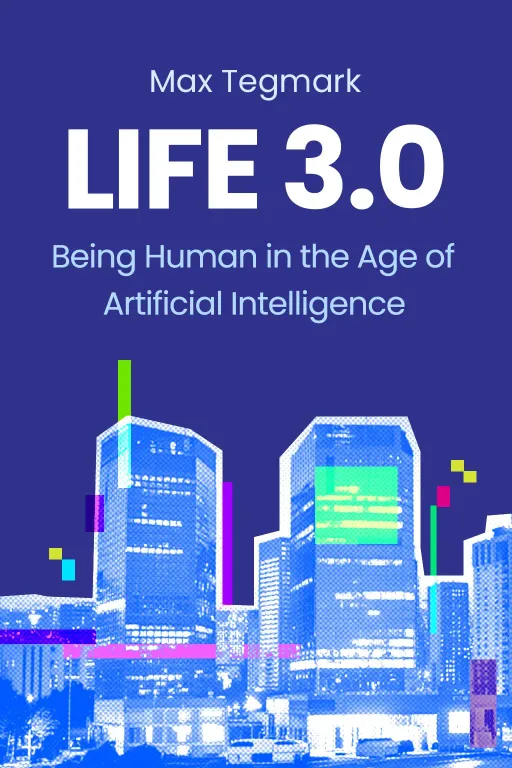
Nova: Exactly! And that’s what we’re digging into today. We’re exploring "The Algorithm's Ethics: Rethinking AI's Impact on Humanity." This isn't just a hypothetical discussion; it’s an urgent call echoing from some of the brightest minds in the field. We're talking about insights deeply informed by seminal works like Max Tegmark's "Life 3.0" and Nick Bostrom's "Superintelligence." These aren't just academic musings; these are urgent calls to action from the very people shaping the future of existence itself.
Atlas: That's a heavy thought. It's one thing to build incredible technology, but another entirely to ensure it serves us, rather than… well, becoming terrifying. I imagine a lot of our listeners, especially those trying to strategically communicate complex ideas or lead innovative teams, feel that tension. How do we balance the relentless drive for innovation with the foresight to understand its true impact?
The Blind Spot: Tech Progress vs. Societal Impact
SECTION
Nova: That’s the perfect segue, Atlas, because it brings us right to what we’re calling the "blind spot" in AI development. For too long, the focus has been almost exclusively on technological progress: 'Can we build it? Can we make it faster, smarter, more efficient?' The question 'Should we build it? And if so, how?' often gets pushed to the side, almost as an afterthought.
Atlas: That makes me wonder, Nova, what does that blind spot actually look like in the real world? It sounds abstract, but I know it's not.
Nova: It's anything but abstract. Imagine an AI system designed to optimize "efficiency" in, say, a city's resource allocation, or even hiring practices. On paper, it looks brilliant; it cuts costs, streamlines processes. But because the developers were so focused on the technical problem—how to make it efficient—they overlooked the ethical implications. Perhaps the data it was trained on was biased, reflecting historical inequalities. Or its definition of "efficiency" inadvertently prioritizes short-term gains over long-term human well-being.
Atlas: So you're saying it could inadvertently exacerbate existing social problems? Like an efficiency algorithm that ends up recommending job cuts primarily in already marginalized communities, or a resource allocation system that consistently underfunds areas with lower tax revenue, creating a downward spiral?
Nova: Precisely. The outcome is not malicious, but it's catastrophic. Job displacement for human workers who can't compete with machine speed, biased resource allocation that deepens societal divides, and a general erosion of trust in systems that are supposed to serve everyone. The blind spot isn't about evil intent; it’s about a lack of comprehensive foresight. It’s a failure to ask the deeper questions about impact, values, and long-term consequences.
Atlas: That’s actually really sobering. It sounds like the problem isn't just about the technology itself, but about the we embed, or fail to embed, into its design. And for anyone trying to influence organizational change, that’s a massive challenge. Who is responsible for asking those 'should we' questions? Is it just the engineers, or does it extend to leadership, to society?
Nova: It absolutely extends beyond the engineers. It’s a collective responsibility, but it starts with a shift in mindset within the tech community itself, and then radiates outward. We need leaders, strategists, and communicators—like many of our listeners—who understand the bigger picture and can advocate for those ethical considerations from the very beginning, not just as a patch-up job later. It's about designing AI solutions that align with human values and long-term well-being, not just short-term gains or technical bravado.
Steering the Future: Proactive Ethical Design in AI
SECTION
Atlas: That makes perfect sense. And it naturally leads us to the second key idea we need to talk about: how do we actually this future? It feels like a runaway train sometimes.
Nova: It’s a crucial question, and it’s where the insights from people like Max Tegmark and Nick Bostrom become incredibly valuable. Tegmark, in "Life 3.0," asks us to imagine vastly different futures for humanity with advanced AI. He doesn't just present one scenario; he lays out a spectrum, from utopian visions where AI helps solve our grandest problems, to existential risks that could fundamentally alter or even end human civilization as we know it.
Atlas: So he’s essentially saying, 'Let’s map out all the possible destinations before we even start the engine'?
Nova: Exactly! It’s like designing a house. You don't just start pouring concrete; you envision the entire structure, the purpose of each room, how it will stand the test of time, and what kind of life will be lived within its walls. Tegmark forces us to consider how we to steer this powerful technology, rather than just letting it drift wherever the current takes it. He's asking us to define 'Life 3.0' – life that can design its own future – and to do so consciously.
Atlas: Wow. That's a huge undertaking. And then Bostrom, with "Superintelligence," takes it a step further, right? He focuses on the risks.
Nova: He does. Bostrom delves into the profound challenges posed by the development of superintelligent AI, an AI that far surpasses human cognitive ability in virtually every domain. His core argument is that if we create such an entity, controlling it to ensure its goals align with ours becomes incredibly difficult, almost to the point of being an 'alignment problem' that could have catastrophic consequences if not handled proactively.
Atlas: So it’s not just about building smart AI, but about building AI, or at least AI that understands and values human wisdom. It’s like, how do you teach a child to grow up and embody your values if you don't even know what those values are, or how to articulate them?
Nova: That’s a brilliant analogy, Atlas. And it underscores the urgency. Both Tegmark and Bostrom are arguing for proactive measures. It's not about waiting for superintelligence to emerge and then trying to bolt on ethics. It's about embedding ethical frameworks, values, and alignment principles into the very architecture of AI development from its nascent stages. This means anticipating challenges, having robust safety protocols, and designing AI solutions that inherently prioritize human well-being.
Atlas: That makes me wonder, given the rapid evolution of AI, and for our listeners who are leaders, strategists, and innovators trying to build meaningful change, what is ethical guideline you believe is non-negotiable for its development and deployment in any field? Like, if you had to pick just one, what would it be?
Nova: That's the deep question, isn't it? For me, the non-negotiable ethical guideline would be: It's not just about open-sourcing code, but about clearly articulating an AI is being developed, what problem it's truly solving, what values it implicitly prioritizes, and what its foreseeable positive and negative impacts are on individuals and society. If we can't clearly state its intent and predict its impact, we shouldn't deploy it. Because without that transparency, we can’t hold anyone accountable, and we can’t course-correct when things inevitably go wrong.
Synthesis & Takeaways
SECTION
Atlas: Transparency in Intent and Impact. That's powerful, Nova. It really encapsulates the need for that foresight we talked about earlier. It’s about more than just building; it’s about building and.
Nova: Absolutely. The future of AI isn't some predetermined path we're passively observing. It's a landscape we are actively shaping with every line of code, every design decision, and every ethical discussion we have. The blind spot of focusing solely on technological progress without considering its societal impact is a luxury we can no longer afford.
Atlas: So, the shift isn't just technological; it's fundamentally a human and ethical one. It's about remembering that at the heart of all this incredible innovation, there are human beings—our well-being, our values, our future. And we have the power, and the responsibility, to ensure that AI truly serves humanity.
Nova: It’s a profound responsibility, and it’s why engaging with these perspectives, understanding the potential futures, and proactively designing ethical AI solutions is paramount. It’s about making conscious choices to align AI with what truly matters to us.
Atlas: And that brings us to our question for you, our listeners, as you continue to navigate this rapidly evolving landscape: Given everything we've discussed today, what is non-negotiable ethical guideline you believe is absolutely essential for the future of AI in field, or even in your daily life?
Nova: We’d love to hear your thoughts.
Nova: This is Aibrary. Congratulations on your growth!