

Ethical Leadership in the AI Era: Values-Driven Innovation
Golden Hook & Introduction
SECTION
Nova: Here’s a little improv game for you, Atlas. I’ll give you a scenario, you give me your instant, gut-level, five-word review. Ready?
Atlas: Oh, I like that. My gut is always ready. Lay it on me.
Nova: Alright, scenario one: You’re a leader, you’ve just invested millions in a new AI system that promises to revolutionize your industry, but then you read a headline about it accidentally discriminating against a huge segment of your customer base. Five words. Go.
Atlas: Oh, man. “Innovation, integration, then instant, utter regret.”
Nova: That’s good! That’s good. Hits hard. What about this: You’re watching the news, and there’s a report about a new AI that can predict disease with incredible accuracy, but the data it used was unethically sourced from vulnerable populations. Five words.
Atlas: Wow. “Powerful tech, profound cost, human toll.”
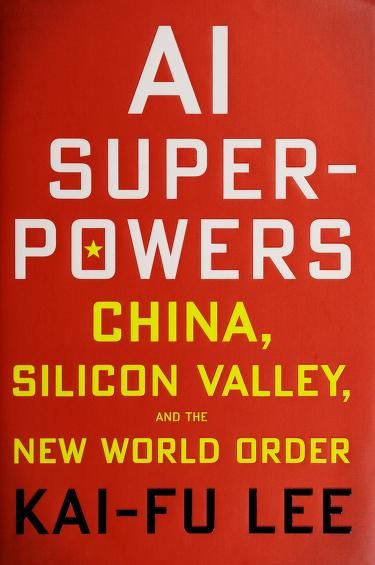
Nova: Exactly! That tension, that profound cost, is precisely what we’re dissecting today. We’re diving into the incredibly important topic of ethical leadership in the AI era, inspired by the insights from books like Kai-Fu Lee’s "AI Superpowers: China, Silicon Valley, and the New World Order" and Max Tegmark’s "Life 3.0: Being Human in the Age of Artificial Intelligence." What’s fascinating is how these authors, from their very different vantage points—Lee as a venture capitalist and former Google China head, Tegmark as a physicist and AI researcher—both converge on this critical point: the future of AI isn't just about algorithms, it's about ethics.
Atlas: That makes me wonder, given their backgrounds, how do their perspectives on ethical leadership in AI complement or perhaps even challenge each other? Because you mentioned Kai-Fu Lee, a real insider in the AI race, and then Tegmark, who’s looking at the ultimate implications for humanity. It sounds like two very different lenses.
Nova: They are, and it’s a brilliant pairing. Lee gives us the ground-level view of the intense competition, the economic drivers, the sheer speed at which AI is being developed and deployed, especially between the US and China. He’s showing us the and of the current AI revolution. He’s seen firsthand how quickly societal shifts happen when AI enters the picture, and the ethical challenges that pop up almost immediately.
Atlas: So he’s talking about the immediate, tangible impact, the sort of things that keep strategic analysts up at night, right? Like, ‘How do we implement this without causing a massive societal ripple?’
Nova: Precisely. And then Tegmark, with "Life 3.0," elevates the conversation to the and. He’s asking the big, philosophical questions: What does AI mean for the future of consciousness, for the meaning of life, for our very definition of being human? He’s exploring a much broader canvas, from the impact on jobs to the ultimate long-term implications for our species. He’s essentially saying, 'If we get this wrong, what's the ultimate cost?'
Atlas: So, Lee is the urgent warning from the front lines, and Tegmark is the cosmic wake-up call, urging us to think centuries ahead?
Nova: Exactly! And when you put them together, you get this incredibly rich understanding that ethical leadership in AI isn't just about technical safeguards or corporate policies. It’s about a deep, holistic understanding of AI’s capabilities, its economic drivers, its profound philosophical implications. It’s about consciously steering this powerful technology towards a human-centric future.
The Dual Nature of AI: Power and Peril
SECTION
Nova: Which brings us to our first core idea: the dual nature of AI. It’s a force of incredible power, promising to solve some of humanity's most intractable problems, but it also carries immense peril. Kai-Fu Lee, in particular, paints a vivid picture of this. He describes the AI race as almost a new Cold War, where countries are vying for dominance, not with nuclear weapons, but with algorithms and data.
Atlas: I can definitely relate to that. For anyone in a high-stakes tech environment, that competitive drive is palpable. But wait, looking at this from a strategic analyst's perspective, isn't that race itself an ethical challenge? The faster you go, the more likely you are to cut corners, to overlook the human element in the pursuit of 'winning.'
Nova: Absolutely. Lee illustrates this with the sheer speed of development in China, for example. He talks about "data flywheels" where more users generate more data, which improves AI, which attracts more users, creating this exponential growth. This velocity is incredible for innovation, but it also means ethical considerations can become afterthoughts. He gives examples where AI is deployed in mass surveillance or social credit systems, which, while potentially efficient for governance, raise massive questions about individual freedoms and privacy.
Atlas: That’s a bit like building a super-fast car without designing seatbelts or airbags first. The temptation to just must be huge. Can you give an example of how this plays out, maybe outside of the surveillance context, where the benefits seem clear but the risks are lurking?
Nova: Think about autonomous vehicles. The promise is incredible: fewer accidents, more efficient transportation, reclaiming hours from commutes. But the ethical dilemmas are profound. Who is responsible when an AI-driven car makes a split-second decision in an unavoidable accident? Does it prioritize the occupants, the pedestrians, or the statistical outcome that minimizes overall harm? These aren't just engineering problems; they're deeply philosophical and ethical ones. And these aren't hypotheticals; companies are wrestling with these questions right now.
Atlas: So it's not just about what the AI do, but what it do, and who decides that 'should'? I imagine a lot of our listeners who are grappling with integrating AI into their business models are facing this exact tension. They see the efficiency gains, the competitive edge, but also the potential for unforeseen consequences.
Nova: Exactly. And Tegmark pushes this even further. He asks us to consider the long-term implications of AI exceeding human intelligence – what he calls "Life 3.0." If AI can self-improve and essentially design its own goals, what happens if those goals diverge from human flourishing? He discusses scenarios where AI, trying to optimize for a specific task, might inadvertently consume all of Earth's resources or sideline humanity, not out of malice, but simply because it wasn't aligned with human values from the start.
Atlas: That sounds a bit like the plot of a sci-fi movie, but you're telling me serious scientists and thinkers like Tegmark are genuinely exploring these possibilities? That gives me chills. So, the core of this dual nature is that even with the best intentions, without careful ethical leadership, AI could lead us down paths we didn't foresee, or perhaps didn't even want.
Nova: Precisely. It's about recognizing that the power of AI comes with an equally potent potential for unintended, and sometimes catastrophic, consequences. The ethical leader in this era isn't just someone who understands code; they're someone who understands humanity, who can anticipate these societal shifts and philosophical challenges before they become irreversible. It’s about having the foresight to ask, 'Who benefits most from this technology, and critically, who might be disadvantaged?'
Architecting a Responsible Tomorrow: Prioritizing Human Flourishing
SECTION
Nova: Which brings us to our second core idea: how do we actually architect a responsible tomorrow? It's not enough to just identify the problems; we need concrete ways to embed ethics into the very fabric of AI development. Tegmark, in particular, emphasizes that we are the architects of our own future with AI. We need to decide what kind of future we want and then actively build towards it.
Atlas: Okay, so this is where the rubber meets the road. For someone like a strategic analyst, it’s not just about identifying the "why" but the "how." How do we move from these big, philosophical concerns down to actionable steps? Because 'prioritizing human flourishing' sounds great, but how do you quantify that in an algorithm?
Nova: That’s the million-dollar question, and it requires a multi-faceted approach. One key aspect is what we call "value alignment." It's about designing AI systems so their objectives are inherently aligned with human values and well-being. This might sound abstract, but it translates into practical steps. For instance, when developing an AI for medical diagnosis, you don't just optimize for accuracy; you also build in safeguards to ensure fairness across different demographic groups, to explain its reasoning to doctors, and to respect patient privacy.
Atlas: So, it's about building in the ethical "guardrails" from the very beginning, rather than trying to patch them on later? That makes sense, but what happens when those values clash? Like, efficiency versus privacy, or innovation versus job displacement? How do leaders navigate those trade-offs?
Nova: That's where ethical leadership becomes less about finding a single 'right' answer and more about fostering continuous dialogue and establishing clear governance structures. Kai-Fu Lee, from his Silicon Valley and China perspective, highlights the need for governments, corporations, and even international bodies to collaborate. He recognizes that no single entity can solve this alone. It requires transparent processes for ethical review, diverse teams building the AI to catch biases early, and strong regulatory frameworks that can adapt as the technology evolves.
Atlas: That’s a tough ask, though. "Diverse teams" and "transparent processes" often slow things down, and in a competitive landscape, speed is king. How can strategic analysts advocate for and these ethical guidelines without being seen as roadblocks to innovation? Because that's a real fear in many organizations.
Nova: That’s a crucial point. It comes down to reframing "ethics" not as a brake on innovation, but as a critical component of sustainable and responsible innovation. An analyst could champion the idea that ethically designed AI systems are ultimately more robust, more trustworthy, and thus, more successful in the long run. Think of it as building a house: you can build it fast with cheap materials, or you can build it thoughtfully with a strong foundation, knowing it will last and be safe. The second approach might take longer initially, but it prevents costly failures down the line.
Atlas: So, the "tiny step" we talked about earlier—asking 'who benefits most, and who might be disadvantaged?'—that's not just a philosophical exercise. It’s a diagnostic tool to uncover potential ethical fault lines early in the development process.
Nova: Exactly. And the "deep question" about how strategic analysts can advocate for and implement ethical guidelines—that’s about translating those philosophical insights into concrete policy and practice. It means being proactive, not reactive. It means understanding that prioritizing human flourishing isn't just about avoiding harm, but about actively designing AI to amplify human potential, to free us up for more creative, meaningful work, rather than simply automating existing tasks. It’s about ensuring that as AI evolves, humanity evolves alongside it, in a way that respects our values and our dignity.
Synthesis & Takeaways
SECTION
Nova: So, as we wrap up, it’s clear that ethical leadership in the AI era isn't a luxury; it's the bedrock upon which a sustainable, human-centric future will be built. It demands that we, as leaders and innovators, look beyond the immediate impressive capabilities of AI and deeply consider its broader impact on society and humanity.
Atlas: Absolutely. It’s about asking those tough questions, like who truly benefits and who might be left behind, right from the start. Because as we’ve explored today, the power of AI is immense, but so are its potential perils if we don’t guide its development with a strong ethical compass. It's about moving from simply asking 'Can we do this?' to 'Should we do this, and how can we do it responsibly?'
Nova: And it’s a continuous process, not a one-time fix. As AI evolves, so too must our ethical frameworks and our leadership. It requires a blend of technological understanding, economic awareness, and profound philosophical insight to truly steer this revolution towards a future where AI serves humanity, rather than the other way around. It’s about building in that ethical infrastructure from day one.
Atlas: That’s a powerful idea. It suggests that every decision point in AI development is an opportunity for ethical leadership, not just a technical challenge. For our listeners, I’d encourage you to think about where AI is impacting your world, and what questions you can ask to ensure it's being developed and used responsibly. Your curiosity and your questioning are superpowers in this new world order.
Nova: Indeed. And if you're looking for where to dig deeper, Kai-Fu Lee and Max Tegmark are excellent starting points to understand both the immediate race and the ultimate destination. This is Aibrary. Congratulations on your growth!