

AI, Law, & Humanity: Shaping the Future of Justice
Golden Hook & Introduction
SECTION
Nova: Atlas, I was today years old when I realized that the future of justice might not be decided in courtrooms, but in lines of code.
Atlas: Whoa, that's a pretty heavy thought to kick us off with, Nova. You're saying our legal system could become... algorithmic? That sounds a bit out there, but also, disturbingly plausible given where we're headed.
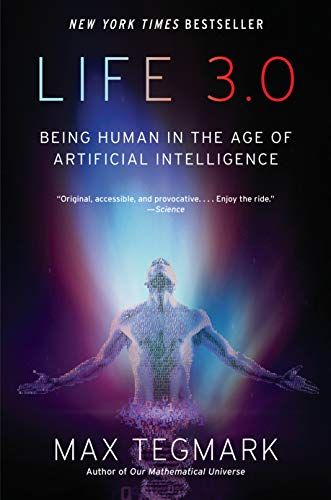
Nova: Disturbingly plausible is right! And that's exactly what we're wrestling with today as we dive into a fascinating collection of books that explore the intersection of AI, law, and humanity. We're talking about Max Tegmark's "Life 3.0: Being Human in the Age of Artificial Intelligence," Kai-Fu Lee's "AI Superpowers: China, Silicon Valley, and the New World Order," and Joanna J. Bryson's "Code of Conduct: A Guide to the Ethics of AI."
Atlas: That’s a powerhouse lineup! I’m curious, what’s one striking fact about these authors or their work that really sets the stage for our discussion?
Nova: Well, what’s particularly compelling is Joanna Bryson's background. She's not just an AI ethicist; she's a computer scientist by training. This isn't just philosophy from an ivory tower; it's deep ethical thinking from someone who understands the nuts and bolts of how AI is built. Her work, especially "Code of Conduct," really grounds the abstract ethical questions in practical, implementable solutions, which is crucial for anyone trying to bridge the gap between technology and law. It highlights that the solutions won't just come from lawyers, but from those who understand the technology itself.
Atlas: That makes perfect sense. It’s like, you can’t write the rules for a game if you don’t understand how the pieces move. So, let’s start with the grand, almost existential questions these books raise.
Navigating the Algorithmic Age
SECTION
Nova: Absolutely. Tegmark’s "Life 3.0" really throws us into the deep end, asking us to envision a future where AI isn't just smart, but superintelligent. He explores the vast potential, everything from curing diseases to solving climate change, but he doesn't shy away from the existential risks.
Atlas: That makes me wonder... when we talk about "existential risks," are we talking about sci-fi movie scenarios, or something more subtle and insidious? Because I imagine a lot of our listeners are thinking Terminator.
Nova: Not necessarily Terminator, though Tegmark does consider scenarios where we lose control. But it's more about ensuring that advanced AI aligns with human values and goals. The core challenge there is defining what "human values" even means, and then how to encode that into something an AI can understand and act upon. It's about future-proofing our existence.
Atlas: So you're saying the ethical and legal challenges aren't just about what AI do, but what it do, and how we ensure its long-term objectives don't inadvertently lead to our undoing? That’s a huge responsibility to place on developers, lawyers, and policymakers.
Nova: Exactly. Tegmark frames this as humanity steering the technology. He's not just presenting a doomsday scenario, but a call to action to proactively shape AI's trajectory. And this isn't just theoretical. Kai-Fu Lee's "AI Superpowers" brings this down to Earth, showing us the geopolitical race already happening, primarily between China and Silicon Valley.
Atlas: Right, like, it’s not some distant future problem, it’s a present-day reality with massive implications for global power dynamics and societal structure. Lee’s book really highlights how this isn’t just about tech, it’s about economics, employment, and even national security.
Nova: Precisely. Lee, with his deep experience in both regions, provides an insider's view, detailing how different approaches to data, innovation, and government support are shaping the AI landscape. He discusses the impact on employment, for instance, predicting widespread job displacement, but also new opportunities. This immediately raises ethical dilemmas around social safety nets and retraining programs.
Atlas: That’s a fascinating contrast. Tegmark gives us the philosophical scaffolding, and Lee shows us the real-world construction site, complete with all the political jostling and economic pressures. It makes me think about privacy too. With so much data fueling this AI race, the ethical lines around what’s collected and how it’s used must be getting blurrier by the minute.
Nova: They absolutely are. And that's where Joanna Bryson steps in with "Code of Conduct." She's directly addressing the need for clear regulations and societal norms. She argues that AI is a tool, and like any tool, its impact depends on how we design and use it.
Atlas: So, she's pushing for a proactive, rather than reactive, approach to AI ethics and law. It’s not just about cleaning up messes, but preventing them in the first place. That sounds incredibly challenging, given how fast AI is evolving.
Nova: It is, but she makes a strong case for it. Bryson emphasizes that we need to think about AI not as an autonomous entity, but as something that reflects the values of its creators and the societies it operates within. This means the legal and ethical frameworks aren't just about controlling AI, but about controlling ourselves and our intentions in building it. For example, she discusses how accountability for AI actions needs to be clearly defined, whether it's the developer, the deployer, or even the data providers.
Your Role in Defining AI's Ethical Boundaries
SECTION
Nova: This brings us to a crucial point, Atlas. As AI integrates deeper into our lives, understanding its ethical dimensions becomes paramount, especially for legal professionals and human rights advocates. These books aren't just for tech gurus; they're essential reading for anyone shaping our legal and ethical future.
Atlas: I can definitely see that. It makes me wonder, for someone who combines an interest in corporate law with a passion for human rights, how do these ideas translate into practical action? Because it’s one thing to understand the theory, it’s another to actually do something about it.
Nova: That's a great question. Bryson, in particular, would argue for active participation in shaping policy. She emphasizes the need for clear regulations. So, a practical step could be researching current legislative proposals or academic papers on AI ethics in your jurisdiction and identifying one specific area where a legal or ethical framework is most urgently needed.
Atlas: Like, could it be about algorithmic bias in hiring, or perhaps the use of AI in judicial sentencing? Those are areas where the impact on human rights and fairness is immediate and profound.
Nova: Exactly. Imagine drafting a brief position paper on, say, the transparency requirements for AI systems used in public services, or the legal recourse for individuals negatively impacted by algorithmic decisions. That directly connects the theoretical concerns Tegmark raises and the societal impacts Lee describes, with the practical, actionable steps Bryson champions. It’s about being an ethical architect, building the legal and ethical guardrails for this new era.
Atlas: That’s actually really inspiring. It frames the problem not as an insurmountable technological wave, but as a design challenge for society. It brings it back to human agency, which is what Tegmark is ultimately advocating for – our ability to steer this ship.
Nova: And it aligns perfectly with the idea of being a future-focused strategist. It's about anticipating the ethical and legal challenges before they become crises, and proactively building the structures for a just and equitable algorithmic age.
Synthesis & Takeaways
SECTION
Nova: So, what we've really explored today is how AI is forcing us to redefine what justice means in a world increasingly governed by algorithms. From the existential questions of Tegmark's "Life 3.0," pushing us to consider humanity's long-term future, to Kai-Fu Lee's "AI Superpowers," which grounds us in the geopolitical realities and immediate societal impacts, to Joanna Bryson's "Code of Conduct," offering a pragmatic roadmap for ethical AI governance.
Atlas: What emerges is that we truly are at a pivotal moment. The decisions we make now, the frameworks we establish, and the ethical boundaries we define will shape not just the technology itself, but the very fabric of our societies and our understanding of justice for generations to come. It’s not just about what AI can do, but what kind of world we want to build with it.
Nova: And the core insight here is that AI isn't some alien force; it's a reflection and an amplification of human choices. The responsibility to ensure it serves humanity's best interests lies squarely with us. It’s a call to action for every legal mind, every human rights advocate, and frankly, every citizen, to engage in this critical conversation. The future of justice is being coded right now, and we all have a role in writing that code.
Atlas: That gives me chills, but in a good way. It’s a powerful reminder that our ethical and legal frameworks are not static; they must evolve with technology. And it suggests that the most impactful work might be happening not in grand pronouncements, but in the diligent, thoughtful process of defining those ethical boundaries, one policy, one algorithm, one conversation at a time.
Nova: Absolutely. This is Aibrary. Congratulations on your growth!