

Unmasking the Narrative: How to See History's Hidden Hand
Golden Hook & Introduction
SECTION
Atlas: You know, Nova, I've been thinking, what if everything we thought we knew about history—those neat timelines, the heroic figures, the grand narratives—was actually… a well-constructed story? Not necessarily a lie, but perhaps, a heavily edited version.
Nova: Oh, I love that, Atlas. Because it absolutely is. We often treat history like a fixed, objective truth, something handed down from on high. But the moment you start to unmask that narrative, you realize it's a dynamic, living thing, constantly being shaped and reshaped. And that's exactly what we're diving into today.
Atlas: So you're saying it's less like a stone tablet and more like a choose-your-own-adventure book, but someone else got to choose all the pages for us?
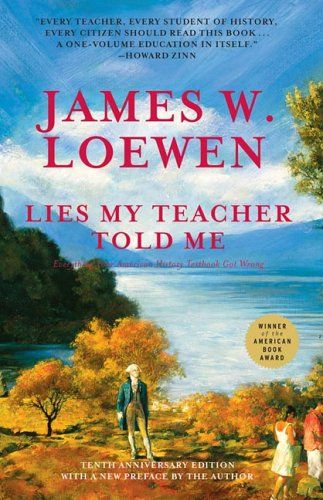
Nova: Precisely! And two brilliant minds who fundamentally shifted how we understand this are Howard Zinn with his groundbreaking "A People's History of the United States," and James W. Loewen, who pulled back the curtain on our textbooks in "Lies My Teacher Told Me." They're not just adding footnotes; they’re challenging the very foundation of how we make sense of our past, and by extension, our present.
Atlas: That makes me wonder, if the history we've been taught isn't the full picture, then what exactly are we missing? And why has it been kept from us?
The Power of the Margins: Reclaiming Suppressed Histories
SECTION
Nova: That's the perfect jumping-off point. Zinn, in particular, really forced us to confront the idea that history has traditionally been written by the victors, or at least, by those in power. His work isn't just about adding new facts; it's about fundamentally shifting perspective. He says, look, if you tell the story of America through the eyes of presidents and generals, you get one narrative. But if you tell it through the eyes of enslaved people, striking workers, or Indigenous communities, you get a completely different, often uncomfortable, truth.
Atlas: But wait, isn't history just... what happened? I mean, shouldn't we just focus on the facts? Why does whose perspective it is matter so much?
Nova: It matters because facts don't speak for themselves, Atlas. They're interpreted, selected, and arranged. Take, for instance, the story of Christopher Columbus. The traditional narrative paints him as a heroic explorer "discovering" America. It's a story of courage and vision.
Atlas: Right, that's what I learned in school. The brave explorer.
Nova: Exactly. But Zinn flips that on its head. He asks, what about the Arawak people who were already there? Their perspective isn't one of discovery; it's one of invasion, enslavement, and genocide. Suddenly, Columbus isn't just an explorer; he's a catalyst for immense suffering. When you hear their story, the "discovery" narrative feels incomplete, even cruel. It's about whose suffering is acknowledged, whose victories are celebrated, and whose voices are simply erased.
Atlas: Wow, that's kind of heartbreaking. It's like we've been listening to only one side of a very complex argument for centuries. I imagine a lot of our listeners, especially those who are deep divers into understanding human experience, would find that omission ethically troubling. It’s not just an academic exercise, is it? It has real-world implications for how we understand justice, equality, and even our own identities today.
Nova: Absolutely. Zinn’s work isn't just an academic exercise in historical revisionism. It's a profound ethical challenge. By deliberately suppressing the voices of the marginalized—whether they are women, people of color, the poor, or dissidents—we lose critical insights into the true nature of power, conflict, and resistance. It’s about understanding that power structures actively work to maintain their narrative, because that narrative justifies their existence and their actions. When you reclaim those suppressed histories, you empower those voices, and you start to dismantle the very foundations of those power structures. It reveals the machinery behind the curtain.
Atlas: So, Zinn basically gives us a toolkit to understand that history isn't just a record, it’s a weapon, or a tool, depending on whose hand is wielding it. And by looking at the margins, we see the whole picture more clearly.
Unmasking the Myth: How Textbooks Shape Our Reality
SECTION
Nova: And that naturally leads us to the second key idea we need to talk about, which often acts as a critical counterpoint to what Zinn unveiled: James W. Loewen's "Lies My Teacher Told Me." If Zinn showed us tells history, Loewen shows us it's told, specifically through the seemingly innocuous medium of our high school textbooks.
Atlas: Wait, our textbooks? The ones we trusted implicitly, the ones that were supposed to be the objective truth? Are you telling me they were... actively misleading us? That sounds a bit out there.
Nova: Well, "misleading" is a strong word, but Loewen argues that they often perpetuate myths and simplifications that serve specific nationalistic or class-based agendas. He analyzed twelve popular American history textbooks and found a consistent pattern: they sanitize controversial figures, gloss over systemic injustices, and present a largely uncritical, feel-good version of history.
Atlas: Can you give an example? Like how? Because I remember my textbooks being pretty straightforward.
Nova: Think about Helen Keller. Everyone knows her story, right? The blind and deaf girl who overcame incredible odds, learned to communicate, and became an inspiration. It’s a wonderful, uplifting narrative.
Atlas: It is! She was amazing.
Nova: And she was. But Loewen points out that textbooks almost always stop there. What they omit is that Helen Keller became a passionate socialist, a suffragist, an anti-war activist, and a vocal critic of capitalism. She believed that blindness and poverty were interconnected, and she fought for radical social change. Our textbooks strip away her radical politics, presenting her as a sanitized, palatable symbol of individual triumph rather than a complex figure who challenged the very systems she lived in.
Atlas: That's incredible! So, they're not overtly lying, but they're intentionally omitting crucial parts of the story to fit a certain narrative? But why would they do that? Why not just give us all the facts?
Nova: Loewen suggests that these omissions and simplifications aren't always malicious, but they’re deeply ingrained. Textbooks aim to create good citizens, often by fostering patriotism and a sense of national unity. To do that, they often avoid anything that might be too complex, too critical, or too divisive. They want to present a coherent, positive narrative, even if it means sacrificing nuance or uncomfortable truths. It implicitly teaches us that our leaders are always noble, our institutions always just, and our progress always linear. It reinforces the status quo.
Atlas: That’s a great way to put it. It makes you realize how much of our understanding of the world is shaped not just by what we're told, but by what we're told. It’s a powerful lesson for anyone trying to analyze complex systems, to always look for the missing pieces. This makes me wonder, how many of those myths are we still unknowingly carrying around today?
Synthesis & Takeaways
SECTION
Nova: Exactly, Atlas. When you combine Zinn’s focus on the voices from the margins with Loewen’s critique of how narratives are constructed in our education system, you get this incredibly potent lens. It shows us that history isn't a dead subject in a dusty book; it's a living, breathing, often contested narrative that profoundly impacts our present. It's about understanding that the stories we tell ourselves about the past dictate how we understand who we are, and what we're capable of, today.
Atlas: So, it's not just about historical facts, it’s about critical thinking. It’s about learning to question the obvious, to dig deeper, to seek out those alternative perspectives. It’s about becoming an active participant in understanding history, rather than just a passive recipient.
Nova: Precisely. And that brings us to our deep question for today, for all our listeners who are keen on seeing history’s hidden hand. What accepted historical narrative have you recently questioned, and what new perspective emerged when you looked at it differently?
Atlas: Yeah, I love that. Thinking about Zinn and Loewen, it compels you to not just accept the first story you hear, whether it's about a national hero or a global event. It's an invitation to be an ethical explorer of information, to challenge conventional thinking, and to truly understand the profound wisdom that comes from seeing the world through multiple lenses. It feels like a superpower, honestly, to be able to unmask those narratives.
Nova: It absolutely is. And it's a superpower that empowers us to make more informed decisions about our future. This is Aibrary. Congratulations on your growth!