

The Stoic Compass: Navigating Chaos with Inner Calm
Golden Hook & Introduction
SECTION
Nova: You know, we spend so much energy trying to rearrange the deck chairs on the Titanic of our lives, hoping if we just get the external circumstances right, we'll find calm.
Atlas: Oh, I know that feeling! It’s like trying to herd cats with a laser pointer – utterly futile, but we keep trying.
Nova: Exactly! And it's exhausting, isn't it? We pour all this effort into manipulating what's outside of us – our jobs, our relationships, the news cycle, even the traffic on our morning commute – only to feel more and more out of control.
Atlas: That’s going to resonate with anyone who struggles with managing high-pressure situations. I imagine a lot of our listeners, the disciplined strategists out there, feel this constant pull to optimize everything external.
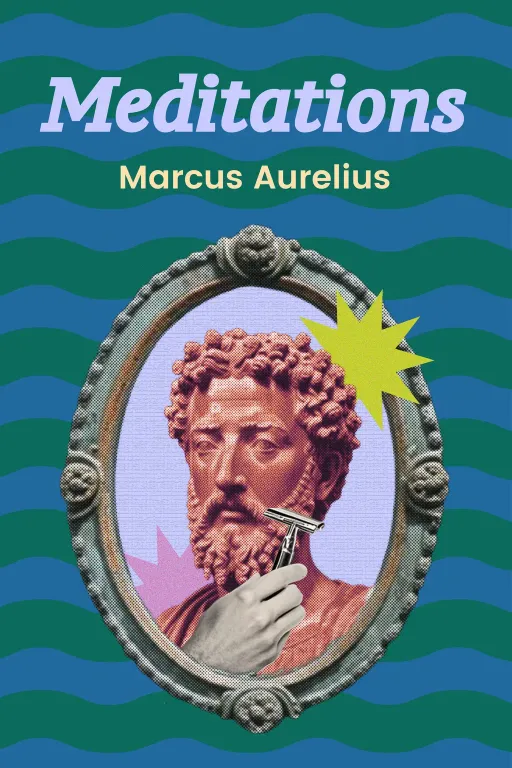
Nova: Well, today, we're diving into a collection of ancient wisdom that suggests a radical alternative to that exhausting pursuit. We're talking about the core tenets found in classics like "Meditations" by Marcus Aurelius and "Letters from a Stoic" by Seneca. What's fascinating is that Marcus Aurelius wrote "Meditations" not for publication, but as a private diary, a personal guide to self-improvement and philosophical reflection amidst the immense pressures of being a Roman Emperor.
Atlas: Wow, a Roman Emperor writing a self-help journal. That’s incredible.
Nova: It is! It’s incredibly intimate, offering a direct window into the mind of one of history's most powerful yet self-disciplined leaders. He wasn't just theorizing; he was living this philosophy in the crucible of absolute power and constant threat. And that brings us directly to our first big idea: the illusion of external control.
The Illusion of External Control
SECTION
Nova: Most of us operate with this massive blind spot. We genuinely believe that if we can just fix the external circumstances, if we can just get everything lined up perfectly, then we'll be calm, we'll be happy, we'll be resilient. But Stoicism, right from the start, challenges that. It says our power isn't in controlling the uncontrollable outside world.
Atlas: So you’re saying we're essentially chasing a mirage? All that effort we put into controlling outcomes, it's actually misdirected?
Nova: Precisely. Think of it like this: imagine a brilliant project manager, someone who meticulously plans every single detail of a major launch. They've got Gantt charts stretching for miles, contingency plans for their contingency plans. Their entire sense of worth and success is tied to this project rolling out flawlessly.
Atlas: Oh, I've seen that person. I might that person sometimes. They're driven by impact and purpose, right? It’s about building something great.
Nova: Absolutely. They're dedicated, they're strategic. But then, an unforeseen market shift happens, or a key team member faces a personal crisis and has to step away. Suddenly, all those meticulously planned variables are thrown into chaos.
Atlas: And the project manager, who tied their inner calm to those external outcomes, just spirals.
Nova: Exactly! Their frustration mounts, they work sleepless nights, they feel this gnawing sense of powerlessness. They might even blame themselves, or external forces, for things that were fundamentally outside their sphere of influence. The distress they feel isn't from the event itself, but from their that they should have been able to control it.
Atlas: But wait, for someone who's all about strategic leadership and building, isn't that just throwing in the towel? Are you suggesting we just… don't plan? Don't strive for excellence? That sounds a bit out there.
Nova: Not at all, Atlas! That's the crucial distinction. It’s not about throwing in the towel on action or ambition. It’s about picking up a different tool. And that naturally leads us to the second key idea we need to talk about, which often acts as a counterpoint to what we just discussed: mastering your inner world.
Mastering the Inner World: Perception and Response
SECTION
Nova: The Stoics, particularly Marcus Aurelius and Seneca, offer us this incredible framework called the 'dichotomy of control.' It’s a simple but profound idea: some things are within our control, and most things are not. Our opinions, our impulses, our desires, our aversions – these are ours. Our bodies, our possessions, reputation, office – those are not.
Atlas: So basically you’re saying, the traffic jam? Not in my control. My reaction to the traffic jam? Entirely in my control.
Nova: Bingo! And it sounds so simple, but it's incredibly difficult to practice. Marcus Aurelius, in his "Meditations," constantly reminds himself that "If you are distressed by anything external, the pain is not due to the thing itself, but to your estimate of it; and this you have the power to revoke at any moment."
Atlas: That’s a great way to put it. But how do you actually that? How does a busy professional, someone trying to cultivate inner calm amidst constant demands, actually 'choose their response' when everything is hitting the fan?
Nova: Well, Seneca, in his "Letters from a Stoic," gives us a fascinating practice called 'premeditation of evils' or. He would deliberately practice voluntary discomfort – sometimes sleeping on a hard bed, eating plain food, or going without luxuries – not because he enjoyed suffering, but to mentally prepare himself for when real adversity struck.
Atlas: Okay, so it’s like a mental fire drill? Getting your mind ready for the worst, so it's not a shock when it happens?
Nova: Exactly! It strengthens your mental fortitude. Now, let's take our earlier example of the project manager. Instead of being derailed by the unforeseen market shift, imagine this: they choose to perceive it not as a disaster, but as an opportunity.
Atlas: An opportunity for what? To pivot? To innovate?
Nova: Precisely. They reframe the situation. The job loss isn't a personal failure; it's a chance to learn new skills, to pursue that long-held passion, or to reassess their values. The initial shock is still there, because we're human, but the conscious, deliberate choice to reframe the situation changes everything. They focus on their agency in responding, not the event itself, leading to a calm, purposeful action plan.
Atlas: That’s actually really inspiring. It’s about shifting from a victim mindset to an agent mindset. Instead of, "This happened to me," it's "Okay, this happened. Now, how will I choose to respond?" For our resilient builders, that’s a game-changer. It’s about building inner strength, not just external structures.
Synthesis & Takeaways
SECTION
Nova: What Nova's take reveals is that our power truly lies in our judgment and our responses, not in controlling the uncontrollable outside world. It's about recognizing that the external world will always be chaotic. It will always throw curveballs. But our inner world, our perception, our chosen response – that is sacred ground, entirely within our jurisdiction.
Atlas: And that gives me chills, honestly. It brings us back to that deep question: where in your own life can you actively practice this shift? Where can you stop trying to control the uncontrollable, and instead, master your own reactions? If you're a disciplined strategist, an ethical guardian, or a resilient builder, this isn't just philosophy; it's a profound strategic advantage.
Nova: It truly is. Trust your inner wisdom, as it guides your outer strength. Practice those mindful pauses. Reflect on your progress daily. Because the Stoics teach us that growth, true growth, comes from within.
Atlas: What a powerful way to cultivate inner calm and resilience. It's not about avoiding the storms, it's about learning to navigate them with a steady hand, from the inside out.
Nova: Absolutely. This is Aibrary. Congratulations on your growth!