

The Mindful Protocol for Burnout Recovery
Golden Hook & Introduction
SECTION
Nova: The most expensive tool in your professional arsenal is not your software, your network, or your degree. It is your ability to stop caring about things that do not actually matter. Most of us are hemorrhaging cognitive bandwidth on professional micro-crises that, in the grand scheme of a long-term career, are statistically irrelevant.
Atlas: That is a brutal way to start a conversation, but you are hitting a nerve. I see people—smart, capable people—spending three hours agonizing over a phrasing change in an email that the recipient is going to skim for exactly four seconds. It is a massive misallocation of resources.
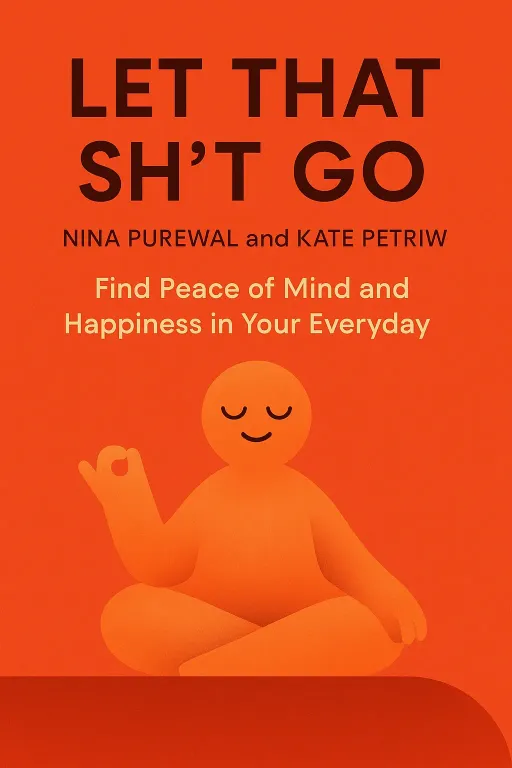
Nova: Exactly. And that is what we are dissecting today. We are looking at two specific frameworks that, when combined, act as a master key for burnout recovery. First, we have the mindfulness approach from Let That Sh*t Go by Nina Purewal and Kate Petriw, which focuses on silencing that relentless inner critic. And second, we are layering in the biological necessity of fun from Catherine Price’s work in The Power of Fun.
Atlas: I have read both of those, and they are interesting because they seem to attack the same problem from opposite ends. One is about subtraction—removing the mental noise—and the other is about addition—adding play back into a system that has become purely mechanical.
Nova: You hit the nail on the head. Purewal and Petriw come at this from a background of high-stress environments where they realized that most of our stress is self-generated. They wrote this book not as a fluffy guide, but as a tactical manual for people who are tired of letting minor professional hiccups ruin their entire week. And then you have Catherine Price, who brings a more scientific, almost clinical lens to the concept of fun. She argues that fun is not a luxury or a dessert; it is a biological requirement for our nervous system to reset.
Atlas: It is a pivot, right? Most of us view fun as something we earn after the work is done, which means we never actually get to it because the work is never done. If we treat it as a biological requirement, like sleep or nutrition, the whole framework shifts.
Nova: That is the shift. We are going to deconstruct how to move from a state of constant, low-level emergency to a state of sustainable, high-impact performance.
The Architecture of the Micro-Crisis
SECTION
Atlas: Let us start with this idea of the micro-crisis. I am curious how you define that, because when you are in the middle of a project, everything feels like a crisis. The server goes down, the client changes the scope, the team misses a deadline. How do you distinguish a real problem from a micro-crisis?
Nova: That is the million-dollar question. Purewal and Petriw suggest that a micro-crisis is any event where your emotional reaction is disproportionate to the actual long-term consequence of the event. Think about the last time you sent an email and realized you forgot to attach the file.
Atlas: Oh, I know that feeling. The heart drops, the stomach churns, you send the follow-up email immediately, and you spend the next ten minutes replaying the error in your head.
Nova: Right. And in that moment, your body goes into fight-or-flight. Cortisol spikes, your focus narrows, and you are essentially burning the same amount of adrenaline you would need to escape a predator. But the actual consequence? Someone waits thirty seconds longer for a file. That is a micro-crisis. It is a glitch in the system that we treat like a system failure.
Atlas: I see where you are going. It is about the gap between the event and our response. If I can shrink that gap, I save my energy for the things that actually move the needle. But how do you stop the physiological response? You can tell yourself it is not a big deal, but your heart is still racing.
Nova: That is where the mindfulness practices they discuss come in. It is not about suppressing the emotion; it is about recognizing the narrative you are attaching to the event. When that email goes out without the attachment, your brain immediately writes a story: I am incompetent, my boss thinks I am a fool, this will ruin my reputation. That narrative is what causes the stress, not the missing file.
Atlas: That is a powerful distinction. The event is neutral; the narrative is the toxic part. So, if I am a listener who is constantly in high-pressure situations, how do I build a system to catch that narrative in real-time?
Nova: You start by treating your inner critic like a noisy, unhelpful employee. Purewal and Petriw suggest a simple exercise: name the critic. Give it a persona. When you start spiraling about that email, you acknowledge it. You say, Oh, that is just my inner critic, let us call him Greg, being dramatic again.
Atlas: That sounds a bit silly, but I can see why it works. It creates distance. It turns an internal truth into an external observation.
Nova: Exactly. It is a classic cognitive behavioral technique. You are separating your identity from the thought. You are not the person who made a mistake; you are the person who is observing a thought about a mistake. Once you have that distance, you can ask the only question that matters: Is this going to matter in a year? If the answer is no, you have permission to let it go.
The Inner Critic as a System Bug
SECTION
Atlas: What about when the inner critic is actually right? I have had moments where I messed up, and the critic was pointing out a genuine flaw in my process. If I just ignore it by calling it a dramatic persona, am I not just avoiding feedback?
Nova: That is a sharp point. And that is where the distinction between constructive critique and the inner critic becomes vital. The inner critic is usually characterized by shame and catastrophic thinking. It says, You are a failure. Constructive feedback is characterized by data and improvement. It says, Your process for tracking attachments is flawed, and you should implement a checklist.
Atlas: So, one is a system update, and the other is a system crash.
Nova: Precisely. If you are getting a notification that you need a process change, that is valuable data. If you are getting a notification that you are a worthless human being, that is a bug. Purewal and Petriw are very clear: we need to learn to distinguish between the two. The inner critic thrives on vagueness. It loves to say, You are going to get fired. It rarely says, You missed a detail on slide four of the presentation, so you should double-check your slides next time.
Atlas: I really like that framing. It turns the inner critic into a data source. If the inner critic is just noise, we filter it out. If it is signal, we process it. But let us talk about the cost of this. If I spend all day filtering my inner critic, that is energy I am not spending on the work itself. Is there a way to automate this?
Nova: The automation comes from the practice of mindfulness. It is like building muscle memory. You do not consciously think about how to drive a car every time you merge onto the highway; you have internalized the process. When you practice catching these micro-crises early, it becomes your default operating system. You stop the spike before it happens.
Atlas: It sounds like the goal is to become an observer of your own life rather than a participant in the chaos.
Nova: That is the ultimate goal. When you are the observer, you can see the micro-crisis for what it is—a small, manageable event—rather than being inside the crisis, where everything looks like a mountain.
Redefining Fun as Biological Maintenance
SECTION
Atlas: Okay, I am sold on the mindfulness side of things. It makes sense as a way to clear the cache, so to speak. But let us bridge this to the second part, which is Catherine Price’s concept of True Fun. I have to be honest, when I hear the word fun, I think of vacations, parties, or hobbies—things I don't have time for when I am in the middle of a high-pressure project. How does this fit into a professional's life?
Nova: That is the exact misconception Price addresses. We have redefined fun as passive consumption—scrolling social media, watching TV, drinking wine. That is not fun; that is numbing. That is how we decompress from the stress, but it doesn't actually restore us.
Atlas: So what is True Fun, then? If it is not numbing, what is it?
Nova: Price defines True Fun at the intersection of three things: Playfulness, Connection, and Flow. It has to be something where you are engaged, you are connected to someone or something else, and you lose track of time. It is not about the activity itself; it is about the state of being.
Atlas: That is a much higher bar. It is not just sitting on the couch. It is active engagement.
Nova: Exactly. And the reason it is a biological necessity is that it resets your nervous system. When you are in a state of flow, your brain releases dopamine and reduces cortisol. It is the physiological antithesis of stress. If you are constantly operating in a state of high-alert, micro-crisis management, you are essentially running your hardware at 100 percent capacity 24/7. You are going to overheat.
Atlas: I get that analogy. If you run a server at 100 percent load without ever letting it idle, it crashes. But let us get practical. If I am the type of person who is hyper-focused on efficiency, scheduling time for play feels like a waste of time. How do you convince someone like that to prioritize it?
Nova: You frame it as a performance-enhancing strategy. Think of it like an athlete’s rest day. If an athlete tries to train at maximum intensity every single day, they get injured. Their performance plateaus. They need the rest day to rebuild the muscle. True Fun is your rest day. It is the time when your subconscious processes the complex problems you were working on earlier. You have probably noticed that your best ideas come when you are in the shower or walking, not when you are staring at the screen.
Atlas: That is true. It is the incubation effect. So, you are saying that by scheduling time for True Fun, I am actually increasing my productivity, not decreasing it?
Nova: Precisely. You are optimizing for long-term output rather than short-term activity. Price’s research suggests that people who prioritize this kind of fun are not only happier but also more resilient and more creative. They don't just work; they sustain.
Atlas: I am thinking about our listeners who might be feeling that burnout creeping in. They hear this and they think, I don't have time for this. If they have to pick one thing—one low-stakes activity—what should it be?
Nova: It has to be something that breaks the cycle of professional optimization. It cannot be something that you can "win" at or something that improves your resume. It has to be purely for the sake of the experience. Maybe it is learning to play a song on an instrument, even if you are terrible at it. Maybe it is a game with friends where the goal is just to laugh. The key is that it has to be low-stakes. If you are worried about whether you are doing it "right," it is not True Fun.
Atlas: That is a great litmus test. If I am worried about whether I am doing it well, it is still work.
Nova: Exactly. If you are playing basketball, and you are worried about your score, you are working. If you are playing basketball and you are just enjoying the movement and the company, you are having True Fun.
The Protocol for Sustainable Growth
SECTION
Atlas: Let us synthesize this. We have the mindfulness piece—silencing the inner critic and ignoring the micro-crises—and we have the True Fun piece—active, restorative engagement. How do these two things work together as a protocol?
Nova: They are two sides of the same coin. The mindfulness piece is about removing the friction that slows you down. It is about clearing the path. The True Fun piece is about fueling the engine. If you clear the path but you don't fuel the engine, you eventually run out of gas. If you fuel the engine but you don't clear the path, you are just spinning your wheels in the mud.
Atlas: That is a great visual. So, the protocol is: clear the path by identifying and letting go of micro-crises, and then fuel the engine by scheduling non-negotiable windows for True Fun.
Nova: Yes. And the critical part is that both of these require intentionality. You have to be the architect of your own mental state. You cannot wait for the environment to become less stressful, because it won't. You have to build the system that allows you to thrive within the chaos.
Atlas: I want to push back on one thing. What happens when you have a week where everything goes wrong? A real crisis, not a micro-crisis. How do you apply this then?
Nova: When a real crisis hits, your mindfulness practice is your anchor. It keeps you from panicking, which allows you to make better decisions. And your True Fun practice? That is your emergency reserve. Even if it is just ten minutes of something that brings you joy, it is enough to keep your nervous system from completely shutting down. It is the difference between surviving the crisis and being destroyed by it.
Atlas: That makes sense. It is like having a backup generator. You don't use it every day, but you are glad it is there when the power goes out.
Nova: Precisely. And the more you practice these things when times are good, the more effective they are when times are tough. It is not something you start when you are already burnt out; it is something you build so that you don't get there in the first place.
Synthesis & Takeaways
SECTION
Atlas: This has been a really helpful breakdown. I feel like we have moved from the abstract concept of burnout to a concrete set of tools. We have the inner critic as a data source, the micro-crisis as a distraction, and True Fun as a biological necessity.
Nova: I am glad it resonated. The key takeaway for anyone listening is to stop looking for a "work-life balance" and start looking for "system sustainability." You are the most important piece of equipment in your career. If you don't maintain it, it fails.
Atlas: So, for the listeners who want to apply this today, what is the single, highest-impact action they can take?
Nova: I would say, look at your calendar for the next week. Find one window of time—maybe it is just an hour—and schedule it for something that is purely, unapologetically fun. No productivity goals, no self-improvement, no networking. Just play. And then, when a minor annoyance happens at work, pause and ask yourself: Is this a data point for a system update, or is this just my inner critic being dramatic?
Atlas: I love that. It is actionable, it is measurable, and it is low-stakes. It is the perfect way to test this protocol.
Nova: And remember, this is not a one-time fix. This is a practice. You are building a new operating system for your professional life, one that prioritizes your sustainability over your immediate reactivity.
Atlas: It sounds like a path to not just surviving the grind, but actually enjoying the journey.
Nova: That is the goal. We want you to be able to do your best work without sacrificing your well-being. It is possible, but it requires the courage to let go of the things that don't matter and the discipline to embrace the things that do.
Atlas: This has been such a great conversation, Nova. I feel like I have a much clearer roadmap for how to handle the next time my inbox starts driving me crazy.
Nova: I am glad to hear that. And to our listeners, we want to hear from you. What is your go-to activity for True Fun? What is one micro-crisis you successfully let go of this week? Share it with us, and let’s keep building these systems together.
Atlas: Until next time, keep optimizing your systems, but don't forget to play. This is Aibrary. Congratulations on your growth!









