Reclaiming Joy and Letting Go of Daily Stress
Golden Hook & Introduction
SECTION
Nova: We live in a culture that treats exhaustion as a resume builder. We wear our burnout like a badge of honor, convinced that if we aren't constantly building, we're falling behind.
Atlas: It is the ultimate productivity trap, isn't it? We assume that if we stop, everything we've built will just crumble. But what if the relentless grind is actually the thing making the foundation unstable?
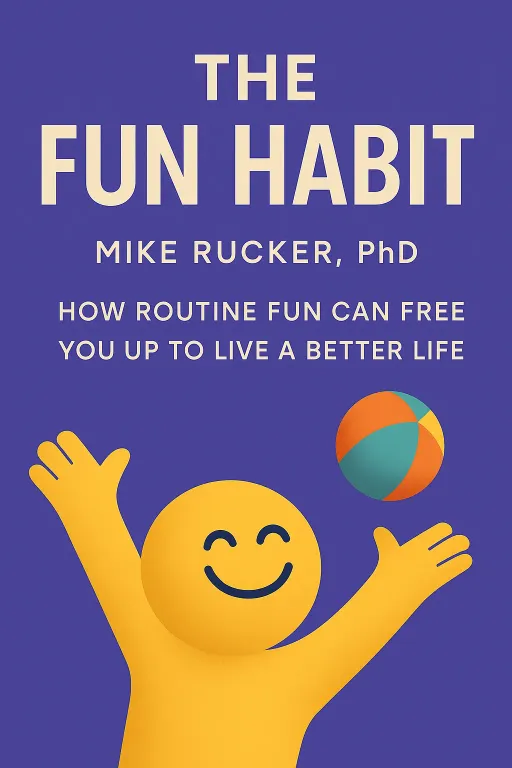
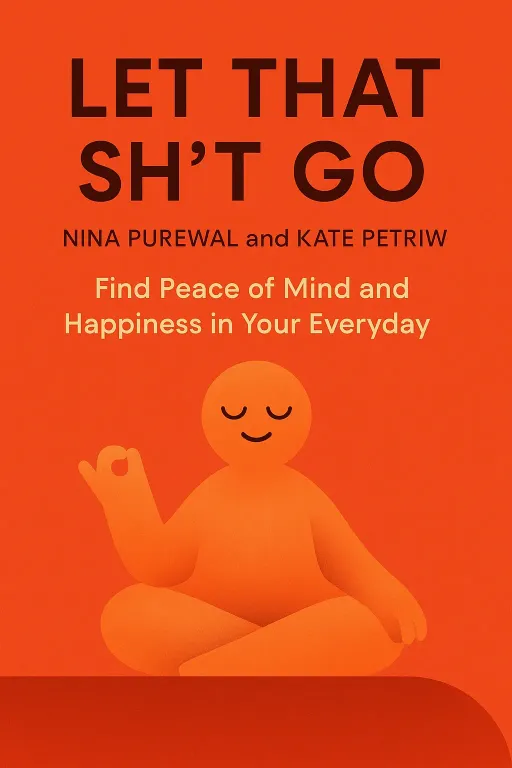
Nova: That is exactly the question we are tackling today. We are looking at two essential frameworks for reclaiming your mental space. First, we have Let That Sh*t Go by Nina Purewal and Kate Petriw, which deals with the mechanics of releasing toxic stress through mindfulness. And we are pairing that with The Power of Fun by science journalist Catherine Price.
Atlas: I have always been skeptical of the word fun. It sounds like a distraction from the real work. But Price argues something very different, doesn't she?
Nova: She does. She defines True Fun as the intersection of playfulness, connection, and flow. It is not a luxury or a reward for finishing your to-do list. It is a biological necessity for cognitive performance.
Atlas: That is a massive shift in perspective. If you are listening to this and you feel like you are constantly running on a treadmill that has no off switch, this conversation is going to change how you view your time.
The Mechanics of Letting Go
SECTION
Nova: Let’s start with that initial feeling of being stuck. Purewal and Petriw argue that most of our stress doesn't come from the events themselves, but from the narrative we construct around them. They call it the cycle of overthinking.
Atlas: I can relate to that. The event happens, and then I spend the next four hours, or maybe four days, replaying it, analyzing it, and predicting the catastrophic outcome of it. That loop is exhausting. How do they suggest we actually break that?
Nova: It begins with a perspective shift. They talk about the difference between reacting and responding. When you react, you are in the cycle. You are in the emotion. When you respond, you are observing the emotion. They suggest simple mindfulness techniques that aren't about clearing your mind of all thoughts, which is impossible anyway, but about acknowledging the thought and letting it pass through like a cloud.
Atlas: That sounds like a classic meditation pitch. But for someone who is a pragmatic builder, someone who needs to see results, how does observing a cloud help me solve the actual problem in front of me?
Nova: That is the crucial distinction. You can solve a problem more effectively when you are not emotionally hijacked by it. When you are in the thick of overthinking, your cognitive bandwidth is entirely consumed by anxiety about the problem, not by the solution. By letting go of the toxic narrative—the part where you tell yourself you are failing or that the situation is hopeless—you actually clear the RAM in your brain to focus on the architecture of the solution.
Atlas: So, it is about data management. If I am running a hundred background programs of worry, my system is going to lag.
Nova: Exactly. And Purewal and Petriw emphasize that this is a practice. It is not a one-time fix. It is like training a muscle. You notice the stress, you label it, you breathe, and you release the physical tension associated with it.
Atlas: I think the physical aspect is what people miss. We store stress in our bodies. My shoulders are usually up by my ears when I am working.
Nova: That is a perfect example. We hold our stress in our traps, our jaws, our hands. When you practice mindfulness, you are essentially doing a system check on your hardware. You are asking, where am I holding tension right now? And then, you consciously release it. It sounds simple, but the impact on your decision-making capability is profound.
Atlas: I can see how that applies to the day-to-day. But what about the big-picture stuff? The imposter syndrome, the fear of not hitting the next milestone?
Nova: The same principle applies. Imposter syndrome is just a narrative. It is a story you are telling yourself about your own competence. When you apply the practice of letting go, you are essentially saying, I am having a thought that I am not enough, but that is just a thought. It is not a fact. That detachment is liberating. It allows you to focus on the work, which is the only thing that actually builds your career.
The Science of True Fun
SECTION
Atlas: Okay, so I am detaching from the narrative, I am lowering my cortisol levels, I am clearing my headspace. But then what? I have this space, but I still feel like I am just in a holding pattern. This is where Catherine Price comes in, right?
Nova: Yes. This is where the transition happens. You clear the space by letting go, and then you fill that space with True Fun to recharge your cognitive engine.
Atlas: I need to push back here. When I hear True Fun, I think of vacations, or parties, or things that take time I do not have. How is this not just another item on my to-do list?
Nova: That is the most common misconception. Price distinguishes between Fake Fun and True Fun. Fake Fun is the stuff we do when we are exhausted—doom-scrolling, binge-watching reality TV, mindless consumption. It is passive. It numbs the brain, but it does not restore it.
Atlas: I am definitely guilty of the doom-scroll. It feels like relaxing, but an hour later, I feel worse.
Nova: Because you are not actually recovering. You are just distracting yourself. True Fun is active. It requires playfulness, connection, and flow. It is the feeling of being so engaged in an activity that you lose track of time. And the science shows that this state is essential for your brain to synthesize information, solve complex problems, and prevent burnout.
Atlas: So, it is not about the activity itself. It is about the state of mind.
Nova: Precisely. You could have True Fun playing a board game with a friend, or you could have it while learning a new, challenging skill, or even while cooking a complex meal. It is about the engagement level. When you are in a state of flow, your prefrontal cortex—the part of the brain responsible for executive function and decision-making—actually gets a chance to rest from the constant switching of tasks.
Atlas: That is the missing link. As a builder, I am constantly switching tasks. I am context-switching every ten minutes. My prefrontal cortex is basically running a marathon every single day.
Nova: And that is why you are tired. You are not tired because you are working; you are tired because you are never entering a state of sustained, flow-based engagement. Price argues that True Fun is the antidote to that fragmentation. It allows your brain to integrate what you have learned and what you have built.
Atlas: I want to get specific. If I am an architect or a builder of any kind, and I am deep in the weeds of a project, how do I find 15 minutes of True Fun? It feels impossible to just stop and play.
Nova: You start by lowering the stakes. Price suggests that we often overthink our leisure time. We think we need a week off, or a big event. But True Fun can happen in micro-doses. What is one low-stakes activity that used to bring you pure, unadulterated joy as a child?
Atlas: Honestly? Building stuff with Legos. Or sketching without a goal. Just drawing lines.
Nova: That is perfect. That is exactly it. It is not about the output. It is about the process. If you took 15 minutes this week to just sketch, without the intention of it being a draft for a client or a part of a project, that is True Fun. You are engaging your brain in a different way, which actually primes it for better problem-solving when you return to your actual work.
Atlas: I can see how that would work. It is like a reset button. But I have to be honest, I struggle with the guilt of doing something that isn't productive. My brain tells me, "You should be doing something useful."
Nova: That guilt is part of the narrative you need to let go of. Remember what we talked about earlier? That thought is just a thought. It is not a fact. The fact is, a rested brain is a more capable brain. If you want to build a foundation that lasts, you cannot ignore the maintenance of the builder. You wouldn't run a high-performance machine 24/7 without maintenance, yet we expect our own brains to do exactly that.
Atlas: That is a great analogy. You would never redline an engine indefinitely. Eventually, something breaks.
Nova: Exactly. And True Fun is the maintenance. It is the oil change. It is the cooling period.
Synthesis & Takeaways
SECTION
Atlas: So, let’s bring this together for the listener who is feeling the weight of their own ambitions. We have identified two pillars here. One is the act of release—letting go of the toxic narratives and the physical tension of stress. And the second is the act of restoration—engaging in True Fun to fuel the cognitive engine.
Nova: And the synthesis is this: You cannot build a lasting structure on a foundation of constant internal friction. You have to learn to let go of the friction to make room for the restoration. They are two sides of the same coin.
Atlas: I really like that framing. It makes it feel like a professional strategy rather than just self-care.
Nova: It is a strategy. It is about optimization. If your goal is self-mastery, then managing your energy is just as important as managing your time.
Atlas: So, for the action plan. I am going to hold myself to that 15-minute challenge. I will set a timer. 15 minutes. No phone, no work, no guilt. Just something that feels like play.
Nova: And notice how you feel afterwards. Do not just do it; observe the effect on your focus. I suspect you will find that the time you spend in that state of True Fun actually gives you more time back in the long run because your work becomes more efficient.
Atlas: It is a counterintuitive investment. Spend time to gain time.
Nova: That is the secret. And for anyone listening, what is that one thing for you? What is that low-stakes activity that makes you forget the time? Schedule it. Treat it as a non-negotiable appointment with your future self.
Atlas: Because if you do not build the joy into the architecture of your life, you are going to end up with a structure that is impressive from the outside but completely hollow on the inside.
Nova: Well said. That is the essence of it. We are not just building careers; we are building lives. And a life without joy is a project destined for renovation.
Atlas: I love that. Let’s leave them with that. We have the tools to let go, and we have the permission to have fun. Now, we just have to do the work.
Nova: Exactly. This is Aibrary. Congratulations on your growth!