

The Art of Rational Living: Expanding Your Stoic Toolkit
Golden Hook & Introduction
SECTION
Nova: You know, Atlas, I was talking to someone the other day who was just utterly overwhelmed, feeling like the world was constantly throwing curveballs they couldn't possibly hit. And it made me think, what if the secret to hitting those curveballs isn't about perfectly predicting their trajectory, but about how you stand at the plate?
Atlas: Oh, I like that. So, it's not about controlling the storm, it's about learning to sail your ship better through it, right? Because I imagine a lot of our listeners, especially those building something new or navigating complex careers, feel that exact pressure.
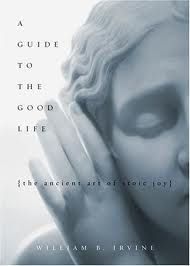
Nova: Exactly! And that’s why today, we’re diving into the enduring wisdom of Stoicism, drawing heavily from two incredibly insightful books: William B. Irvine's and John Sellars' concise yet profound. Irvine, for instance, isn’t just some academic philosopher; he brings this ancient wisdom to life with a practical, almost instructional approach, making it profoundly actionable for navigating contemporary complexities.
Atlas: That's a great point. I think a lot of people hear "Stoicism" and picture grim, unfeeling statues. But Irvine and Sellars, they sound like they’re saying something totally different, something about joy and practical application. What's the biggest misconception we need to bust right out of the gate?
Core Topic 1: Distinguishing Control and the Power of Negative Visualization
SECTION
Nova: The biggest misconception, Atlas, is that Stoicism is about suppressing emotions or being indifferent. It’s actually about your internal responses, especially to things outside your control. And this brings us to our first core idea: the profound power of distinguishing between what is within your control and what is not.
Atlas: Okay, so, easier said than done, right? Because my to-do list, my boss's mood, the traffic—they all feel very much in my control, but they still dictate so much of my day. How does Stoicism actually help with that distinction in a tangible way?
Nova: That's where a technique like negative visualization comes in, which Irvine explores beautifully. It's a "tiny step" we recommend this week. Instead of just hoping for the best, you deliberately spend a few moments imagining losing something you cherish—your job, a relationship, your health. You don't wallow in it, but you truly the potential absence.
Atlas: Whoa, that sounds… intense. My immediate reaction is, "Why would I want to feel that? Isn't that just inviting bad vibes?" It almost sounds counterintuitive to seeking joy.
Nova: It absolutely feels counterintuitive at first. But here's the magic: once you've briefly imagined that loss, you then reflect on how much you appreciate that thing. It's not about being morbid; it’s about fostering profound gratitude and building resilience against future shocks. It's a mental rehearsal for adversity. Think of it like a fire drill for your emotions.
Atlas: So, it's like, you simulate the worst-case scenario in a safe space, so if it ever actually happens, you're not completely blindsided? And if it doesn't, you're just left with this incredible appreciation for what you have? That makes sense. For someone who's constantly strategizing and building, this is literally a way to strategy-proof your inner peace.
Nova: Exactly! Irvine highlights that we often take things for granted until they're gone. Negative visualization short-circuits that process. It allows you to enjoy what you have because you've consciously considered its fragility. It's a deliberate practice of gratitude, not a passive hope. And it directly tackles the "Deep Question" we posed: How can actively distinguishing between what is within your control and what is not enhance your ability to respond constructively to adversity?
Atlas: And the answer is, by doing this, you realize the external event—the loss—might be out of your control, but your to it, your appreciation, your resilience, that's entirely yours to master. That's a powerful shift. It moves you from being a victim of circumstance to an active participant in your emotional landscape.
Core Topic 2: Internal Freedom and the Art of Rational Living
SECTION
Nova: And that naturally leads us to the second key idea, which often acts as a counterpoint to what we just discussed, and that’s the profound understanding that true freedom comes not from controlling external events, but from mastering your internal responses to them. This is the "healing moment" we touched upon.
Atlas: So, if negative visualization helps you appreciate what you have and prepares you for loss, then mastering internal responses is about how you when things go wrong, or even when they go right, right? It’s about not being tossed around by every wave.
Nova: Precisely. Sellars, in, makes this incredibly accessible. He boils down complex ancient ideas into actionable insights. He emphasizes that while we can’t always choose what happens to us, we choose how we respond. This is the core of what he calls "rational living." It's about using reason to guide your judgments and actions, rather than being swept away by impulses or external pressures.
Atlas: That sounds like a superpower for a "purposeful builder" or an "insightful strategist." Because so much of building involves setbacks, unexpected challenges. If your internal response is always panic or despair, you're going to burn out fast. But what does "mastering your internal responses" actually look like in practice? Is it just deep breaths?
Nova: It's more than deep breaths, though those help! It involves a constant self-awareness, a kind of internal monitoring. When something external happens—a criticism, a missed deadline, a sudden change in plans—the Stoic asks: "Is this within my control?" If it's not, the focus immediately shifts to: "What is my about this, and how can I respond constructively?" It's about questioning your initial emotional reaction, which is often automatic and unhelpful.
Atlas: So instead of just reacting, you're inserting a cognitive step. You're saying, "Hold on, is this actually worth my emotional energy, and is there a rational way to approach this?" It's not about being emotionless, but about choosing emotions to lean into.
Nova: Exactly. It's about understanding that your peace of mind, your tranquility, is an internal state that external events cannot fundamentally disturb,. This is where the idea of the "inner citadel" comes from—building an internal fortress of calm and reason that is impervious to the slings and arrows of outrageous fortune. It's the ultimate form of self-possession.
Atlas: Wow. That's actually really inspiring. Because if you're constantly seeking meaning and purpose, then having that internal anchor, that "inner citadel," means your purpose isn't dependent on external validation or smooth sailing. It's something you carry with you, no matter what. It means your quest for meaning becomes more resilient.
Synthesis & Takeaways
SECTION
Nova: And that’s the beautiful synthesis here, Atlas. By practicing negative visualization, we cultivate gratitude and prepare for adversity. And by mastering our internal responses, we ensure that our inner peace and purpose are not contingent on the chaotic external world. Modern interpretations of Stoicism, like those from Irvine and Sellars, don't just offer ancient wisdom; they offer profoundly actionable tools for building robust mental fortitude in our complex, modern lives.
Atlas: So, it's not about becoming a robot, but about becoming a more deliberate, more resilient human being. It’s about upgrading your internal operating system so you can better navigate the external world, no matter what it throws at you. For anyone who's trying to build, innovate, or simply live with more intention, these Stoic tools feel less like philosophy and more like essential life skills.
Nova: Absolutely. It truly is about expanding your toolkit for rational living. So, this week, try that negative visualization, and pay attention to your internal responses. It’s a small step towards a much more tranquil and joyful life.
Atlas: That's a powerful call to action. It gives you something tangible to work with, to put into practice immediately.
Nova: This is Aibrary. Congratulations on your growth!









