Optimism, Growth, and Relational Intelligence
Golden Hook & Introduction
SECTION
Nova: You know, sometimes it feels like the world expects us to be endlessly optimistic, even when everything's going sideways. Just 'cheer up,' right? As if a simple mindset shift will magically fix everything.
Atlas: Oh, I love that. Because for a lot of us driven types, 'just be positive' feels like someone telling you to just at something you don't even know how to do. It sounds a bit naive, even, when you're facing real-world challenges, deadlines, and the sheer complexity of scaling a venture. It almost feels like a distraction from the work.
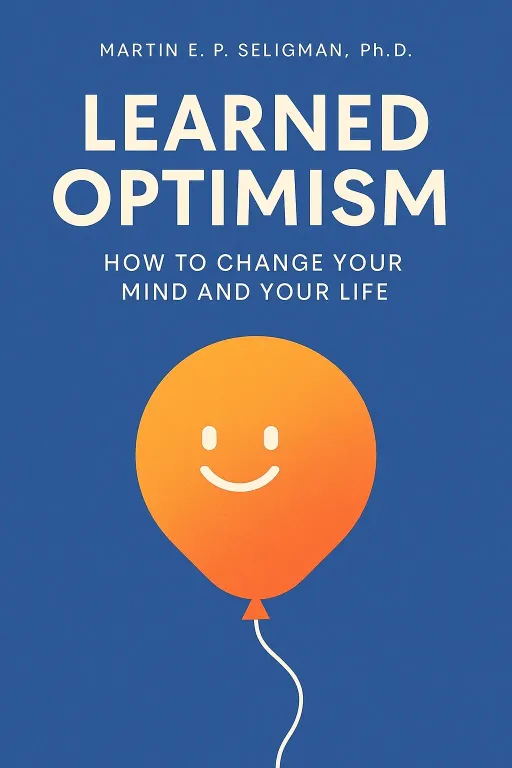
Nova: Exactly! And that's precisely what we're dissecting today, because what if that 'cheer up' wasn't just a platitude, but a powerful, learnable skill? We're drawing heavily from two truly foundational works. We're talking about Martin E. P. Seligman, Ph. D.'s pioneering work, "Learned Optimism," which essentially launched the entire field of Positive Psychology, and then Rick Hanson, Ph. D.'s "Making Great Relationships," which brings deep, practical neuroscience into our daily interactions. Both authors are giants in their fields, bringing scientific rigor to concepts often dismissed as mere 'soft skills.'
Atlas: Pioneering work and neuroscience? Now you have my attention. Because if it's learnable, then it's a tool, a strategy. So, how does this 'learned optimism' thing actually work? Is it about faking it till you make it, or is there something more profound happening under the hood?
Learned Optimism: The Strategic Edge for Resilience
SECTION
Nova: That's the perfect question, Atlas, because it’s absolutely not about faking it. Seligman, as a psychologist, observed something fascinating: some people bounce back from adversity, while others crumble. He called this their "explanatory style."
Atlas: Explanatory style? What does that mean for someone trying to navigate, say, a tough market or a product recall?
Nova: It's how you explain setbacks to yourself. A pessimistic explanatory style sees bad events as permanent, pervasive, and personal. So, if that product recall happens, a pessimist thinks, "This always happens to me", "Everything I touch fails", and "I'm a terrible leader".
Atlas: Oof. I imagine that's a quick path to burnout, especially for someone who's already putting in a ton of hours. If every challenge feels like a personal failing, that's not sustainable.
Nova: Precisely. And this isn't just about feeling bad; it's about measurable impact. Seligman's research showed that people with a pessimistic explanatory style are more prone to depression, poorer health, and significantly lower performance in everything from sales to sports. They simply give up faster.
Atlas: So, the opposite is true for optimists? They see setbacks as temporary, specific, and external? Like, "This product recall is a temporary hiccup, specific to this one launch, and maybe the manufacturing partner had issues, not necessarily my entire leadership capability?"
Nova: Exactly! They don't deny the setback, but their internal narrative frames it in a way that allows them to learn and move forward. They think, "This is a temporary problem, specific to this project, and we can adjust our strategy." This isn't just wishful thinking; it’s a cognitive reframing that directly impacts perseverance and problem-solving. Seligman even developed techniques to literally people how to shift their explanatory style, which he outlines in "Learned Optimism."
Atlas: That’s incredible. So, it's a skill. And for a pragmatic learner who values efficiency, understanding to reframe setbacks efficiently could be a game-changer. What's one of those techniques? Because time is always a factor.
Nova: One of the most powerful is the ABCDE model. A is for Adversity – the event itself. B is for Belief – your immediate interpretation. C is for Consequence – how that belief makes you feel and what you do. The key steps are D and E. D is for Disputation – actively challenging your negative beliefs. Are they really true? Is there another way to look at this? And E is for Energization – the positive outcome when you successfully dispute a negative belief.
Atlas: Oh, I see. So instead of just letting the belief run wild and dictate the consequence, you actively intercept it with disputation. It’s like being your own internal devil's advocate, but for optimism. That sounds like a powerful tool for someone leading a team, too. If the leader can model that kind of internal resilience, it probably trickles down.
Nova: It absolutely does. When a leader consistently demonstrates the ability to reframe challenges, their team learns to do the same. It builds collective resilience. You're fostering an environment where setbacks are seen as data points for learning, not catastrophic failures. And that, in turn, fuels growth, because innovation inherently involves risk and failure. If you can't bounce back, you can't innovate.
Atlas: That makes perfect sense. It’s not just about surviving, it's about creating a culture that thrives on adapting and learning. It’s a strategic advantage, not just a nice-to-have.
Relational Intelligence: Amplifying Impact and Scaling Ventures
SECTION
Nova: And that naturally leads us to the second pillar of sustainable growth: how we connect with others. Because even the most resilient, optimistic leader can't scale a venture alone. True impact is amplified through collaboration, influence, and the ability to inspire.
Atlas: Right, like you can be the most optimistic person in the room, but if no one wants to work with you, that optimism isn't going to get you very far. But 'relationships' often gets lumped into 'soft skills' territory, which some driven innovators might view as secondary to strategy or execution. How does Rick Hanson's work elevate this beyond just being 'nice'?
Nova: That's a crucial distinction. Hanson, as a neuropsychologist, approaches relationships from the brain up. He shows us that our brains are constantly being shaped by our experiences, and relationships are literally our neural pathways. Every positive interaction, every moment of genuine connection, physically strengthens the neural circuits for empathy, trust, and cooperation.
Atlas: Okay, so it’s not just an emotional concept; it’s biological. We’re actually building better brains for connection through our interactions? Like, if I have a really good, supportive conversation with a colleague, it’s not just a feel-good moment, it’s building a stronger neural bridge for future collaboration?
Nova: Precisely. He talks about "taking in the good"—consciously noticing and savoring positive experiences, especially in relationships. It could be a moment where a team member goes above and beyond, or a constructive feedback session that actually lands well. Instead of letting those moments pass, you consciously let them sink in. This isn't just about warm fuzzies; it's about actively cultivating the neural resources for compassion, gratitude, and resilience within your own brain.
Atlas: Wow. That's a really different way to think about it. It’s like micro-investments in your relational capital, both internally and externally. How does this translate into scaling ventures or leading effectively? Because a lot of our listeners are trying to grow their businesses, and 'taking in the good' might sound like a luxury they don't have time for.
Nova: It’s the ultimate efficiency hack, ironically. Think about the cost of low trust in a team: miscommunication, rework, internal politics, high turnover. These are massive drains on productivity and capital. A leader who consciously builds relational intelligence—by fostering trust, clear communication, and genuine appreciation—creates a team that is more cohesive, innovative, and resilient. They solve problems faster because they trust each other's intentions. They collaborate more effectively because they feel safe to take risks.
Atlas: So, it's about building a psychological safety net, almost, through consistent, positive relational deposits. And that safety net allows people to perform at their peak, to be more creative, and ultimately, to drive growth. It means that investing 20 minutes in a focused, empathetic conversation with a team member could yield far greater returns than 20 minutes spent micromanaging.
Nova: Absolutely. Hanson provides practical, neuroscience-backed techniques to foster more fulfilling and supportive personal and professional relationships. It's about recognizing that leadership isn't just about individual brilliance; it's about the collective intelligence and capacity you unlock in others. And you unlock that through genuine connection, which is built, neuron by neuron, through these intentional interactions. It’s the difference between a team that together and a team that together.
Synthesis & Takeaways
SECTION
Nova: So, when we bring these two powerful concepts together—Seligman's learned optimism and Hanson's relational intelligence—we see a truly synergistic model for leadership and growth. Optimism provides the internal fuel and resilience to navigate the inevitable challenges of innovation and scaling. Relational intelligence then becomes the engine that translates that individual drive into collective momentum.
Atlas: It's about being intentionally optimistic about challenges, and intentionally cultivating connections. It really reframes growth not just as a relentless, solitary push, but as a journey fueled by resilience and deep, strategic connection. It's about mastering yourself and mastering your influence, both of which are learnable skills.
Nova: Exactly. It's the ultimate growth hack because it taps into fundamental human capabilities. It's not about being born a certain way; it's about recognizing these are muscles you can strengthen. And the impact isn't just on your bottom line, but on your well-being and the well-being of those around you.
Atlas: That gives me chills, honestly. It’s a hopeful and incredibly practical message. So, for our pragmatic learners and driven innovators who are always short on time, what's one tiny step they can take today to start building these muscles?
Nova: Let's make it two. First, practice identifying one positive aspect in a challenging situation today, consciously reframing your perspective. It’s a micro-moment of disputation. And second, consciously acknowledge and savor one positive interaction you have with someone, truly "taking in the good." These small, consistent actions build momentum.
Atlas: That makes it actionable, and that's what we're all looking for. It really drives home the idea that true leadership isn't just about what you achieve, but how you build the capacity to keep going and inspire others along the way. It's about impact, growth, and the profound wisdom of human connection.
Nova: Absolutely. And for our listeners, we want to leave you with this deep question: How can fostering a more optimistic outlook in yourself and nurturing stronger relationships enhance your capacity to lead and scale your ventures? Think about that this week.
Atlas: This is Aibrary. Congratulations on your growth!