

Engines of Emotional Mastery and Cognitive Fortitude
Golden Hook & Introduction
SECTION
Atlas: Most people assume that failure is a direct result of bad luck or poor timing. But researchers have found that the most expensive part of a setback isn't the event itself, but the specific story you tell yourself about it in the moments after it happens.
Nova: That is the ultimate bottleneck for high performers. We spend years refining our technical skills, our strategy, and our networks, yet we leave the most critical piece of infrastructure—our own internal operating system—to chance.
Atlas: It sounds like we are talking about the difference between a minor hiccup and a full-blown career stall. I am guessing this is where our books for today come in?
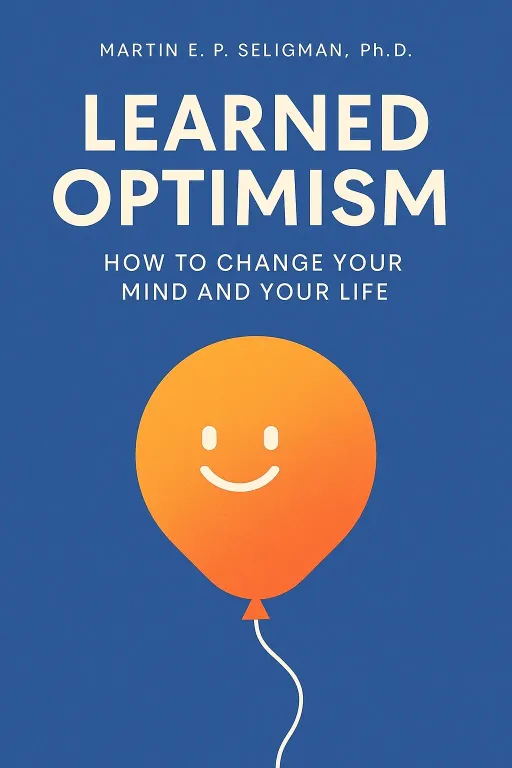
Nova: Exactly. We are diving into two distinct but complementary approaches to building that mental infrastructure. First, we have Learned Optimism by Martin E. P. Seligman. Seligman is widely recognized as the father of positive psychology. He famously shifted the focus of clinical psychology away from just fixing pathology and toward understanding what actually creates human potential.
Atlas: And the second piece of the puzzle?
Nova: That is Master Your Emotions by Thibaut Meurisse. This is a much more tactical, modern guide. Meurisse focuses on the daily mechanics of handling the bio-chemical signals we call emotions. He writes from a place of intense, practical application, which is perfect for anyone trying to maintain momentum during high-pressure transitions.
Atlas: So, we have the philosophical architect in Seligman and the tactical engineer in Meurisse. Let’s start with the architect. You mentioned that the "story we tell ourselves" is the bottleneck. How does Seligman actually break that down?
The Architecture of Explanatory Style
SECTION
Nova: Seligman calls this your Explanatory Style. It is not just a personality trait; it is a learned habit of thought. He identified three dimensions that determine whether a setback becomes a learning opportunity or a permanent roadblock. He calls them the Three Ps: Personal, Permanent, and Pervasive.
Atlas: I can imagine how those three things would spiral out of control. Walk me through what that looks like in a real-world scenario. Let’s say a project manager just had a major client reject a proposal they spent weeks on. A typical reaction might be pretty rough.
Nova: Right. A pessimistic explanatory style would frame that rejection through those three lenses. First, Personal: "I am incompetent. I failed because I am not good enough." Second, Permanent: "I always fail at these pitches. Nothing ever goes right for me." And third, Pervasive: "My entire career is a disaster, and I am probably going to lose my job because I cannot handle any of these responsibilities."
Atlas: That is a brutal internal monologue. It turns one single, specific event into a life-altering catastrophe.
Nova: Precisely. And the kicker is that this style of thinking is what Seligman identifies as the primary driver of learned helplessness. When you view a setback as permanent and pervasive, your brain effectively shuts down. You stop trying because, in your mind, the outcome is already predetermined by your own flawed identity.
Atlas: That makes sense from a biological standpoint. If your brain thinks the situation is hopeless, conserving energy by giving up is a survival mechanism. But how do we flip that?
Nova: The goal is to shift toward what Seligman calls an optimistic explanatory style. This is not about toxic positivity or ignoring reality. It is about accuracy. You reframe the event into specific, temporary, and external causes.
Atlas: Give me the "optimistic" version of that same project rejection. How does the professional handle that without lying to themselves?
Nova: They look at the evidence. They would say: "This specific proposal lacked the data integration the client needed. This particular pitch didn't land because of the timing of their budget cycle. I can adjust my strategy for the next meeting."
Atlas: I see the difference. The pessimist attacks their identity; the optimist attacks the strategy. The pessimist makes it about who they are; the optimist makes it about what they can change.
Nova: That is the crux of it. The optimist sees the "failure" as a discrete data point in a larger, successful trajectory. The pessimist sees the "failure" as a confirmation of their own limitations.
Atlas: I imagine this is incredibly difficult to do in the moment. When the email comes in and your heart rate spikes, your brain is flooded with cortisol. You are not exactly in a state to sit down and perform a logical audit of your explanatory style.
Nova: You hit the nail on the head. That is where we need to bridge the gap between Seligman’s high-level framework and the day-to-day tactical work. We know how to think, but how do we manage the immediate, visceral experience of feeling like we have failed?
The Emotional Dashboard
SECTION
Atlas: This is where Meurisse comes in, right? Because even if I know I should think like an optimist, I still feel the punch in the gut when things go wrong.
Nova: Exactly. Meurisse’s Master Your Emotions is essentially a manual for that "punch in the gut" feeling. He argues that emotions are temporary bio-chemical signals. They are not permanent identity traits.
Atlas: I love that framing. It is the difference between saying "I am angry" and "I am experiencing the sensation of anger."
Nova: That is the distinction that changes everything. Meurisse suggests we stop identifying with the emotion. When you say, "I am angry," you are merging your identity with the chemical spike. When you say, "I am experiencing anger," you are creating a gap between the stimulus and your response.
Atlas: It is like looking at the dashboard of a car. If the "check engine" light comes on, you don't say, "I am a broken car." You say, "There is a signal indicating an issue I need to investigate."
Nova: That is a perfect analogy. The emotion is the dashboard light. It is giving you data. If you feel anxiety, it is a signal that you perceive a threat or an uncertainty. If you feel frustration, it is a signal that your expectations are not being met by reality.
Atlas: So, instead of suppressing the emotion or letting it consume us, we should be asking, "What is this signal trying to tell me?"
Nova: Precisely. Meurisse advocates for a process of labeling. You feel the emotion, you pause, you name it, and then you ask what it is signaling. He argues that by simply naming the emotion, you engage your prefrontal cortex, which helps calm the amygdala—the part of the brain that drives that fight-or-flight response.
Atlas: I have read about that. It is sometimes called "name it to tame it." But let’s get into the weeds here. If someone is dealing with a high-pressure career transition—maybe they are moving from a technical role into a leadership position, and they are feeling massive impostor syndrome—how do they use this?
Nova: They would start by acknowledging the physical sensation. "I am feeling tightness in my chest and a knot in my stomach." Then, label it: "This is anxiety about the upcoming presentation." Then, they use the framework we just discussed. They look at the signal: "What is this anxiety telling me?" It is telling them they care about the outcome and that they want to do a good job.
Atlas: That reframes the anxiety from a sign of weakness to a sign of preparation.
Nova: Exactly. And then, they pivot to Seligman’s framework. They look at the thoughts attached to that anxiety. If they are thinking, "I am going to bomb this, and everyone will see I am a fraud," they catch that, label it as a catastrophic, permanent, and personal thought, and reframe it. "I am nervous because this is a new challenge. I have prepared for these specific points, and I can handle the Q&A session."
Atlas: This is a powerful feedback loop. You use Meurisse to handle the biological wave of the emotion, and you use Seligman to handle the narrative that the emotion is trying to write.
Synthesis & Workflow
SECTION
Nova: That is the ultimate workflow for resilience. You are not just managing your thoughts; you are managing your physiology.
Atlas: I want to get to the "Tiny Step" you mentioned earlier. We have these high-level concepts, but for our listeners who are managing packed calendars and high-stakes projects, what is the single, most effective way to implement this?
Nova: It comes down to a simple, daily habit. Next time a project experiences a setback—even a small one—write it down. Do not keep it in your head. Put it on paper.
Atlas: Why the paper? Why not just think it through?
Nova: Because writing forces you to slow down. When you write, you externalize the thought. You move it from the emotional, reactive part of your brain to the logical, analytical part. When you see your own words on the page, you can objectively critique them.
Atlas: So, you write down the setback, you write down your immediate, pessimistic explanation, and then you force yourself to write the alternative, optimistic, specific explanation.
Nova: Yes. And you don't have to do this for every single thing. Just focus on the setbacks that actually trigger a strong emotional response. By doing this, you are effectively training your brain. You are building a new neural pathway. Over time, this becomes your default explanatory style.
Atlas: I love that. It is not about changing your personality; it is about building a workflow for your brain. It is the difference between being a victim of your circumstances and being the architect of your own resilience.
Nova: That is the legacy of competence we are talking about. It is the ability to maintain momentum not because things are always going right, but because you know how to handle it when things go wrong.
Atlas: We have covered a lot of ground today. We started with Seligman’s three dimensions of explanatory style—Personal, Permanent, and Pervasive—and how to flip them to specific, temporary, and actionable. Then we moved to Meurisse’s view of emotions as signals rather than identity traits.
Nova: And the synthesis is the act of slowing down, labeling the emotion, and writing down the reframe. It is a simple, daily practice that pays massive dividends over a career.
Atlas: If you are listening to this and you are feeling the pressure of a current project, take five minutes today. Don't just think about what went wrong. Write it down. Rewrite the story. You might be surprised at how much control you actually have.
Nova: It is not just about surviving the setback; it is about using the data from that setback to build a stronger, more resilient strategy for the next one.
Atlas: That feels like a solid blueprint for growth. Thank you for walking us through this, Nova.
Nova: It was a pleasure. To all our listeners, keep building that resilience. This is Aibrary. Congratulations on your growth!









