

Personalized Podcast
Golden Hook & Introduction
SECTION
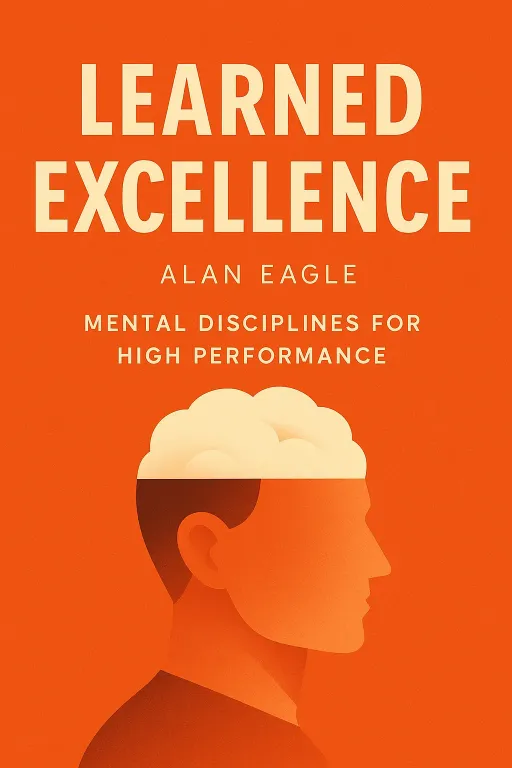
Socrates: Ding, you're a product manager, you build roadmaps for complex systems. But you're about to launch the most complex 'product' of all: a new family. The book we're talking about today, "Learned Excellence," argues that we are all performers, but parenting... that's the ultimate high-stakes performance with no instruction manual. It makes you wonder, in a situation where the outcome matters more than anything, how do you prepare your mind when there's no script?
Ding: That’s the question, isn't it? It’s a profound one. As a PM, I'm used to specs, requirements, user stories. There's a logic, a framework. This is... different. It's a system with the most unpredictable user behavior imaginable, and I'm one of the lead engineers. The idea of building a mental 'operating system' to handle that is incredibly appealing. It feels like the only way to approach it.
Socrates: Exactly. And that's why this book is so perfect for our conversation. It's not really a self-help book; it's more like an engineering manual for the mind, written by people who have worked with the highest performers on the planet. That's our central question today. We're going to explore this by looking at the mental toolkits of Navy SEALs and elite athletes, and see how they apply to the beautiful chaos of work and family. Today we'll dive deep into this from three perspectives. First, we'll explore how to build an unshakeable internal anchor based on your identity, not your reputation. Then, we'll discuss the critical skill of toggling your mindset between your professional and personal roles. And finally, we'll look at how to engineer a balanced life like a well-managed portfolio.
Ding: I'm ready. It sounds like exactly the kind of strategic framework I've been looking for.
Deep Dive into Core Topic 1: The Identity Anchor
SECTION
Socrates: Fantastic. So, let's start with the foundation of that operating system. The book's first principle is about your core code: your identity. The author makes this powerful distinction between living for —which is all about what other people think of you—and living from —which is about who you fundamentally are, based on your own values.
Ding: That distinction feels immediately relevant. The pressure to have the right stroller, the right sleep schedule, to be the 'perfect parent' on social media... that's all reputation. And at work, especially being new in a role, the pressure to seem like you have all the answers is immense. It's all external validation.
Socrates: Precisely. And the book illustrates the danger of chasing reputation with this incredible story about a professional cliff diver named David Colturi. He was a Red Bull-sponsored athlete, one of the best in the world. His reputation his life. In 2018, he was at an event in Switzerland and agreed to do this promotional stunt—a dive from a tiny platform hanging from a paraglider.
Ding: That sounds... unstable.
Socrates: Wildly. The first attempt went okay. But on the second, the pilot came in too high and too slow. David jumped anyway, knowing it was wrong. He hit the water from a dangerous height, trying to turn his body to avoid a full belly flop. The impact was brutal. He felt a searing pain but, driven by his reputation as this tough-as-nails diver, he got out and actually did two more dives. Hours later, he collapsed. He was rushed to the hospital with a lacerated spleen and was bleeding internally. He needed an emergency splenectomy to save his life.
Ding: Wow. All because he didn't want to look weak.
Socrates: Exactly. And in his recovery, he had this epiphany. He wrote, and I'm quoting here, "I started thinking that I was a human first and diver second. For the first time in my career, I was able to completely overcome the phenomenon of reputation." That shift from 'what I do' to 'who I am' feels so critical, doesn't it? Especially with the pressures of being a 'good parent' or a 'successful PM'.
Ding: Absolutely. It's the difference between focusing on vanity metrics versus core KPIs. Reputation is a vanity metric—it feels good, it gets you likes, but it can be dangerously misleading. David Colturi almost died chasing it. Identity, on the other hand, is the core KPI—it tells you if the system is fundamentally healthy and aligned. The book suggests creating a 'personal credo' to define that identity. For me, as a product manager, that sounds like defining the mission statement for 'Project Ding.'
Socrates: A mission statement... I love that framing. Tell me more.
Ding: Well, a good product has a clear mission. It's the north star that guides every decision. So, what's the mission for me, as a person? The book says to boil it down to ten words. What are the ten words that define my values as a father, a partner, a builder, a friend? That's not just a nice thought; it's a functional anchor. When the storm of sleep deprivation and work deadlines hits, I won't be asking 'What would a good dad do?' which is a reputation question. I'll be asking, 'What does my credo, my identity, guide me to do right now?'
Socrates: That's a powerful reframe. It's not a feel-good exercise; you're seeing it as a strategic document for your life. It's the core code that you can always refer back to, no matter what the external inputs are.
Ding: Exactly. It's the stable API in a world of chaotic inputs.
Deep Dive into Core Topic 2: The Mindset Toggle
SECTION
Socrates: I love that. A stable API. And once you have that strategic document, that core code, you have to execute it in different environments. This brings us to our second idea, which is one of the most practical and, frankly, chilling stories in the book: the need for a mindset toggle.
Ding: A toggle... like a feature flag for your brain?
Socrates: A perfect analogy. The story is about a SEAL sniper chief. This is a man whose job requires absolute perfection, where a tiny mistake has fatal consequences. He's a master of his craft, a peak performer. He comes home from a long deployment, and he's at the dinner table with his family. His three-year-old son, being a three-year-old, spills a glass of milk. And the sniper chief... he just explodes. He yells at this tiny child with all the intensity of a commanding officer berating a recruit. The look on his son's face, and his wife's, just broke him. He realized he was still running his 'combat' operating system at home.
Ding: Oh, that's a gut punch. I can feel that.
Socrates: Isn't it? He went to the author for help, full of shame, and the solution they came up with was so simple but so profound. It was a ritual. Every day when he got home, he was to go to the bathroom mirror, look himself in the eye, and say, "I'm not at training. I'm not deployed. My son is three years old and he is going to spill his milk today. Twice."
Ding: He's setting his own expectations. He's consciously loading the 'Dad' software.
Socrates: He's loading the Dad software! It's such a stark example of a mindset bleeding from one role into another where it's not just ineffective, but destructive. As you prepare for this new role, how do you think about creating that separation between your 'analytical finance PM' brain and your 'patient new dad' brain?
Ding: That story is so potent because it's a context-switching failure. In software engineering, if you carry variables or states from one function into another incorrectly, the whole program can crash or produce garbage results. The sniper's 'combat' variables—high-stress, zero-tolerance, immediate-action—were toxic in the 'family' function. The mirror ritual is a deliberate 'context-clearing' routine. It's like consciously closing all your work tabs, clearing your browser cache, and shutting down your work laptop before you even think about opening your 'home' application.
Socrates: So it’s not just about willpower, it’s about process.
Ding: Exactly. Willpower is a finite resource. Process is scalable. I can see myself creating a physical ritual to trigger that mental switch. Maybe it's putting my work phone and laptop in a specific drawer the moment I walk in the door. That physical act becomes the trigger that says, 'The PM is offline. The Dad is online.' It's a simple, repeatable process to force the context switch.
Socrates: A physical trigger for a mental switch. That's a brilliant, tangible application. It's designing your environment to support your desired mindset. You're not just hoping you'll remember to be a good dad; you're building a system that makes it easier.
Ding: It has to be a system. Because when you're exhausted and stressed, the system is what you fall back on. Your default programming takes over. The sniper's default was combat. I need to design a new default for home.
Deep Dive into Core Topic 3: Engineering Balance
SECTION
Socrates: And that idea of designing a system, designing a process, is the perfect bridge to our final point: engineering balance. We all talk about work-life balance, but the book argues it's a myth if you think of it as a perfect 50/50 split on a scale. Instead, it presents balance as a dynamic portfolio you have to actively manage.
Ding: A portfolio. Okay, as a finance PM, you have my attention.
Socrates: I thought you might like that. The framework is built on six pillars of life: Work, Relationships, Health, Spirituality, Hobbies, and Legacy. The idea isn't to spend equal time on all six every single day. That's impossible. The goal is to be aware of them and ensure that, over time, none of them completely crumble. The book tells the story of Deena Ryerson, a senior assistant attorney general and a mother, who felt like she was constantly failing at both her job and parenting.
Ding: I'm already feeling that, and the baby isn't even here yet.
Socrates: Right? Her breakthrough came when she accepted, in her words, that "There are balls that have to drop. Once you realize that, you have to forgive yourself." She stopped trying to be perfect at everything and instead identified her 'non-negotiables' for both work and family in any given week, and let the other, less critical things slide.
Ding: So it’s not about juggling everything perfectly, it’s about knowing which balls are glass and which are rubber.
Socrates: That's the perfect metaphor for it. For you, Ding, a baby is about to become the highest-priority pillar, a very fragile glass ball. How does this six-pillar framework help you think about managing the other five without letting them all collapse?
Ding: It reframes the problem entirely. It's no longer a vague, overwhelming feeling of 'not enough time.' It becomes a concrete problem of 'resource allocation.' As a product manager, you can never build every feature on the roadmap at once. You have to prioritize. You have to make tough calls. You accept that some features get pushed to the next quarter, they go into the backlog. The idea of identifying 'non-negotiables' is the key.
Socrates: So what might that look like for you, practically?
Ding: Practically, it means my wife and I can sit down and say, 'Okay, for the next six months, the 'hobby' pillar might get minimal resources. My weekend coding projects are going into the backlog. But the 'health' pillar—getting some sleep, eating a real meal—and the 'relationships' pillar—making sure we connect as a couple, not just as co-parents—those are non-negotiable for system stability.' It's about being intentional and, as Deena said, forgiving. You're not abandoning the roadmap for your life; you're just adjusting the sprint plan based on new, critical requirements.
Socrates: Adjusting the sprint plan. That makes it sound so much more manageable and strategic, rather than just chaotic and reactive. You're still the engineer of the system, even when the system gets wildly more complex.
Ding: You have to be. Otherwise, the system engineers you.
Synthesis & Takeaways
SECTION
Socrates: That is a perfect summary of everything we've talked about. So, to bring it all together, we have these three powerful ideas from "Learned Excellence," reframed for this new chapter of your life. First, we have our identity, our personal credo, as a strategic anchor in the storm. Second, a deliberate, designed process for toggling our mindset between our different roles. And third, a portfolio approach to engineering a balanced life, where we make conscious, strategic choices about where to allocate our energy.
Ding: It feels like a complete toolkit. It’s not about having all the answers, but about having a better framework for finding them. It's about being an intentional designer of your own life, your own experience.
Socrates: Beautifully put. So, to leave our listeners with something to act on, what's the one thing you're taking away from this conversation that you'll put into practice?
Ding: It all comes back to that first step. You can't build a system without a solid foundation. So, my challenge to everyone listening, and very much to myself, is the one you mentioned earlier: What are the ten words in your personal credo? What's the core code for your personal operating system? I'm going to spend time on that this week, before the launch date gets any closer. Defining that seems like the most critical first step to navigating whatever performance comes next.
Socrates: A perfect call to action. Ding, thank you for sharing your perspective. This was a fantastic conversation.
Ding: Thank you, Socrates. This has been incredibly clarifying.









