The Architecture of Elite Performance
Golden Hook & Introduction
SECTION
Nova: You know, Atlas, we often talk about what it takes to perform at an elite level. The common wisdom is usually "work harder, push more, grind it out." But what if that's only scratching the surface? What if truly elite performance, the kind that scales ventures and creates lasting impact, isn't just about brute force, but intelligent design?
Atlas: Oh, I like that. "Intelligent design" for performance. That’s going to resonate with anyone who’s ever felt the burnout of just "working harder." It sounds like you’re suggesting there's a more strategic blueprint, not just a bigger hammer.
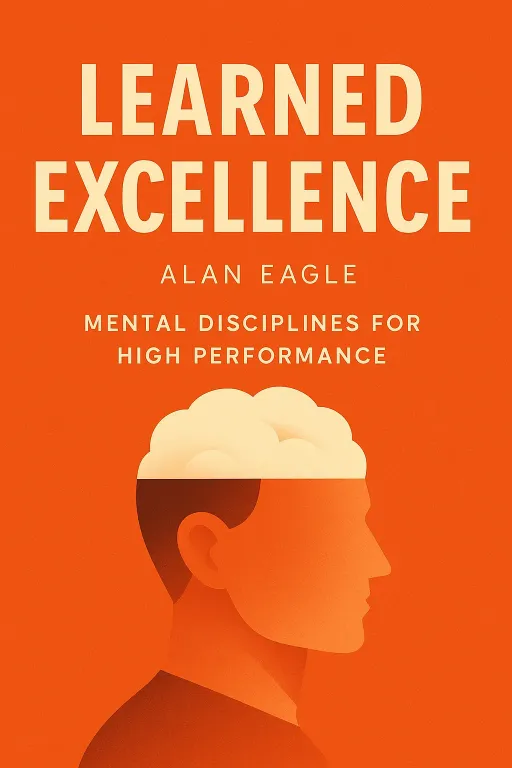
Nova: Exactly! Today, we're diving into what we're calling "The Architecture of Elite Performance." It's a synthesis of incredible insights from two brilliant minds: Alan Eagle, with his book "Learned Excellence," and Brad Stulberg, author of "Rugged Flexibility." Eagle, leveraging his unique experience collaborating with Navy SEALs, really pulls back the curtain on how elite capabilities are forged. And Stulberg, who's widely recognized for his science-backed approach to sustainable high performance, gives us the framework to maintain that edge, especially when things get turbulent.
Atlas: That’s a powerful combination. Demystifying how the best of the best operate, and then giving us a way to adapt it without crumbling under pressure. For our listeners who are constantly navigating new tech trends, trying to scale their ventures, or just optimize their limited time, this sounds like an operating system upgrade.
Nova: It absolutely is. And it starts with a concept that often gets overlooked: that excellence isn't just innate talent, it's meticulously learned.
The Foundation of Elite Performance: Deliberate Practice & Mental Models
SECTION
Nova: So, let's kick off with Alan Eagle’s "Learned Excellence." He argues that elite performance, even in the most high-stakes environments like the Navy SEALs, isn't some mystical gift. It's the result of deliberate practice and the cultivation of sophisticated mental models. This book was highly praised for demystifying what seems like superhuman capability, showing it's a structured, repeatable process.
Atlas: I'm curious. When we hear "Navy SEALs," we think extreme physical and mental toughness. How does "deliberate practice" apply there, and more importantly, how does someone like, say, a startup founder with a packed schedule, translate that into their world? It’s not like they're practicing clearing a building every Tuesday.
Nova: That’s a fantastic point, and it’s where Eagle’s work becomes so universally applicable. Deliberate practice, at its core, is about focused, intentional effort on specific skills, with immediate feedback, pushing beyond your comfort zone. For a SEAL, it might be disassembling a weapon blindfolded until it’s muscle memory. For our hypothetical startup founder, let’s call her Anya, who's developing a new AI-driven analytics platform, it means something different.
Atlas: Give me an example. How does Anya do "deliberate practice" in a tech environment? She’s probably got a million things pulling her attention.
Nova: Okay, imagine Anya is trying to master a new, complex machine learning algorithm that’s critical for her platform's next feature. Instead of just reading documentation or trying to implement it all at once, she carves out dedicated, uninterrupted blocks of time—say, 20 minutes a day, like we often recommend for focused learning. During those 20 minutes, she’s not checking emails or taking calls. She’s isolating one specific component of that algorithm – maybe it's understanding the nuances of a particular hyperparameter tuning technique.
Atlas: So it's not just "learn ML," it's "master this one specific ML tuning technique."
Nova: Precisely. She sets a clear, almost brutally specific goal for that session. She might write a small, isolated piece of code to test just that component. She then immediately analyzes the output, compares it to her expectations, and identifies precisely where her understanding or implementation deviated. This immediate, granular feedback is crucial. She’s actively seeking out her weaknesses and directly addressing them, rather than just passively consuming information.
Atlas: That sounds incredibly disciplined. But for many of our listeners, myself included sometimes, finding even 20 minutes of time for deep, deliberate focus feels like a luxury. How do you protect that time when you’re already swamped trying to scale a venture?
Nova: That’s where the "treating it like an important meeting" mindset comes in. Just as you wouldn't typically flake on a critical investor meeting, you shouldn't flake on your deliberate practice. It’s a meeting with your future, more capable self. The key is consistency, even if the sessions are short. Over time, these small, focused efforts compound, building those powerful mental models.
Atlas: Mental models. Can you expand on that? Is it just deep understanding, or something more?
Nova: It’s more. Mental models are internal representations of how the world works. For the SEALs, it's having a detailed, dynamic mental map of a building they need to clear, predicting enemy movements, and understanding weapon mechanics. For Anya, it’s building an intuitive, interconnected understanding of how her AI platform interacts with data, how different algorithms behave under various conditions, and anticipating potential bugs or performance bottlenecks before they even occur. It’s about being able to run simulations in your mind, to predict outcomes, and to quickly diagnose problems because you understand the underlying architecture, not just the surface-level code.
Atlas: Okay, so it’s like an internal simulator. You’ve practiced the individual components so much that you can mentally assemble them and see potential outcomes. That’s a game-changer for efficiency and foresight, especially in fast-moving industries.
Nova: Exactly. It’s about building a robust, internal operating system for your professional life. But here’s the thing: even the most robust internal system needs to know when and how to adapt. And that brings us to our second powerful concept.
Beyond Hard Work: The Power of Rugged Flexibility
SECTION
Nova: So, if Alan Eagle gives us the blueprint for building elite capability, Brad Stulberg, in "Rugged Flexibility," provides the wisdom for navigating the unpredictable landscape once you have that capability. His central argument is for the 'and' mindset: being both firm in your values flexible in your methods. He stresses that true peak performance isn't just about being tough; it's about being anti-fragile, capable of thriving amidst change, which earned his work wide acclaim for its practical, science-backed approach to resilience.
Atlas: "Rugged Flexibility." That’s a fascinating phrase. It sounds like a contradiction at first glance. How do you stay "firm" while also being "flexible"? Especially when you're trying to scale a business and the market is constantly throwing curveballs. Isn't that just another way of saying "be adaptable," or is there a deeper layer to it for someone trying to grow their venture?
Nova: That’s the beauty of it, Atlas. It's far more nuanced than simple adaptability. Stulberg argues that true flexibility comes from having an unshakeable core. Think of a redwood tree. It’s incredibly firm, deeply rooted, but its branches sway with the strongest winds. It doesn't break because its core is solid, allowing its methods to be highly flexible. For a venture, your "firm values" are your core mission, your ethical compass, your why. Your "flexible methods" are your strategies, your tactics, your specific product offerings.
Atlas: So, you're saying if your "why" is clear, your "how" can change dramatically, and you won't lose your way?
Nova: Precisely. Let's take another hypothetical, a founder named Leo. Leo started a company with a core value: "Empower small businesses with accessible, cutting-edge tools." That's his firm value. Initially, his method was to build a complex, all-in-one CRM system. He spent years on it. But then, the market shifted. Smaller, niche SaaS tools started dominating, and businesses preferred integrating best-of-breed solutions rather than a single behemoth.
Atlas: That's a common story. Many founders would see that as a failure, or a sign to double down on their original strategy, hoping the market would come back around.
Nova: Exactly. But Leo embraced rugged flexibility. His core value—empowering small businesses—remained firm. His method, however, had to be flexible. Instead of trying to force his all-in-one CRM, he pivoted. He took the most valuable modules from his CRM, repackaged them as standalone, easily integrable apps, and even started offering consulting services to help small businesses choose and integrate the tools for specific needs.
Atlas: Wow. So he didn't abandon his mission, he just radically changed he delivered on it. That’s a huge distinction. But wait, looking at this from a strategist's perspective, how does one distinguish between "flexible methods" and just abandoning a failing strategy? How do you maintain professional identity when everything around you is changing, when you're pivoting your entire product line?
Nova: That’s the critical piece, Atlas. The "rugged" part comes from deeply understanding your core professional identity and your venture's fundamental purpose. It’s not about being stubborn, but about having a clear internal compass. Leo's professional identity wasn't "CRM builder"; it was "small business empowerer." When his method no longer served his value effectively, he adapted the method. The identity remained intact, even strengthened, because he was still serving his core purpose, just through a new vehicle.
Atlas: That makes sense. It’s about knowing what you stand for, not just what you do. It means your identity isn’t tied to a specific product or service, but to the impact you want to create. This is crucial for anyone scaling a venture, especially in unpredictable markets. It frees you up to be innovative without feeling like you're betraying your original vision.
Nova: Absolutely. It’s the difference between being brittle and breaking under pressure, and being resilient and evolving. The deliberate practice we discussed earlier helps build the robust internal systems, the mental models that allow you to quickly assess new situations. And then rugged flexibility gives you the strategic agility to apply those systems in ever-changing ways.
Synthesis & Takeaways
SECTION
Nova: So, bringing it all together, what Alan Eagle and Brad Stulberg illuminate for us is that elite performance and successful venture scaling aren't about a linear path of just more effort. It's about building an incredibly sophisticated internal architecture.
Atlas: It’s about upgrading the operating system of your professional life, as I said earlier. From Alan Eagle, we learn to forge our skills and understanding through deliberate practice and sophisticated mental models, making us internally robust. And from Brad Stulberg, we get the wisdom to navigate external chaos with rugged flexibility, ensuring our core mission stays firm even as our methods pivot.
Nova: Exactly. It's about having that deep-seated, learned excellence that allows you to be truly "rugged"—strong, resilient, and deeply rooted—while simultaneously being "flexible" enough to adapt, innovate, and thrive no matter what the market throws at you. You pivot your strategy without losing your core professional identity, ensuring that growth isn't just about expansion, but about sustainable, impactful evolution.
Atlas: So it's not just about adding more hours to the clock; it's about making those hours count towards building a system that can both perform at a high level and gracefully adapt. This is essential for anyone wanting to master tech trends, scale ventures with smart strategies, and optimize their time for maximum impact.
Nova: That's the profound insight, Atlas. Elite performance isn't just about what you achieve, but you're built to achieve it, and how you sustain that achievement through constant, intelligent adaptation. It’s the architecture, not just the brute force of the building itself.
Atlas: That gives me chills, honestly. It reframes the entire idea of success. For our listeners out there, what's one area where you could apply a "rugged flexibility" mindset this week? Maybe it’s in how you approach learning a new skill, or perhaps how you're thinking about your next business pivot. We'd love to hear your thoughts. Share your insights with the Aibrary community.
Nova: Absolutely. Your growth is our mission.
Atlas: This is Aibrary. Congratulations on your growth!