

Leadership Lessons Across Epochs
Golden Hook & Introduction
SECTION
Nova: Atlas, give me your five-word review of what it takes to achieve elite performance.
Atlas: Oh, I love this game. Hmm. Exhausting. Unattainable. Overrated. Loneliness. Myth.
Nova: Ouch. That’s pretty bleak! Mine are a bit more optimistic: Practice. Progress. Purpose. Persistence. Possibility.
Atlas: Okay, I can see that. Definitely two very different takes right out of the gate. Sounds like we have some ground to cover today.
Nova: We absolutely do. Because today, we’re challenging some fundamental beliefs about how we achieve greatness and how we understand progress itself. We’re drawing insights from two incredibly profound, yet vastly different, works.
Atlas: And I’m curious to see how you’re going to weave these together, because they sound like they’re coming from opposite ends of the spectrum.
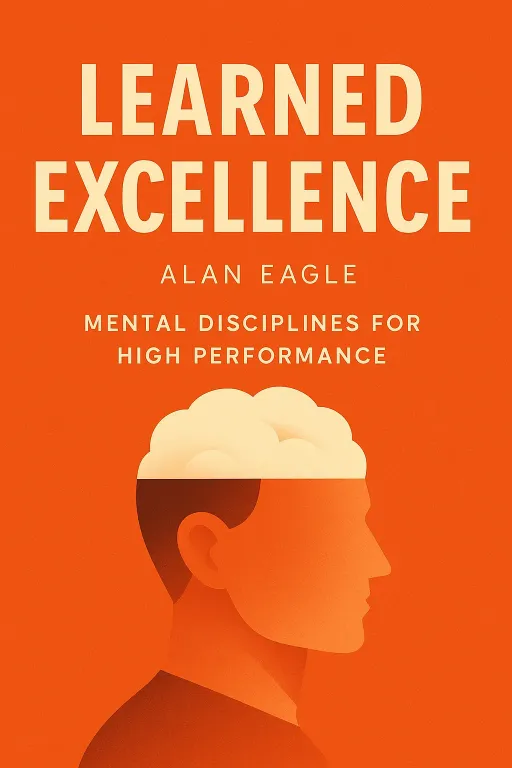
Nova: Well, we’re starting with “Learned Excellence” by Alan Eagle. Now, Eagle spent years observing what truly separates the best from the rest, from athletes to executives at some of the world's most competitive organizations. His work really distills practical wisdom into what it means to be truly excellent.
Atlas: That’s going to resonate with anyone striving for growth, especially in today's intense environments. But why do I have a feeling he’s not just telling us to "work harder"?
Nova: You’re absolutely right. And then, we’re zooming out, way out, with “The Lessons of History” by Will and Ariel Durant. These two, Will and Ariel Durant, spent over five decades writing their monumental “Story of Civilization,” and “The Lessons of History” is their incredible distillation of that lifetime of wisdom into a concise, powerful book. It’s a classic, widely acclaimed for its sweeping perspective on human patterns.
Atlas: That’s a huge scope. So, from the micro-level of individual excellence to the macro-level of human civilization. I’m intrigued. Where do we begin?
The Myth of Innate Genius & The Power of Deliberate Practice
SECTION
Nova: We begin by dismantling a myth, Atlas. The myth of innate genius. Alan Eagle makes a compelling case that elite performance is not some magical gift you’re born with. It’s the direct result of deliberate practice and a fierce refusal to accept plateauing.
Atlas: Hold on. But it like genius! When you watch a prodigy, whether it's a musician at five years old or a coder who seems to just "get" complex algorithms instantly, it feels like they were just born different.
Nova: I totally know that feeling. We see the finished product, the effortless mastery, and we attribute it to some kind of divine spark. But Eagle argues that’s a dangerous oversimplification. He’d say that what we're witnessing is the cumulative effect of thousands of hours of practice.
Atlas: So, what exactly is "deliberate practice"? Because it sounds like more than just logging hours. I mean, I could spend hours doing my job, but that doesn't mean I'm achieving "elite performance" just by showing up.
Nova: Exactly. It’s not just showing up. Deliberate practice is highly intentional. It’s uncomfortable. It pushes you just beyond your current capabilities. Think of a concert pianist. They don't just play their favorite pieces over and over. They isolate the most difficult passages, slow them down, practice them repeatedly, analyze their mistakes, get feedback, and then speed them up. It's focused, painful effort on specific weaknesses.
Atlas: That makes sense. It’s like, instead of just running a marathon every day, you’re doing targeted sprint training, then lifting specific weights to strengthen your knees, then working with a physical therapist to improve your form. You’re isolating the elements that are holding you back.
Nova: Precisely. And the refusal to plateau is just as critical. Many people reach a certain level of competence and then stop pushing. They become comfortable. Elite performers, however, are constantly seeking out that edge, that next level of discomfort where true growth happens. They see a plateau not as a resting place, but as a challenge to overcome.
Atlas: That sounds rough, but also incredibly empowering. For someone in a high-growth, fast-paced environment, where every day feels like a sprint, how do you even begin to the time for this kind of deliberate, uncomfortable practice without burning out? It sounds like a luxury.
Nova: It’s definitely not a luxury, it’s an investment. And it doesn't always mean hours of isolated work. It can be integrating deliberate practice into your daily routine. For a leader, it might be consciously practicing active listening in every meeting, or specifically working on delivering difficult feedback with empathy. It's about taking one small, critical skill and intentionally working to improve it, getting feedback, and reflecting on the outcome.
Atlas: So it's about being really honest about your weaknesses and then them strategically? That’s going to resonate with anyone who struggles with feeling like they’re just treading water. It turns the idea of "just doing your best" into "doing your best to get better."
Nova: And that distinction is everything. It shifts the focus from an outcome you can't control – being a "genius" – to a process you absolutely can: deliberate, persistent effort.
Human Nature's Constancy Amidst Technological Revolutions
SECTION
Nova: Speaking of enduring efforts, this idea of constant striving for excellence actually ties beautifully into our second book, “The Lessons of History” by Will and Ariel Durant. They offer a grand, sweeping perspective on human civilization, and their core observation is profound: technological progress only provides new means for achieving old human ends. Human nature, they argue, remains the constant in every revolution.
Atlas: That’s a powerful idea. It makes me wonder, even with something as revolutionary as AI, which feels like it's fundamentally changing everything, the Durants would say it's just a new, incredibly powerful tool for old human desires? Like, my AI chatbot isn’t inventing new needs, it’s just giving me a super-efficient way to get information, which humans have always craved.
Nova: Exactly! Think about it. The desire to communicate, to connect, to tell stories, to gain knowledge, to create beauty, to organize society, to overcome hardship – these are ancient, hardwired human needs. From cave paintings to the printing press, from smoke signals to the telegraph, and now to instant global communication via AI-powered platforms, the have changed dramatically. But the – connecting with others, sharing information – remains the same.
Atlas: That gives me chills. So, the core human drives haven't evolved, just the tools we use to satisfy them. It makes you realize that understanding human psychology is still paramount, even in the most technologically advanced fields. We’re not building entirely new human experiences; we’re just making existing ones faster, more accessible, or more personalized.
Nova: It's a fantastic lens for evaluating new technologies, isn't it? Instead of being swept away by the novelty, we can ask: Which fundamental human need is this fulfilling that has existed for centuries? Is it helping us connect more deeply, or just more superficially? Is it enhancing our understanding, or just overwhelming us with data?
Atlas: That’s a truly profound thought. It grounds us. It also suggests that true leadership across epochs isn't just about mastering new tools, but about understanding timeless human principles. It’s about recognizing the enduring patterns of human motivation and behavior, even as the landscape shifts around us.
Nova: Absolutely. The Durants spent decades pouring over history, and they saw these patterns repeat again and again. Empires rise and fall, technologies emerge and disappear, but the human desire for status, for connection, for security, for meaning – those remain.
Atlas: So, when I’m looking at a new AI advancement for an edtech startup, for example, I shouldn’t just be asking, "What can this AI?" but "What ancient human need for learning, for growth, for understanding, is this AI serving in a new way?"
Nova: Precisely. And how does it empower individuals to engage in their own "deliberate practice" towards excellence, even if that excellence is now mediated by an algorithm? It brings both books full circle. The constant human drive for improvement, and the constant human needs that drive innovation.
Synthesis & Takeaways
SECTION
Nova: So, bringing these two powerful ideas together, what we learn is that the pursuit of excellence is a constant human endeavor, cultivated through deliberate, uncomfortable practice. And technology, even something as transformative as AI, simply amplifies our capacity to pursue these timeless human ends.
Atlas: It really reframes how we look at innovation, doesn't it? Instead of just chasing the next shiny object, we should be asking: Is this helping us achieve excellence in a fundamental human pursuit, or just distracting us with novelty? It's about intentionality, both in our personal growth and in our technological development.
Nova: Exactly. And that leads us to our tiny step for today, something you can integrate immediately.
Atlas: I love a good tiny step. What have you got for us?
Nova: Today, look at one major AI advancement you encounter—it could be a new tool at work, a headline you read, or even an app on your phone. Ask yourself: Which fundamental human need is this fulfilling that has existed for centuries?
Atlas: That’s an incredibly powerful lens. It forces you to look beyond the surface and connect to something deeper and more enduring. It grounds us. And it reminds us that true leadership isn't just about mastering new tools, but mastering timeless human principles.
Nova: Absolutely. It’s about being historically informed, even when you're building the future. It’s about understanding that while the world changes at lightning speed, the human heart, and our fundamental drives, beat to a much older rhythm.
Atlas: That’s a beautiful way to put it, Nova. What a journey through time and human nature.
Nova: A pleasure, as always, Atlas.
Nova: This is Aibrary. Congratulations on your growth!









