

Fast Track to Professional Mastery
Opening
SECTION
Nova: Content` format, and `` headers.
Golden Hook & Introduction
SECTION
Nova: Atlas, five words. Give me your take on the idea of "fast-tracking mastery." What comes to mind?
Atlas: Oh, that’s a challenge! Efficient. Focused. Game-changing. Seriously. Possible.
Nova: Seriously possible! I love that. Because for so long, the prevailing wisdom has been that mastery demands 10,000 hours, years of relentless grind, a near-monastic devotion to a single craft. It sounds daunting, doesn't it?
Atlas: Absolutely. That 10,000-hour rule, it’s almost become a cultural mantra. It makes you feel like if you’re not willing to dedicate a decade to something, you might as well not even start. And for someone looking to make their time count, that’s a huge mental block.
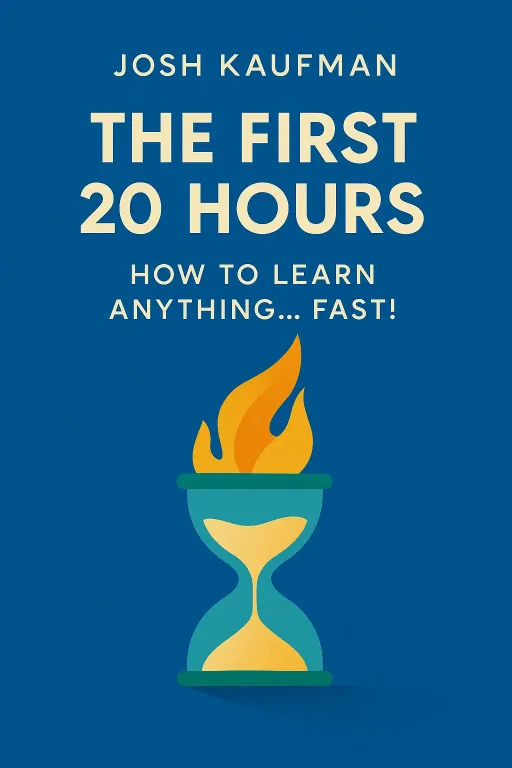
Nova: Exactly! But what if that's not the whole story? What if there's a more strategic, dare I say, path to achieving significant competence, even mastery, in a fraction of that time? Today, we’re diving into two brilliant minds who challenge that conventional wisdom. We'll explore the insights from Josh Kaufman’s widely acclaimed book, "The First 20 Hours: How to Learn Anything... Fast!" and Alan Eagle’s compelling research in "Learned Excellence: Mental Toughness for the World's Best Athletes and How to Apply It to Your Life."
Atlas: That’s a fantastic pairing, because one seems to tackle the "what" and the other the "how." Kaufman, an entrepreneur and self-learner, really made waves with his pragmatic approach to skill acquisition. And Eagle, with his background as a Google executive and deep dive into the science of elite performance, brings a rigorous, data-driven perspective.
Nova: Precisely. Kaufman’s work, which gained significant traction after his viral talk, really demystifies the initial hurdle of learning. He’s all about breaking down the intimidating mountain of a new skill into manageable, climbable steps.
Atlas: Oh, I like that. So, for our listeners who often feel overwhelmed by the sheer volume of things they learn or master in their careers, this sounds like a breath of fresh air. Let’s face it, in a world of endless options, clarity on effective action is gold.
Deconstructing Mastery: The "First 20 Hours" Principle
SECTION
Nova: It absolutely is. And that brings us to our first core idea: the radical simplicity of deconstructing mastery. Kaufman challenges the 10,000-hour rule by focusing not on performance, but on. He argues that you can go from zero to pretty good in just 20 focused hours.
Atlas: Wait, are you saying that someone could, for instance, pick up a new programming language or a critical business analysis skill in just 20 hours and actually be with it? That seems almost too good to be true, especially for someone who needs to see true value for their time.
Nova: It’s not about becoming a world-class expert, Atlas, but about becoming functionally proficient, capable of getting most tasks done effectively. Kaufman’s method is beautifully systematic. He outlines four key steps. The first is to. He says most skills are actually complex bundles of smaller sub-skills.
Atlas: So, instead of "learn to code," it’s "learn to write a basic function, then debug it, then connect to a database"?
Nova: Exactly! He gives a fantastic example of himself learning to play the ukulele. Instead of trying to master every chord and strumming pattern, he identified the core components: a few basic chords, a couple of common strumming patterns, and how to change chords smoothly. He broke it down into its absolute minimum viable product of skill. He wasn't aiming for Carnegie Hall, but for being able to play a few songs and enjoy it.
Atlas: That makes sense. It’s like, for a new career field, instead of trying to absorb, you figure out what 20% of the sub-skills will give you 80% of the value. But how do you even identify that "critical 20%" in a field you know nothing about? That sounds like a meta-skill in itself, almost a strategic intelligence.
Nova: That’s a crucial question, and it’s where the "strategist" in all of us comes into play. Kaufman suggests several ways. First, research. Look at what successful people in that field day-to-day. What are their essential tools, their core tasks? Second, talk to experts. Ask them, "If I only had limited time, what would be the absolute non-negotiables I learn?" Third, observe. Watch others perform the skill. What are the common patterns? What are the recurring challenges? It’s about being an active, almost scientific observer of the skill itself, rather than just diving into the deep end blindly.
Atlas: I see. So it's about intelligence gathering, almost like a reconnaissance mission before you commit your resources. You're trying to find the leverage points. That’s a great way to put it – scientific observation. It shifts the focus from sheer effort to intelligent effort. It’s not about working harder, but about working smarter from the very beginning. I can see how that would appeal to anyone looking for effective action and a clear path forward.
The Engine of Excellence: Deliberate Practice for Rapid Gain
SECTION
Nova: And once you've deconstructed the skill, once you know what those critical components are, then you need to apply the second powerful concept we’re discussing today: deliberate practice. This is where Alan Eagle’s "Learned Excellence" really shines, connecting the dots between initial competence and sustained, high-level performance.
Atlas: Okay, so Kaufman gets you to "pretty good" quickly. Eagle then tells you how to get to "excellent"?
Nova: Precisely. Eagle, drawing from his extensive research and interviews with world-class performers—from Olympic athletes to top executives—shows that elite performance isn't some innate gift. It's the direct result of deliberate, structured practice routines. And here's the crucial part: it’s not just practice. It’s a very specific kind of practice. He emphasizes that the path to excellence is a chosen one, built through intentional effort, not inherited talent.
Atlas: This is where I think a lot of our listeners might get stuck. They schedule time for "practice," but it often feels like just repeating the same thing over and over, hoping for improvement. For someone driven by growth, they want to know their effort is actually moving the needle. What does "deliberate" actually look like, beyond just "structured"? How is it different from just grinding away?
Nova: That’s the million-dollar question. Deliberate practice, as Eagle describes it, has several key characteristics. First, it’s. You’re not just going through the motions; you’re intensely concentrating on improving one specific aspect of the skill. Second, it’s. You’re pushing yourself just beyond your current comfort zone, where mistakes are likely but also where learning happens. Third, it involves. You need to know almost instantly whether you’re succeeding or failing, and why. This feedback loop is absolutely critical for adjustment and improvement.
Atlas: So, if I'm trying to master a specific software feature for a new professional role, it's not just "use the feature for 45 minutes." It’s "use this feature to solve and immediately check if my solution is efficient, correct, and elegant, then adjust"?
Nova: Exactly! Think of a musician practicing scales. A non-deliberate approach is just playing the scale while half-watching TV. A deliberate approach is focusing intently on the evenness of each note, the precise finger placement, or playing it at a slightly faster tempo than comfortable, and listening critically for imperfections. Or, for a sales professional, it might be recording a mock call and then dissecting specific word choices, tone, and objection handling—not just making calls, but analyzing some attempts succeed and others don't. It's about turning every practice session into a learning experiment.
Atlas: That’s a powerful distinction. It means you’re not just logging hours; you’re those hours. You're turning practice into a strategic endeavor. It makes perfect sense for someone who wants to streamline their efforts and ensure their time truly counts, moving them towards their visionary goals.
Nova: And that’s why the recommendation to schedule four 45-minute sessions of deliberate practice this week is so potent. It’s not an overwhelming commitment, but it’s enough time to engage in truly focused, feedback-driven work on those critical 20% sub-skills you’ve identified. It's about building a habit of intelligent effort, proving that consistency, even in small, powerful bursts, can outpace sporadic intensity.
Atlas: I can definitely relate to that. Consistency over intensity, right? It’s about making those small, focused improvements day after day that compound into significant gains, rather than waiting for some mythical block of "perfect" time.
Synthesis & Takeaways
SECTION
Nova: So, to bring these two powerful ideas together: achieving professional mastery quickly isn’t about some innate talent or endless, undefined hours. It’s a two-pronged strategic assault. First, you leverage Kaufman’s insight to deconstruct the skill, identifying the highest-leverage components—that 20% that gives you 80% of the practical value.
Atlas: And then, you apply Eagle’s principles of deliberate practice. You take those identified sub-skills and you don't just practice them, you them through focused, challenging sessions with immediate feedback. It's about precision learning, turning every minute into an opportunity for growth.
Nova: Absolutely. This isn’t a shortcut to genius, but a fast track to competence and, ultimately, excellence. It’s about being a strategic learner, someone who understands where to place their effort for maximum return, making every hour count. It's about making your learning journey efficient and impactful.
Atlas: That’s actually really inspiring. It frames professional growth not as an endless, vague pursuit, but as a series of solvable, deconstructible challenges. For our listeners who crave clarity and effective action, this is gold. It empowers them to take control of their learning and truly make progress.
Nova: Exactly. So, our challenge to you this week is simple, yet profound: identify the '20% of sub-skills' that provide 80% of the value in your new career field, or any skill you want to master. Then, schedule four 45-minute sessions of deliberate practice. Block out that time. Give it your full, undivided attention.
Atlas: Because true mastery isn't just about accumulating knowledge; it's about strategically applying focused effort. And that, my friends, is a journey worth embracing, every single 45-minute session of it.
Nova: This is Aibrary. Congratulations on your growth!









