

Mastering Learning & Memory for Academic Success
Golden Hook & Introduction
SECTION
Nova: Most of us were taught to learn by rereading notes until our eyes glazed over, or highlighting textbooks until they looked like a neon rainbow. If you’ve ever felt like you’re working harder, not smarter, when it comes to absorbing new information, then this episode found you.
Atlas: Oh man, that's incredibly relatable. I think we’ve all been there, staring at the same paragraph for the tenth time, wondering if our brain just decided to take a vacation without us. It feels like a fundamental flaw in how we approach knowledge.
Nova: Absolutely. And what if I told you that the way many of us were taught to learn is actually… wildly inefficient? That there are scientifically proven methods to not only make learning faster and more enjoyable, but also to make that information stick, permanently?
Atlas: That sounds almost too good to be true, especially for anyone who's ever faced a daunting exam or a mountain of new material to master. So, where do we even begin to untangle decades of ingrained study habits?
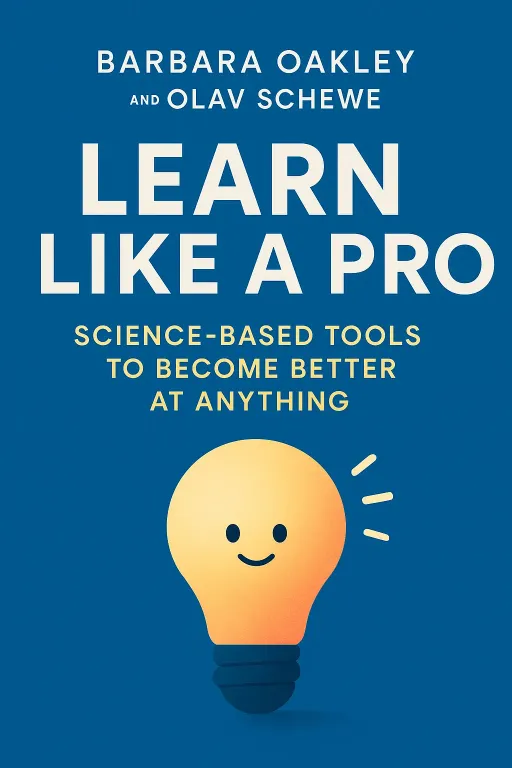
Nova: Well, we’re diving into two brilliant books today that offer complementary blueprints for exactly that. We’re talking about "Learn Like a Pro" by Olav Schewe and Barbara Oakley, and "Become a SuperLearner" by Jonathan A. Levi.
Atlas: Two powerhouses in the learning space. What makes these books particularly impactful for someone looking to truly transform their learning?
Nova: What’s fascinating is the distinct yet complementary expertise these authors bring. Barbara Oakley, for instance, is renowned for her work bridging engineering and neuroscience. She literally went from struggling with math and science in her early career to becoming a distinguished professor of engineering, all by understanding how the brain learns. Her journey makes her insights incredibly grounded and relatable.
Atlas: That's a phenomenal trajectory! And Jonathan Levi?
Nova: Jonathan Levi, on the other hand, gained recognition through his rapid learning courses and personal achievements in memory competitions. He’s proven that with the right strategies, anyone can dramatically improve their memory and information processing speed. So, we have the foundational science and the practical, advanced application.
Atlas: I can see how those two perspectives would create a really comprehensive picture. It sounds like a roadmap for anyone who values self-growth and seeks genuine understanding, moving beyond just surface-level consumption.
Nova: Exactly. Today, we're going to explore how to fundamentally transform our approach to learning and memory, moving beyond rote memorization to true mastery. First, we'll explore the foundational science of how our brains actually learn, and then we'll discuss groundbreaking techniques to supercharge our memory, making information stick like never before.
The Foundations of Efficient Learning
SECTION
Nova: So, let's start with the foundations. "Learn Like a Pro" introduces this incredibly insightful concept of focused versus diffuse thinking. It’s like understanding the two primary gears your brain has for processing information.
Atlas: Okay, focused versus diffuse. What exactly do you mean by that? Are we talking about concentration versus... zoning out?
Nova: In a way, yes, but it’s far more strategic. Focused mode is when you’re intensely concentrating on something, like solving a math problem, analyzing a complex sentence, or really drilling down on a specific concept. Think of it as a powerful, narrow beam of a flashlight, illuminating one specific area brightly.
Atlas: Right, that intense, deep work where you're actively wrestling with the material. We all know that feeling.
Nova: Now, diffuse mode is what happens when you relax your focus. You might be taking a walk, taking a shower, or even just daydreaming. This mode allows your brain to make broader connections, see the bigger picture, and consolidate information without the pressure of intense concentration. It’s more like a floodlight, illuminating a wider area, looking for patterns and relationships between different pieces of information.
Atlas: So, are you saying I should just... daydream during study? Because I'm pretty good at that already.
Nova: Ha, not exactly! The magic happens when you alternate between the two. The book emphasizes that you need both. You dive into focused mode to grasp the details, then you step back into diffuse mode to let those details settle and connect with existing knowledge. It's why stepping away from a tough problem often leads to a sudden "aha!" moment later. Your diffuse mode was working on it in the background.
Atlas: That makes so much sense! I’ve definitely experienced that – banging my head against a wall with a problem, taking a break, and then the solution just pops into my head while I'm doing something completely unrelated. So, it's about actively leveraging both states, not just one.
Nova: Precisely. And this leads us to another core concept: chunking. Think of your brain as a library. When you first encounter new information, it’s like a pile of loose, unfiled papers. Chunking is the process of organizing those papers into neat, labeled folders. A chunk is a piece of information that’s bound together through meaning or use.
Atlas: Okay, so it's like organizing your mental closet. You group related ideas together. But how do you make sure those chunks actually and don't just get lost in the back of the closet?
Nova: That's where active recall comes in, and this is probably the single most powerful learning technique discussed in "Learn Like a Pro." Instead of just rereading your notes, which gives you the illusion of knowing, active recall means testing yourself, forcing your brain to retrieve the information from scratch.
Atlas: That "tiny step" from the book – quizzing yourself immediately after reading a chapter, rather than just rereading. That feels almost too simple. Does it really make much of a difference?
Nova: It makes an enormous difference. Think of it like this: every time you successfully retrieve information, you're not just recalling it; you're strengthening the neural pathways to that information. It's like carving a deeper groove in your brain. Rereading, on the other hand, is passive. It's like looking at a map of a path you've already taken. You recognize it, but you're not building the muscle memory to walk it yourself.
Atlas: Wow. So it’s the effort of retrieval that really solidifies the memory. That’s a game-changer for anyone who has ever spent hours "studying" by just looking at their notes, only to feel blank when the test comes. It directly addresses that frustration.
Nova: It totally does. Studies consistently show that active recall, even in short bursts, is far more effective than passive review for long-term retention. It’s challenging, sometimes frustrating, but that struggle is what builds the strength. It’s what transforms information into true understanding.
Supercharging Memory with Advanced Strategies
SECTION
Nova: And once you've built those solid chunks, Atlas, and you're actively recalling them, how do we then make them? This is where Jonathan Levi's "Become a SuperLearner" really shines, pushing us beyond just effective learning into memory mastery. He introduces the world of mnemonic devices.
Atlas: Mnemonics! I remember learning about "Please Excuse My Dear Aunt Sally" for math operations in school, but that was about the extent of it. Does Levi take it to a whole new level?
Nova: Oh, absolutely. He delves into techniques like the memory palace, also known as the Method of Loci. This isn't just about remembering a short list; it's about creating an entire mental architecture for vast amounts of information.
Atlas: Whoa, a memory palace? That sounds like something out of a Sherlock Holmes novel! Is that really practical for learning, say, complex medical terms or historical dates for academic success?
Nova: It sounds fantastical, but it's incredibly powerful and surprisingly accessible. The idea is to associate pieces of information with specific locations within a familiar place – your house, your daily commute, a favorite park. You create a mental journey, and as you "walk" through it, each stop triggers a memory. For example, if you need to remember a grocery list: imagine a giant, absurd loaf of bread blocking your front door, then a carton of milk spilling all over your couch, and a talking apple juggling in your kitchen.
Atlas: Okay, so the more vivid and absurd the image, the better it sticks. It's playing into how our brains naturally remember stories and images far better than abstract facts. That's brilliant!
Nova: Exactly! Our brains are wired for visual and spatial memory. By turning abstract data into bizarre, memorable images and placing them in a mental landscape, you're leveraging your brain's natural strengths. Levi teaches you how to systematically build these palaces for different subjects, making vast amounts of information instantly retrievable.
Atlas: That's incredible. So, going back to the "deep question" from our initial content, how do we combine this 'chunking' method with these advanced mnemonic techniques to master complex academic subjects more effectively? That’s where the real magic must happen.
Nova: This is where the two approaches fuse into something truly powerful. Imagine you're studying cell biology. First, you use the "Learn Like a Pro" methods: you chunk the information. Instead of memorizing a paragraph about the mitochondria, you create a chunk for "Mitochondria: Powerhouse of the Cell, ATP production, double membrane." You understand its core function.
Atlas: So, you've got the organized, meaningful chunk.
Nova: Then, you bring in Levi's SuperLearner techniques. You build a memory palace, perhaps using your own body as the palace, or a familiar classroom. For the mitochondria chunk, you might imagine a tiny, hyperactive power plant running on your bicep, furiously generating energy, with two distinct layers of protective wall around it. You make it vivid, perhaps even funny.
Atlas: So, it's not just about memorizing facts, it's about building a whole interconnected mental landscape, a visual story for your knowledge. It feels less like studying and more like creative world-building. That's such a hopeful way to look at something as dry as cell biology for many students.
Nova: It absolutely transforms the experience. You're not just stuffing facts into your short-term memory; you're integrating them into a rich, spatial, and visual network. This makes recall faster, more reliable, and frankly, more enjoyable. When you combine chunking with mnemonics, you're not just remembering data; you're building a deeply understood, interconnected web of knowledge that you can access at will. It's like having a hyper-organized, visually indexed super-library in your head.
Atlas: That’s a phenomenal analogy. It moves beyond simply passing a test; it’s about true mental clarity and the ability to express complex ideas effectively, which is essential for anyone aspiring to communicate well. It’s about owning the information, not just renting it for a semester.
Synthesis & Takeaways
SECTION
Nova: Precisely. What both of these books collectively teach us is that learning isn't a passive reception of information. It's an active, strategic process. It’s about understanding your brain's natural rhythms with focused and diffuse thinking, organizing information into meaningful chunks, actively retrieving it to solidify those neural pathways, and then, for that extra edge, using powerful mnemonic devices to make those chunks unforgettable.
Atlas: It really shifts the mindset from "I'm bad at learning" to "I just haven't learned the right techniques yet." For anyone who's ever felt overwhelmed by the sheer volume of information they need to absorb, this offers a tangible path forward. It’s about reclaiming your mental space and making learning a source of empowerment, not stress.
Nova: That’s the core insight, Atlas. It's not about being "smarter"; it's about being smarter about you learn. It means that 30 minutes of focused, active recall combined with strategic breaks and imaginative mnemonic practice can be far more effective than hours of passive rereading. It truly empowers the curious learner to achieve profound understanding and academic success.
Atlas: So, for our listeners who are ready to embrace this journey, what's one immediate tiny step they can take today to start applying these principles?
Nova: My recommendation is to pick one subject you're currently studying, and after your next study session, instead of rereading, spend just 10 minutes trying to write down everything you remember without looking at your notes. Then, check what you missed. That simple act of active recall will immediately begin to strengthen those connections.
Atlas: That's a perfect, actionable step. And if you try that, we'd love to hear about your experience! Share your insights, your "aha!" moments, or even your challenges. Engaging with these ideas is part of the learning process itself.
Nova: Absolutely. Learning is a journey, and every step, no matter how tiny, contributes to incredible growth.
Atlas: This is Aibrary. Congratulations on your growth!









