

Elevating Your Learning & Development Ecosystem
Golden Hook & Introduction
SECTION
Nova: Think fast, Atlas! I'm going to throw out a word, and you give me the first thing that comes to mind, no filter. Ready?
Atlas: Oh boy, I love these. Hit me. My brain is primed and ready... or maybe it's just caffeinated.
Nova: Learning.
Atlas: Learning... hmm. Textbooks. Deadlines. That feeling of finally something. And, honestly, sometimes a bit of a time sink.
Nova: Time sink! That's a fascinating one. Because for many, learning feels like an extra burden, something you to do, not something that propels you forward efficiently. But what if I told you there’s a science to making learning not just effective, but? A way to turn that "time sink" into a turbocharged growth engine?
Atlas: Really? That sounds almost too good to be true, especially for our listeners who are pragmatic strategists, always looking for leverage in a world of limited time. I imagine a lot of them feel like they're constantly playing catch-up, trying to master new skills or concepts while juggling a million other things.
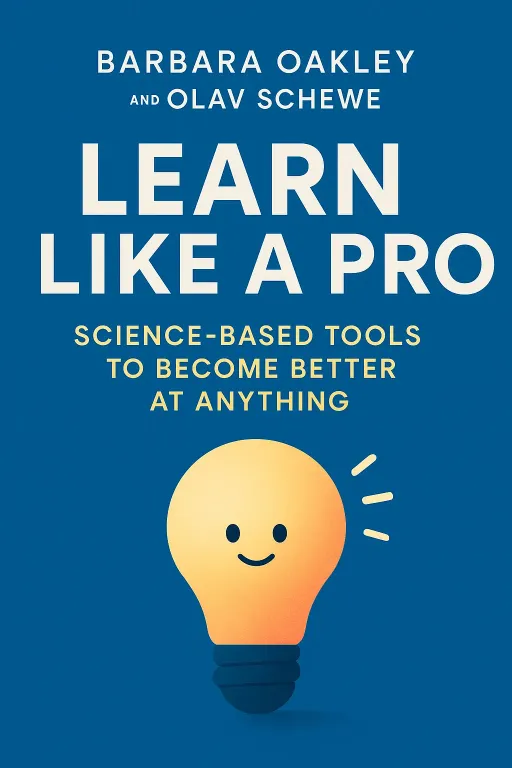
Nova: Absolutely. And that's exactly what we're diving into today, pulling insights from two incredible books. First, we have "Learn Like a Pro" by the brilliant duo Olav Schewe and Barbara Oakley. Now, Barbara Oakley is a fascinating individual; she famously went from struggling with math and science in high school to becoming an engineering professor and then a renowned expert in learning. Her journey itself is a testament to the power of understanding we learn.
Atlas: Wow, that's a powerful origin story for someone teaching us about learning. It's not just theory for her, it's lived experience.
Nova: Exactly. And then, we're pairing that individual mastery with "The Learning and Development Handbook" by Michelle Parry-Slater, which takes that personal journey and scales it, showing how organizations can embed continuous learning into their very DNA.
Atlas: So this isn't just about personal hacks; it's about transforming entire professional ecosystems. That's a huge leap. I'm curious how we bridge that gap.
Unlocking Personal Learning Superpowers: The Science of 'Learn Like a Pro'
SECTION
Nova: Well, let's start with the personal. Schewe and Oakley, drawing on neuroscience, demystify what actually makes learning stick. They present techniques that are surprisingly simple but profoundly effective. The first one, and perhaps the most impactful, is active recall.
Atlas: Active recall. I’ve heard the term, but for many, it probably sounds like another academic buzzword. What does it actually mean, and how is it different from just, you know, studying?
Nova: That’s a great question, because it's fundamentally different from passive re-reading or highlighting. Active recall is literally on what you're trying to learn. Instead of just looking at your notes, you close the book, you try to explain the concept in your own words, you draw a diagram from memory, or you answer practice questions. It’s the act of information that strengthens the neural pathways in your brain, not just putting information in.
Atlas: So it's like, instead of just filling a bucket, you're actively trying to pull water out of it to make sure the bottom isn't leaky?
Nova: That’s a perfect analogy! Imagine you're learning a new client management software. Most people would sit through a tutorial, maybe take notes, and then try to use it. But active recall would involve, after each module, pausing, closing the software, and trying to list the steps for a specific task without looking. Or explaining to a colleague how to do it. It forces your brain to work harder, and that effort is what builds stronger, more accessible memories.
Atlas: That makes sense. I can definitely relate to that feeling of reading something five times and still not quite grasping it. It’s like my brain just glazes over the words.
Nova: Precisely. Your brain gets a false sense of familiarity. It the information, but it hasn't actually it in a way that allows for quick retrieval under pressure. Active recall directly addresses Jenn's time constraints mentioned in our user profile. It might feel slower in the moment, but it dramatically reduces the total time needed to truly master something, because you don't have to re-learn it constantly.
Atlas: Okay, so active recall, that’s one superpower. But what about the other side of the coin? Because sometimes, even after actively recalling, things still fade.
Nova: That’s where its powerful sibling, spaced repetition, comes in. This technique leverages the brain's natural tendency to forget. Instead of fighting it, you embrace it. You review material not in one long cramming session, but in increasing intervals over time. You study something today, then again in three days, then a week, then a month.
Atlas: So it's like gardening, where you don't just water once, but you keep coming back to nurture the plant at just the right times, making sure it doesn't wilt?
Nova: Exactly! And the beauty of it is, the more you space out your reviews, the stronger the memory becomes, and the longer it lasts. It’s far more efficient than frantic cramming before a big presentation or a new project launch. Schewe and Oakley emphasize that these aren't just academic tricks; they're fundamental principles of how our brains are wired to learn effectively.
Atlas: That’s actually really inspiring. It sounds like these techniques could transform how someone approaches anything from learning a new language to mastering a complex business strategy. But wait, looking at this from an empathetic leader's perspective, this sounds great for individual study, but I imagine a lot of our listeners leading teams might wonder, how does this translate beyond personal flashcards? How do you scale this individual mastery across an entire organization?
Building a Learning Ecosystem: From Personal Growth to Organizational Impact
SECTION
Nova: That’s a brilliant segue, Atlas, because that's precisely where Michelle Parry-Slater's "The Learning and Development Handbook" picks up the torch. She argues that traditional L&D, the kind where you send people to a one-off workshop or an annual training day, is largely ineffective in today's fast-paced world. It's like trying to fill that leaky bucket from before with a single, massive pour.
Atlas: I can see that. For our listeners who are future navigators, the idea of static, infrequent training feels completely outmoded. The world changes too fast.
Nova: Absolutely. Parry-Slater advocates for embedding learning the flow of work. It’s about creating an entire ecosystem where learning isn't an event, but a continuous process, a daily habit. Think about it: instead of a mandatory "innovation training" once a year, what if teams had dedicated time each week for peer-led knowledge sharing sessions? Or micro-learning modules integrated directly into project management tools?
Atlas: So it's not just about giving people resources, but creating an environment where learning is actually and constantly, almost invisibly? Like it becomes part of the operating system, not an app you occasionally open.
Nova: Exactly. She highlights organizations that are doing this well. For instance, some companies are implementing "learning sprints" where small teams dedicate a few hours each week to collectively explore a new tool or methodology, then immediately apply it to a current project. Others are using internal mentorship programs, or even "reverse mentoring," where junior employees teach senior leaders about emerging technologies or social media trends.
Atlas: That sounds ideal, but for someone in a high-stakes environment, isn't there a fear that "embedding learning" just means more work without clear outcomes? How do you measure the impact of continuous learning versus a structured course with a clear completion certificate?
Nova: That’s a really critical point, and Parry-Slater addresses it by shifting the focus from "completion" to "application" and "impact." Instead of tracking who attended a workshop, you track how many people are successfully using the new software feature, or how a team's problem-solving speed has improved, or how customer satisfaction scores have risen due to improved communication skills. It's about connecting learning directly to business outcomes and fostering a culture where asking "what did I learn today?" is as natural as "what did I achieve today?"
Atlas: I see. It's about seeing learning as an investment in agility and future capability, not just a line item in the budget. It's about making curiosity a competitive advantage.
The Virtuous Cycle: How Individual Mastery Fuels Collective Capability
SECTION
Nova: Precisely. And this is where the profound synergy between these two books truly shines. Individual learning mastery, those science-backed techniques from Schewe and Oakley, become the bedrock. When individuals are empowered to learn efficiently and effectively, they aren't just improving themselves; they become catalysts for collective capability.
Atlas: So, my personal use of active recall to master a new skill isn't just about my own growth, it's about me becoming a more valuable, more agile contributor to my team?
Nova: Absolutely. Imagine a team where everyone consistently applies active recall and spaced repetition to their ongoing projects. They're not just absorbing information; they're truly internalizing it, becoming experts faster. Then, when that team engages in the continuous learning practices Parry-Slater describes – the peer coaching, the knowledge sharing, the learning sprints – the individual mastery amplifies the collective impact.
Atlas: That gives me chills. It’s like each person's intellectual muscle-building contributes to the entire team's strength. It's a virtuous cycle. Personal learning fuels collective capability, and a supportive learning ecosystem encourages even more personal growth.
Nova: That’s it. It transforms the question from "How do learn?" to "How do learn, and how does my learning elevate everyone around me?" It's about personal evolution creating a blueprint for collective success, driving innovation, and building an organization that isn't just adapting to the future, but actively shaping it.
Atlas: That’s actually really inspiring. It means my own growth isn't just selfish; it has a ripple effect. So, for our listeners who are discerning leaders or future navigators, what's the first "tiny step" they can take to start building this blueprint, both for themselves and their teams?
Synthesis & Takeaways
SECTION
Nova: The core message here is that learning is not a passive consumption of information, nor is it a one-off event. It's an active, ongoing, strategic advantage. By understanding how our brains truly work, we can transform our personal learning habits. And by consciously embedding learning into our professional environments, we can transform an entire organization into a dynamic, adaptive powerhouse. The "Deep Question" we started with – how can you transform your personal learning habits into a blueprint for fostering a dynamic, learning-centric environment within your professional spheres – really comes down to this synergy.
Atlas: I love that. It’s about being intentional with our growth, not just hoping it happens. So, the "tiny step" from these books is beautifully simple: Choose one learning technique from "Learn Like a Pro"—whether it’s active recall for your next big presentation or spaced repetition for that new software—apply it to a current work task, and then, crucially, consider how you could integrate continuous learning into your team's workflow. Start small, see the impact, and then let that ripple effect begin.
Nova: It’s a powerful invitation to rethink our relationship with learning, both individually and collectively. It's not just about what you know, but how effectively you can acquire and apply new knowledge, and how you empower others to do the same.
Atlas: And in a world that's constantly changing, that ability to learn and adapt isn't just a skill; it's the ultimate differentiator.
Nova: Absolutely.
Atlas: This is Aibrary. Congratulations on your growth!









