

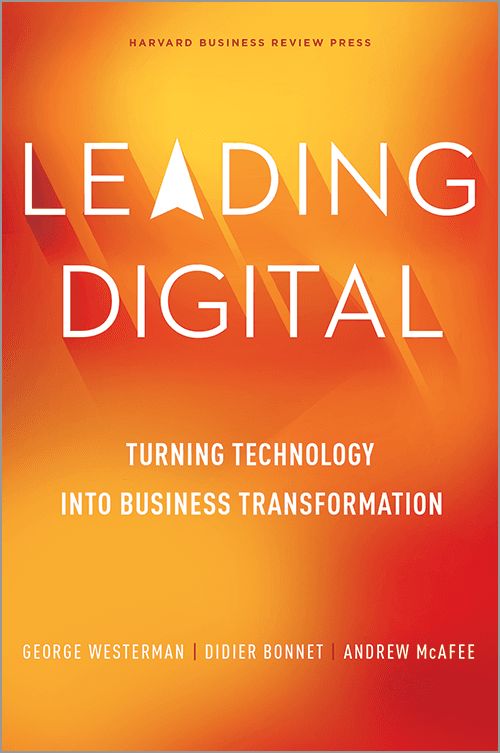
Leading Digital
Turning Technology into Business Transformation
Introduction: Beyond the Tech Bubble
Introduction: Beyond the Tech Bubble
Nova: Welcome to the show! Today, we're diving into a book that fundamentally changed how established industries view technology: George Westerman's "Leading Digital: Turning Technology into Business Transformation."
Nova: : I'm ready. I always assumed digital transformation was a Silicon Valley problem, something for startups. Why should a CEO running a traditional manufacturing plant or a retail chain care deeply about a book written by MIT Sloan experts?
Nova: That's the perfect starting point. The core message is that digital transformation is not optional, and it’s definitely not just for tech companies. Westerman and his co-authors, Didier Bonnet and Andrew McAfee, studied large, established firms—think Nike, Caesars, Burberry—and found that the ones succeeding weren't just adopting new gadgets. They were fundamentally changing how they operate.
Nova: : So, it’s less about buying the latest cloud software and more about a complete organizational overhaul?
Nova: Exactly. They found that only about 10% of the organizations they studied were truly successful in leveraging digital technology for massive business impact. These elite few they dubbed the "Digital Masters." The book is essentially the blueprint for joining that top 10%.
Nova: : A blueprint sounds useful. What's the first major shift in thinking we need to make to even start following this blueprint?
Nova: The biggest shift is moving away from viewing digital initiatives as temporary projects. That's our first deep dive: understanding the mindset of a Digital Master.
Key Insight 1
The Digital Master Mindset: Capability Over Project
Nova: The research Westerman conducted revealed a critical distinction. Most companies treat digital transformation like an IT project—it has a start date, an end date, a budget, and then it's 'done.'
Nova: : That sounds logical, though. You implement the new CRM, you launch the new app, and you move on to the next priority.
Nova: But the Digital Masters don't do that. Westerman stresses that for them, digital transformation is about building an enduring. It’s a continuous organizational muscle, not a one-off sprint. They embed digital thinking into their DNA.
Nova: : That’s a huge difference in resource allocation and leadership focus. How do they measure this capability? Is it just revenue growth?
Nova: It’s broader. They focus on three key areas where digital technology must drive value. Think of it as the three pillars of transformation: enhancing customer experience, streamlining operational processes, and fundamentally reshaping the business model itself.
Nova: : So, if a company just digitizes its existing paperwork but doesn't change how it interacts with customers or how it makes money, they’re still just a project-focused laggard?
Nova: Precisely. One statistic that stuck out was how often leaders fail to connect the technology investment to tangible business outcomes. The Masters link every digital dollar spent directly to one of those three pillars. They aren't just modernizing; they are technology for competitive advantage.
Nova: : Weaponizing—I like that aggressive framing. It implies intent. Does Westerman offer a way to grade where a company currently stands on this journey?
Nova: He does, and this leads us perfectly into the framework. They developed what’s often called the Digital Mastery Quadrant. It plots companies based on their digital capabilities versus their leadership commitment. It’s a harsh reality check.
Nova: : A quadrant sounds like a way to sort companies into buckets. Are there four distinct levels?
Nova: Yes. You have the lowest level, where companies are just dabbling, maybe running a few small digital pilots without executive buy-in. Then you move up through stages where they might have strong tech but weak leadership alignment, or vice versa.
Nova: : And the top tier, the Digital Masters, must have both high capability and high leadership commitment?
Nova: Exactly. They have the leadership mandate to drive change across silos, and they possess the internal technical and analytical skills to execute that vision consistently. It’s the synergy between the C-suite and the tech teams that defines them.
Nova: : So, the first takeaway is: Stop thinking about the next software rollout and start thinking about building a permanent, high-level organizational muscle that drives value across customer experience, operations, and business models.
Key Insight 2
The Two-Part Framework: Strategy Meets Execution
Nova: Let's unpack that two-part framework I mentioned earlier. Westerman structures success around two main components that must work in harmony: Strategy and Execution.
Nova: : Strategy is the 'what'—the vision. Execution is the 'how'—the implementation. Seems straightforward, but where do most companies fail in this pairing?
Nova: They fail because they treat them as separate departments. The Masters integrate them. On the strategy side, they focus on defining the —what the company will look like in five years because of digital, not just what tools they will use.
Nova: : And on the execution side, what’s the secret sauce? Is it agile methodology?
Nova: It’s more foundational than methodology. Westerman highlights that Digital Masters often invest heavily in cleaning up their legacy systems or major transformations. They don't just build shiny new things on top of a shaky foundation.
Nova: : Ah, the dreaded technical debt cleanup. That’s never fun, but it makes sense. You can’t build a skyscraper on sand.
Nova: Precisely. And this cleanup isn't just IT’s problem; it’s a leadership mandate. They treat the cleanup as a strategic enabler, not a necessary evil. Furthermore, they focus on building internal talent pools.
Nova: : So, they’re not just outsourcing the transformation; they’re building internal expertise in data science, digital marketing, and user experience design?
Nova: Absolutely. They are building the. They hire for digital fluency and then create structures where that fluency can thrive. Think about the case study of Burberry. They didn't just hire a CMO; they fundamentally rewired their entire supply chain and retail experience around digital engagement.
Nova: : Burberry is a great example. They went from being known for trench coats to being a digital fashion leader. What about the operational side? How did they streamline processes differently than a non-Master company?
Nova: For the Masters, operational streamlining isn't just about cost-cutting; it’s about speed and responsiveness to the customer. They use digital tools to create feedback loops that are almost instantaneous. If a customer complains online, the operational team sees it, analyzes it, and can adjust production or logistics within days, not months.
Nova: : That speed is terrifying for a slow-moving incumbent. It sounds like the framework demands a level of organizational transparency that many legacy companies actively avoid.
Nova: It does. It forces the breaking down of those traditional silos. The strategy and execution components must feed each other constantly. If the execution teams find a technical roadblock, it immediately informs the strategy review, and vice versa. It’s a living document, not a binder on a shelf.
Case Study & Culture Deep Dive
Culture Eats Strategy: The Human Element of Digital Change
Nova: We’ve talked about vision and framework, but the research strongly suggests that the hardest part of digital transformation isn't the technology—it's the people. Westerman dedicates significant attention to culture and change management.
Nova: : That rings true. People naturally resist change, especially when it threatens established roles or power structures. What specific cultural hurdles do the Digital Masters overcome?
Nova: They tackle employee resistance head-on. Westerman notes that leaders must foster a culture of innovation where failure is viewed as a learning opportunity, not a career-ending mistake. This is crucial when you are experimenting with new digital models.
Nova: : So, they create psychological safety for experimentation? That’s hard to mandate from the top down.
Nova: It is, but they mandate the for it. They use specific language and reward systems that celebrate smart risks, even if the outcome isn't immediately profitable. Consider the case of Caesars Entertainment. They used data analytics not just to track gambling habits but to personalize every aspect of the guest experience, from room upgrades to restaurant reservations.
Nova: : That level of personalization requires employees on the ground to trust the data and feel empowered to act on it, right? A front-desk clerk needs to feel comfortable overriding a standard script because the data suggests a different approach.
Nova: Exactly. That trust is built through clear communication about the change is happening—tying it back to survival and growth, not just efficiency. Westerman emphasizes that leaders need to be visible champions, constantly communicating the digital vision and celebrating small wins publicly.
Nova: : It sounds like the leader has to become the Chief Storyteller for the transformation.
Nova: Absolutely. They have to tell the story of the 'before'—the risks of stagnation—and the 'after'—the exciting future they are building. One of the key takeaways mentioned in summaries is the need to develop digital leadership capabilities across the organization, not just hoard them in the IT department.
Nova: : So, if I’m a middle manager in finance, I need to understand how digital tools are changing reporting, even if I’m not coding them?
Nova: That’s the goal. Digital fluency must permeate every function. The book shows that the Masters actively manage the cultural transition, often by creating small, cross-functional teams—sometimes called 'digital hubs'—that operate outside the traditional bureaucratic structure to move faster.
Nova: : These hubs sound like internal startups, protected from the inertia of the main organization. That’s a smart way to test and prove new concepts before a massive, risky rollout across the entire enterprise.
Conclusion: The Mandate for Continuous Digital Evolution
Conclusion: The Mandate for Continuous Digital Evolution
Nova: We've covered a lot of ground today, moving from the abstract concept of Digital Mastery to the concrete actions required to achieve it. What's the single most important thought you're taking away from Westerman's work?
Nova: : For me, it’s the idea that digital transformation is not a destination; it’s a permanent state of evolution. The moment you declare victory, you’ve already started falling behind. The focus must remain on building the to adapt continuously.
Nova: I couldn't agree more. The actionable takeaway is to audit your current efforts against the three pillars: Customer Experience, Operations, and Business Model. Are your digital investments clearly serving one of those three, or are they just modernization for modernization's sake?
Nova: : And secondly, look at your leadership structure. Are you fostering psychological safety for experimentation, or are you punishing smart failures? That cultural element is the true gatekeeper to becoming a Master.
Nova: Westerman’s work is a powerful reminder that technology is the tool, but leadership and culture are the engine of digital success. It’s about leading people through change, not just implementing software.
Nova: : A fantastic deep dive into a foundational text for modern business strategy. It certainly reframes the entire conversation around technology investment.
Nova: Indeed. If you’re looking to move your organization from merely surviving the digital age to actively shaping it, "Leading Digital" is essential reading. This is Aibrary. Congratulations on your growth!