

Inspiring Transformative Change: Moving Beyond Incremental Gains.
Golden Hook & Introduction
SECTION
Nova: Everyone talks about change, right? Small tweaks, minor adjustments. But what if those 'tiny steps' are actually holding you back from something truly monumental? What if you're stuck in the quicksand of incrementalism?
Atlas: Oh, I love that. The quicksand of incrementalism. That's going to resonate with anyone who's ever felt like they're constantly pushing a boulder uphill, only to see it roll back down.
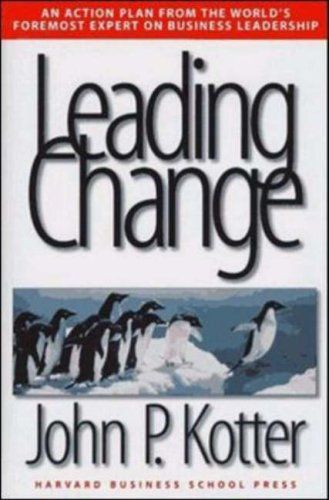
Nova: Exactly! And today, we’re diving into the profound insights from two titans of organizational thought: John P. Kotter’s seminal work, “Leading Change,” and Jim Collins’ groundbreaking research in “Good to Great.” Kotter, a Harvard Business School professor, revolutionized how we think about organizational transformation, giving us a roadmap that is still incredibly relevant decades later.
Atlas: That makes me wonder, Nova, because for a lot of our listeners who are systems thinkers, always looking for that bigger picture and building for the future, the idea of 'transformative change' can feel… overwhelming. Where do you even begin when you want to shift an entire organization?
Deep Dive into Core Topic 1: The Strategic Architecture of Transformative Change
SECTION
Nova: That’s precisely where Kotter steps in. He argues that true transformative change isn't about one big leap, but an 8-step process. It starts with creating a sense of urgency. Think of it like this: if people don't feel the heat, they won't move the furniture.
Atlas: Okay, but wait. For someone who's already dealing with supply chain resilience or customer journey mapping, isn't there already a sense of urgency? How do you create more urgency without just creating panic?
Nova: That's a brilliant question, Atlas. It's not about manufactured panic. It's about revealing the 'brutal facts,' as Jim Collins would say, but in a way that inspires action, not paralysis. Imagine a manufacturing company, 'Global Gears,' that's been dominant for decades. Their market is shifting to custom, on-demand parts, but their internal systems are built for mass production. Profits are slowly eroding, but the old guard is comfortable. The CEO, instead of just announcing layoffs, commissions a detailed report showing how their top three competitors are innovating with AI-driven customization, and how Global Gears is losing bids at an alarming rate. He presents this data not as a threat, but as an opportunity for reinvention.
Atlas: So, it's not just saying 'we're in trouble,' it’s showing them the specific, undeniable data that proves the current path is unsustainable, and then painting a picture of what's possible.
Nova: Exactly. And then, Kotter says, you need a powerful guiding coalition. This isn't just a committee; it’s a cross-functional team with real power, influence, and diverse perspectives. For Global Gears, this coalition included leaders from engineering, sales, IT, and even a few forward-thinking factory floor managers. Their mandate was to champion the vision for AI-driven customization. They became the internal evangelists, translating the CEO's vision into actionable steps for different departments.
Atlas: I can see how that would be critical. If it's just top-down directives, it feels like an imposition. But if you have a diverse group actually designing the new path, it builds ownership. That makes sense, but how do you keep that coalition from becoming just another siloed group, especially in a large organization?
Nova: That's where continuous communication and visible wins come in. They need to be seen as the engine, not just the steering wheel. This strategic architecture provides the blueprint. But a blueprint, no matter how brilliant, is useless without the human will to build.
Deep Dive into Core Topic 2: The Human Heartbeat of Lasting Innovation
SECTION
Nova: And that naturally leads us to the second key idea we need to talk about, which often acts as the true differentiator: the human heartbeat of lasting innovation. Jim Collins, in 'Good to Great,' explores leadership that transforms companies. He talks about 'Level 5 Leadership,' which is this fascinating blend of extreme personal humility with intense professional will.
Atlas: Humility and fierce resolve? That sounds like a contradiction. For many of our listeners who are innovators and often have to fight for their vision, 'humility' might feel like backing down. What do you mean by that?
Nova: It’s a great point. It’s not about being a shrinking violet. It’s about channeling your ego away from yourself and into the larger goal. Think of a leader who, when things go well, points to the team, the process, or even sheer luck. But when things go wrong, they look in the mirror and take full responsibility. They build enduring greatness, not personal glory. Picture a tech startup, 'Synapse Innovations,' facing a critical bug in their flagship AI product just before launch. The CEO, Sarah, instead of blaming her engineers, publicly takes responsibility, then quietly works alongside the development team, pulling all-nighters, asking "how can I help?" not "who messed up?"
Atlas: Wow, that’s actually really inspiring. So, it’s about a leader who is relentless in their pursuit of excellence for the company, but completely unassuming about their own role in it. That gives me chills.
Nova: Absolutely. And alongside that, Collins emphasizes confronting the 'brutal facts.' Level 5 leaders don't sugarcoat reality. They create a culture where people can speak truth to power, where data drives decisions, even if that data is uncomfortable. Sarah at Synapse Innovations didn't hide the bug from investors; she presented the problem, the solution plan, and the revised timeline with complete transparency. This built immense trust, both internally and externally.
Atlas: That’s a great way to put it. For someone who's driven by impact and meaningful progress, this kind of leadership would empower their team, giving them space to grow, just like our user profile suggests. It's about trust and transparency, not just top-down strategy.
Nova: Precisely. It’s about building a culture where reality is faced head-on, where people aren't afraid to bring bad news, because they know the focus will be on solving the problem, not punishing the messenger. This combination of strategic architecture and human-centric leadership is what truly ignites and sustains transformative change.
Synthesis & Takeaways
SECTION
Nova: So, when we look at Kotter’s strategic roadmap and Collins’ insights into leadership, we see that leading transformative change isn't just about having the best new idea. It's about orchestrating a symphony of strategy and human dynamics.
Atlas: Right. It’s about understanding that the courage to light the way, as our user profile says, comes from both a clear, well-communicated plan and the humility to empower others to execute it, trusting their vision.
Nova: Exactly. The cold fact is, you can have the most brilliant strategy on paper, but if you haven’t inspired a shared vision and navigated the human resistance, it’s just a theoretical exercise. The ability to inspire is as critical as the strategy itself.
Atlas: That makes me wonder, for all our listeners out there, what’s one tiny step they can take this week to start moving beyond incremental gains?
Nova: I'd say, identify one area where your team needs to embrace a new way of thinking. Then, instead of just dictating it, craft a compelling narrative for why this change is essential. Not just what needs to be done, but the inspiring future it unlocks.
Atlas: I love that. Crafting the narrative. Because it's not just about the facts; it's about the story we tell ourselves and each other.
Nova: Absolutely. And that story is what truly transforms.
Atlas: Thank you, Nova, for shedding light on such a critical topic.
Nova: My pleasure, Atlas.
Atlas: What an incredible conversation about inspiring transformative change. We hope this episode has sparked some reflections on how you lead and innovate.
Nova: We'd love to hear your thoughts! What's one compelling narrative you're crafting for change in your own sphere? Share your insights with us.
Atlas: This is Aibrary. Congratulations on your growth!