

Mastering Your Inner and Outer World
Golden Hook & Introduction
SECTION
Nova: What if the biggest lie we tell ourselves about personal growth isn't about lack of motivation, but about misunderstanding the very mechanics of change?
Atlas: Oh, I like that. Because if motivation were enough, I’d be fluent in five languages, have a six-pack, and my inbox would be at zero. My willpower usually lasts about as long as my New Year's resolutions do, which is to say, not very.
Nova: Exactly! And that’s where today’s insights truly shine. We’re dissecting two profoundly complementary works that, together, offer a complete blueprint for mastering both your inner philosophy and your daily actions.
Atlas: So, less "just try harder" and more "understand how you're built"?
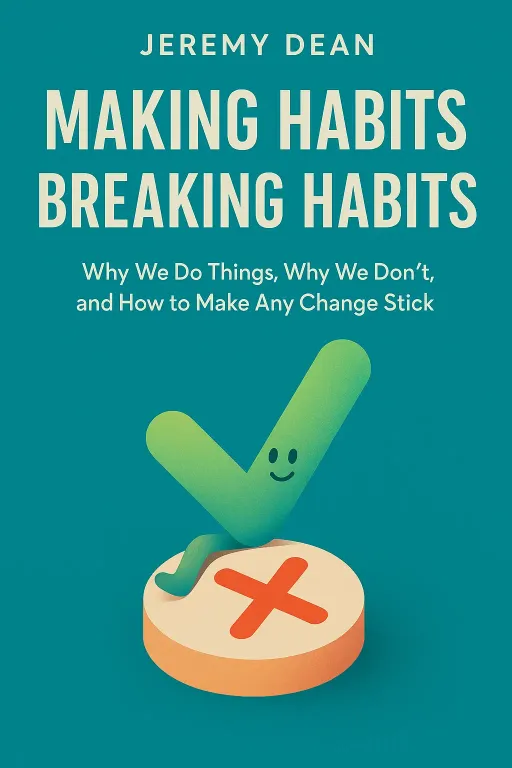
Nova: Precisely. We’re talking about Jeremy Dean’s groundbreaking book, "Making Habits, Breaking Habits," which deconstructs the science behind behavioral change, and then we’re elevating that with Jim Rohn’s enduring classic, "Leading an Inspired Life," which grounds all that action in a powerful personal philosophy.
Atlas: That’s fascinating. I mean, we all know habits are powerful, but it feels like most advice is just... 'be consistent.' It rarely gets into the 'how' for people who struggle with consistency. And then layering Rohn on top, that’s about the deeper 'why,' right?
Nova: Absolutely. Dean gives us the tactical, evidence-based strategies for lasting behavioral change – think of it as the operating manual for your personal routines. And Rohn, he gives us the strategic, philosophical framework to ensure those routines are building towards a truly inspired and impactful existence. It’s the ultimate one-two punch for anyone driven by making informed choices and maximizing their impact.
The Micro-Mechanics of Lasting Habits
SECTION
Nova: So, let's dive into Dean first. His work, "Making Habits, Breaking Habits," isn't just another self-help book. It’s a deep dive into the psychology of automatic behavior, challenging so many common myths that actually hinder our progress.
Atlas: Common myths? Like what? That it takes 21 days to form a habit? Because I’ve heard that one a million times.
Nova: Bingo! That 21-day myth? Dean would tell you it’s vastly oversimplified and often inaccurate. Research shows it can take anywhere from 18 days to 254 days, depending on the person and the complexity of the habit. The real takeaway is that consistency matters far more than a magic number.
Atlas: That’s a relief, honestly. It takes the pressure off, knowing I’m not a failure if day 22 isn't perfect. But if it’s not about willpower or a specific timeline, what it about?
Nova: It’s about understanding the: the cue, the routine, and the reward. Dean emphasizes that lasting change comes from manipulating these elements, not from sheer force of will. He provides evidence-based strategies. For instance, making the desired behavior incredibly easy to start, almost frictionless.
Atlas: So, it's about engineering your environment, rather than just gritting your teeth? Can you give us an example? Let’s say, for someone trying to get a handle on their finances, which is a big goal for a lot of our listeners.
Nova: Perfect example. Let's consider Sarah, a busy professional who wants to save more money but constantly finds herself overspending on impulse buys or subscriptions she forgets about. Her traditional approach was probably "I'll just try harder to not spend." That’s a willpower approach, and it’s exhausting.
Atlas: I know that feeling. It's like trying to hold your breath all day.
Nova: Exactly. Dean’s approach would be entirely different. First, identify the. For Sarah, it might be boredom during her lunch break, leading her to browse online stores. Or an email notification about a new gadget. The is the impulsive purchase. The is the fleeting dopamine hit of a new item or the satisfaction of ownership.
Atlas: Okay, so how does she hack that loop?
Nova: She applies Dean’s strategy of making the habit difficult and the habit easy. Instead of relying on willpower to resist the online store, she might block those shopping sites during work hours. Or, for subscriptions, she schedules a monthly "subscription audit" in her calendar. That’s her new. The is the calendar notification, the is reviewing and canceling, and the is seeing her savings grow and feeling in control.
Atlas: That makes so much sense. It’s like setting up tripwires for bad habits and glide paths for good ones. It's less about self-control in the moment and more about pre-commitment and environmental design.
Nova: Absolutely. Another key insight from Dean is the power of "tiny steps." Many people try to overhaul their entire life at once. Instead, Dean advocates for identifying one habit, so small it feels almost ridiculous to do it.
Atlas: So, if I want to run a marathon, I don't start by running five miles. I start by... putting on my running shoes?
Nova: Precisely! Or walking to the mailbox. The goal isn't the immediate outcome; it's building the of someone who runs. The consistency of that small action, day after day, rewires your brain. It's about showing up, not about crushing it every time. This consistent, deliberate practice is what truly builds new neural pathways and solidifies habits.
Atlas: I guess that makes sense. It’s like gravity. A tiny, consistent pull over a long time creates massive change. But what about when things get tough? When life throws you a curveball and those tiny steps feel impossible?
Cultivating an Inspired Philosophy for Life
SECTION
Nova: That’s a perfect segue, Atlas, because that’s where Jim Rohn steps in. While Dean gives us the for those micro-mechanics, Rohn provides the and the foundational strength to keep going when the 'how' gets challenging. His work, "Leading an Inspired Life," emphasizes the critical role of a personal philosophy.
Atlas: "Personal philosophy" sounds a bit... academic. For someone who's looking to build wealth or just navigate the complexities of modern tech, how does 'philosophy' actually help with daily action?
Nova: That’s a great question, and it’s where Rohn’s genius lies. He doesn't mean abstract academic concepts. He means your personal set of beliefs, values, and principles that guide your decisions and shape your perspective. It’s your internal compass. Without it, even the best habits can feel hollow or directionless.
Atlas: So, if Dean is the architect of the house, Rohn is the one who designs the life that will be lived that house.
Nova: Beautiful analogy! Rohn argues that true inspiration and impact don't just happen; they're cultivated through self-discipline and taking radical responsibility for your own life. He says, "You are the sum total of your choices." Not your circumstances, not your luck, but your choices.
Atlas: That sounds a bit harsh, honestly. I imagine a lot of listeners might feel like their circumstances heavily influence their choices. It feels like a big leap to say you're for everything.
Nova: I hear you, and it’s a powerful, almost unsettling idea at first. But Rohn isn’t saying you're responsible for, but rather for to what happens. He challenges us to move beyond a victim mentality and embrace our agency. For example, let's consider someone feeling stuck in a career they dislike, blaming the economy or their boss for their lack of progress.
Atlas: That’s a common story. I imagine a lot of our listeners can relate to that feeling of being trapped.
Nova: Exactly. Rohn would say that while the circumstances are real, the and the are where personal philosophy comes in. Instead of saying, "My job sucks, and I can't do anything about it," a Rohn-inspired philosophy would prompt the question: "Given these circumstances, what I do? What choices do I have, and how do they align with my deeper values?"
Atlas: Okay, so it’s less about blaming yourself for bad luck, and more about owning your power to act despite it. What does that look like in practice?
Nova: It looks like someone, let’s call her Maria, who, despite feeling overwhelmed at work, starts dedicating 20 minutes daily – following our micro-learning suggestion – to learn a new skill that could open up different opportunities. It’s not about quitting her job tomorrow, but about taking ownership of her learning and growth trajectory. Her personal philosophy shifts from "I am a victim of my job" to "I am the architect of my career path."
Atlas: So, the habit of micro-learning, for instance, isn't just a random act; it's fueled by a conscious decision to take responsibility for her future, and a belief that she shape it. It's the conviction that gives the tiny step its power.
Nova: Precisely. Rohn teaches us that our personal philosophy dictates the quality of our actions, and ultimately, the quality of our lives. It gives purpose to the consistent, deliberate practice Dean talks about. Without a strong 'why,' even the most perfectly structured habits can falter when faced with real-world friction.
Synthesis & Takeaways
SECTION
Nova: So, bringing these two powerful minds together, we see that Dean’s "Making Habits, Breaking Habits" provides the scientific toolkit – the micro-mechanics for automating beneficial actions. And Rohn’s "Leading an Inspired Life" provides the compass and the fuel – the personal philosophy and radical responsibility that ensures those actions are meaningful and sustainable.
Atlas: That’s a profound connection. It’s not enough to just build habits; you need to know you're building them for. Otherwise, you could be incredibly efficient at something that doesn't actually serve your deeper purpose.
Nova: Exactly. True mastery of your inner and outer world comes from aligning your daily, scientific habit-building with a clear, self-defined personal philosophy. It’s not just about doing, but doing with intention. It's the difference between merely existing and truly leading an inspired, impactful life.
Atlas: And for our listeners, especially those who value self-growth but struggle with time, or who are driven by making informed choices and maximizing impact, this synergy is gold. It’s about being incredibly smart with your limited energy.
Nova: It really is. It’s about understanding that small, consistent actions, when guided by a clear, intentional philosophy, are the bedrock of significant, lasting change.
Atlas: So, for our takeaway this week, inspired by both Dean and Rohn, let's make it actionable. Identify one small habit you want to cultivate this week. Apply Dean's insights on consistent, deliberate practice – make it ridiculously easy to start. And then, connect it to Rohn's philosophy of intentional living: ask yourself, "How does this tiny habit serve my larger vision for an inspired and impactful life?"
Nova: That’s the perfect challenge. That tiny step, consciously chosen and consistently practiced, is where big momentum begins.
Atlas: It’s where the pragmatic explorer meets the future navigator.
Nova: This is Aibrary. Congratulations on your growth!









