

The 'Great Man' Fallacy: Why Leadership is More Than Charisma
Golden Hook & Introduction
SECTION
Nova: We often celebrate the lone genius, the charismatic leader who single-handedly changes the course of history. We see them on pedestals, their names etched into our collective memory as the sole architects of progress. But what if that entire narrative, that almost mythical belief, is not just oversimplified, but actively harmful to how we truly understand power and societal progress?
Atlas: Whoa, hold on a second, Nova. Are you saying our heroes aren't actually heroes? That all those inspiring stories we grew up with are... just stories? That sounds a bit out there, to be honest.
Nova: Not at all, Atlas. It's not that they weren't heroes, or that their actions didn't matter. It's that our focus on their individual brilliance often blinds us to the much larger, more complex forces at play. We're talking about what's often called the 'Great Man' Fallacy. It’s the idea that leadership is primarily about individual traits and charisma, rather than a deep engagement with the intricate systems leaders operate within.
Atlas: Okay, so what exactly is this 'fallacy' then? Because for many of us, when we think of a leader, we picture that singular, decisive figure. We look for the person at the top.
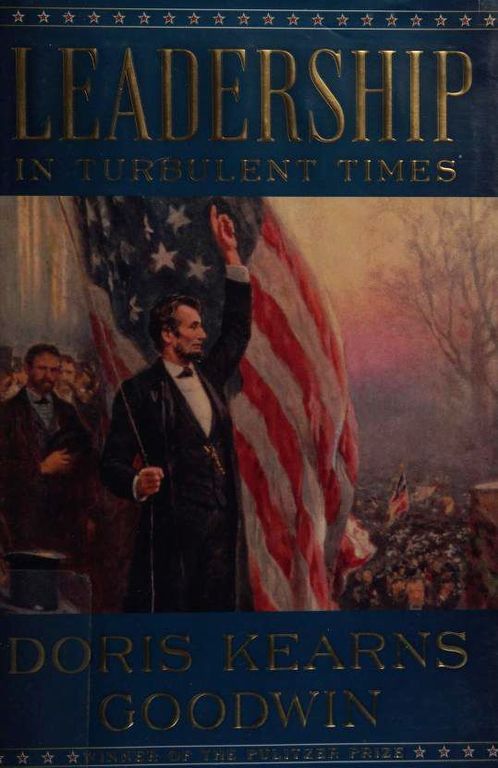
Nova: Exactly! And today, we're diving into why that view, while inspiring, overlooks the very mechanisms that allow change to happen. We're looking at why leadership is truly more than charisma, drawing insights from two incredible books. First, we have Doris Kearns Goodwin's seminal work, "Leadership: In Turbulent Times." Goodwin, a Pulitzer Prize-winning historian, is renowned for her meticulous research into presidential leadership during America's most challenging periods. Her work isn't just biography; it's a deep dive into how these figures navigated unprecedented crises.
Atlas: I mean, Goodwin’s reputation alone gives that book immense weight. She really humanizes these larger-than-life figures. So how does someone like Donella Meadows, a pioneering environmental scientist and systems theorist, fit into this conversation about leadership? Her book, "Thinking in Systems," feels like it’s from a completely different universe.
Nova: And that's precisely why it's so powerful here, Atlas. Meadows' "Thinking in Systems," though published posthumously and compiled from her groundbreaking lectures, is considered a foundational text in understanding how everything is interconnected. It offers a framework for seeing the world not as isolated events, but as dynamic, interconnected systems. Her insights are crucial for understanding the 'how' behind effective leadership. This brings us right to our first big idea: deconstructing this 'Great Man' Fallacy.
Deconstructing the 'Great Man' Fallacy: Beyond Individual Charisma
SECTION
Nova: Our core blind spot is this tendency to credit single individuals for vast historical shifts. It’s a powerful narrative, the lone hero against all odds. But it often misses the complex forces, the collective actions, and the systemic pressures that truly shape outcomes.
Atlas: But Nova, aren't there undeniable figures whose individual will truly bent history? I mean, Abraham Lincoln, for example. We learn about his unwavering resolve, his moral compass guiding the Union through its darkest hour. He feels like the epitome of a 'Great Man.'
Nova: Absolutely, Lincoln is a perfect example, and Doris Kearns Goodwin's work helps us see him with new eyes, not to diminish his greatness, but to understand it more profoundly. Goodwin shows how Lincoln, during the Civil War, didn't just operate through sheer genius or charisma. He was a master adapter. He was constantly learning, listening to diverse voices, and crucially, building coalitions. He understood the intricate political, social, and military landscape he was navigating. His leadership was about leveraging collective action, convincing disparate factions to unite for a common, larger cause, even when it meant personal compromise or political maneuvering.
Atlas: So you're saying Lincoln wasn't just a genius, but a master of 'situational awareness' and 'team-building' before those terms even existed? It’s like he was running the ultimate high-stakes startup, constantly iterating and adapting, rather than just issuing decrees from on high.
Nova: Precisely! His famous "Team of Rivals" approach wasn't just a clever anecdote; it was a systemic strategy to bring dissenting voices into his cabinet, ensuring he heard all perspectives and could better anticipate challenges. He saw the presidency not as a throne, but as a crucial leverage point within a deeply fractured system. Similarly, Franklin D. Roosevelt's New Deal during the Great Depression was a monumental collective undertaking. It wasn't just FDR's vision; it was a massive mobilization of government agencies, experts, and public support, all working in concert to address a systemic crisis. It required an understanding of economic feedback loops, social needs, and political will.
Atlas: This really changes how you look at the historical figures you thought you knew. It's like seeing the entire orchestra, not just the soloist. It pulls back the curtain and shows the intricate machinery behind the scenes. For someone who seeks to unravel underlying causes and impacts, this is a profound shift. It means the 'hero' is often the one who best understands the stage, the score, and the other players.
Systemic Leadership: Understanding and Shaping the Dynamics
SECTION
Nova: And that notion of seeing the whole orchestra leads us perfectly to our second core idea: what does it mean to truly lead within systems, rather than just within the spotlight? This is where Donella Meadows' work becomes indispensable. She reveals that leaders operate within intricate systems, and their true influence often comes from understanding feedback loops and leverage points, not isolated heroic acts.
Atlas: Feedback loops? Leverage points? Nova, can you give us an example that makes this tangible? For a listener trying to understand how societal change happens, how does this apply beyond just abstract theory?
Nova: Absolutely. Think about something like traffic congestion. The simple solution often seems to be "build more roads," right? So, you build a new highway. Initially, traffic eases. But then, a feedback loop kicks in: people realize the commute is better, so more people move further out, or choose to drive instead of taking public transport. Soon, the new road is just as congested as the old one. The "leverage point" isn't necessarily adding more roads; it might be investing in robust public transportation, or incentivizing remote work, or even redesigning urban planning to reduce the need for long commutes. A systemic leader identifies where a small, targeted intervention can create a ripple effect through the entire system.
Atlas: That makes sense. It’s like trying to fix a leaky faucet by just putting a bucket under it, instead of tightening the washer. But wait, isn't it easier to just rally people with a powerful speech? Systemic change sounds… slow and complicated. How does charisma even fit into this if it's all about invisible mechanics?
Nova: Charisma absolutely has its place, Atlas. It can inspire, it can motivate, it can bring people together. But as Meadows' work implies, charisma without systemic understanding is like a powerful engine without a steering wheel. You can make a lot of noise, move very fast, but you might just crash or go in circles. True leadership, from a systemic perspective, is about understanding and shaping the underlying dynamics of a situation, not just commanding attention. It's about designing the rules of the game so that the desired outcomes are more likely to emerge naturally, rather than constantly trying to force them with sheer willpower or personality.
Atlas: So, it's not about being the loudest voice, but about understanding the quiet mechanics of how things actually work. That's a profound shift in perspective, especially for those of us who tend to look for a single person to fix big problems. It means the real power isn't in the individual, but in understanding the network.
Synthesis & Takeaways
SECTION
Nova: Exactly. So, when we move beyond the 'Great Man' fallacy and embrace systemic thinking, we realize leadership isn't just about the person at the top, or the one with the most inspiring rhetoric. It's about anyone who understands the system well enough to find those leverage points. It's about recognizing the intricate dance between individual action and collective forces, between charisma and context.
Atlas: This implies that leadership isn't just for a select few with inherent genius or a grand title. It means anyone, even a citizen who observes, analyzes, and understands these underlying dynamics, can contribute to significant change. It democratizes the very idea of impact, moving beyond the individual to the collective wisdom embedded within a system.
Nova: Absolutely. And this is the deep question that our content today truly poses: How might focusing on systemic influences, rather than just individual traits, change your understanding of historical figures you admire? It forces us to appreciate their context, their struggles, and their collaborations in a much richer light.
Atlas: And perhaps, more importantly, how might it change your understanding of your potential to lead and create impact, not by being a 'great man' or 'great woman' in the traditional sense, but by being a great system-thinker? It's about seeing the threads that connect everything, and knowing where to gently pull to make a difference. That's a powerful thought to leave with.
Nova: Indeed. It's about seeing complexity not as a barrier, but as an opportunity for profound and sustainable change.
Atlas: This is Aibrary. Congratulations on your growth!