

The Practice of Leadership: Cultivating Presence and Impact
Golden Hook & Introduction
SECTION
Nova: What if the key to unlocking your team's peak performance isn't another strategy workshop or a new tech tool, but something far more fundamental, something within?
Atlas: That's a bold claim, Nova. Most of the strategic innovators I know are always looking for the next external lever—the new software, the optimized process. Are you suggesting the real efficiency gain, the real competitive edge, is actually found inside? That feels almost counterintuitive for someone driven by global supply chain trends or process innovation.
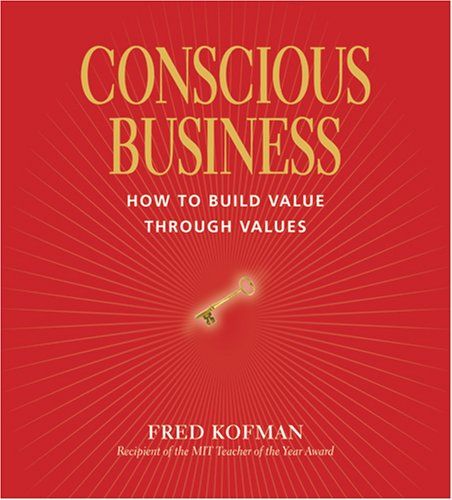
Nova: Absolutely, Atlas. And that's precisely what we're diving into today, drawing insights from two pivotal works. First, "Conscious Business" by Fred Kofman, a truly unique voice who blends his background in economics and philosophy to champion integrity and emotional intelligence as the bedrock of leadership. Kofman argues that true business success isn't just about profit, but about meaning and consciousness.
Atlas: Okay, so a philosophical economist. That's a fascinating blend. And the second?
Nova: The second is "Leadership Embodiment" by Wendy Palmer and Janet Crawford. What's remarkable about Palmer is her background as a martial arts master, which gives her a completely different lens on how our physical presence profoundly shapes our influence. She brings the abstract notion of "presence" into tangible, actionable practices. Together, these books reveal that leadership isn't just about what you, but profoundly about who you and how you.
Atlas: That's intriguing. We often talk about "executive presence," but to hear it rooted in martial arts or economic philosophy... it definitely piques my interest. But how does this "inner game" actually translate into something tangible for a leader who needs to inspire and motivate a team, not just meditate?
Leading from Within: The Inner Game of Impact
SECTION
Nova: That's the perfect question, Atlas, because it's not about meditation in a corner office. It's about a fundamental shift in perspective. Kofman's "Conscious Business" really hammers home that integrity, responsibility, and emotional intelligence aren't just fluffy HR terms; they're the foundational operating system of truly effective leadership. He describes leaders who operate from an "unconscious" place, driven by ego or fear, often creating environments rife with blame and low trust.
Atlas: I’ve seen that in action. It’s like a ripple effect. One leader’s unresolved issues or insecurities can permeate an entire department, leading to a culture of finger-pointing instead of problem-solving. It erodes trust, and that absolutely impacts operational success.
Nova: Exactly. Let me paint a picture. Imagine a project manager, let's call her Sarah, leading a complex, high-stakes software launch. The deadline is looming, and a critical bug is discovered late in the cycle. An unconscious leader might immediately lash out, demand answers, or try to find someone to blame. The internal state is one of panic and defensiveness.
Atlas: And the team's response? They shut down. They hide problems, they get defensive, and innovation grinds to a halt. It reinforces the idea that vulnerability is a weakness, which is truly detrimental to cultivating potential.
Nova: Precisely. Now, imagine Sarah, drawing from the principles of "Conscious Business." When that bug is discovered, her first internal move isn't panic. Instead, she takes a breath, acknowledges the stress, but chooses to operate from a place of responsibility and integrity. She might gather her team, not to interrogate, but to say, "Okay, this is a challenge. My responsibility is to lead us through it. What do need to do? How can support you?" Her internal state shifts from 'who's to blame?' to 'how do we solve this?'
Atlas: That's a powerful distinction. It's about shifting from an adversarial mindset to a collaborative one, even under immense pressure. I can imagine that kind of response would foster incredible loyalty and problem-solving. It directly addresses the "leadership psychology" aspect—how you motivate and inspire. It’s not just about being "nice"; it's about being fundamentally effective when things go sideways.
Nova: It's about creating psychological safety, which is a measurable factor in high-performing teams. When leaders cultivate that inner awareness, they model it for their teams. It's a profound ripple effect that transforms workplace culture from reactive and fearful to proactive and innovative. So, this "inner game" isn't a luxury; it's the fundamental engine for operational success and sustainable growth.
Embodied Leadership: Cultivating Presence Under Pressure
SECTION
Atlas: That makes a lot of sense, Nova. It’s about building a resilient internal foundation. But how does this profound inner awareness translate into something visible, something that actually changes how you interact in a critical meeting or when you're delivering tough news? Because sometimes, even if your intentions are pure, if your presence doesn't convey it, the message gets lost.
Nova: And that naturally leads us to how this profound inner awareness isn't just internal; it actually projects outwards, shaping how we're perceived and how effectively we lead, especially when the stakes are high, as Wendy Palmer and Janet Crawford explore in "Leadership Embodiment." They argue that our physical state—our posture, our breath—is inextricably linked to our mental and emotional state. Think about it: when you're stressed, what happens to your body?
Atlas: My shoulders hunch, my breath gets shallow, my voice might even tighten. I've noticed it in myself and in others, especially when they're about to deliver bad news or face a challenging question. It’s like the body physically contracts.
Nova: Exactly. And that physical contraction, what Palmer and Crawford call "collapsing," actually signals insecurity or defensiveness. It can inadvertently undermine your words, no matter how confident they are. Conversely, when we're grounded and expansive, we project confidence, competence, and calm. They teach practices to cultivate what they call "presence under pressure."
Atlas: So, it's not just about "faking it 'til you make it" with a power pose. It's deeper than that. It’s about intentionally shifting your physical state to genuinely access a more resourceful internal state.
Nova: Precisely. They offer simple, yet incredibly powerful techniques to "center" yourself. Think of a sturdy tree in a storm versus a wilting plant. The tree has deep roots and a strong core, allowing it to sway without breaking. A leader with embodied presence is like that tree. They can be flexible, responsive, but fundamentally grounded.
Atlas: Okay, so for someone about to walk into a critical negotiation or a high-pressure board meeting—say, presenting on a new process innovation that could significantly impact the company—what does this "centering" actually look like? Can you give us a tiny step, something concrete they can literally do in five minutes before that meeting?
Nova: Absolutely. It’s incredibly simple. Before that important meeting, find a quiet moment, even just a minute or two. Stand or sit with your feet firmly on the ground, feeling that connection. Gently drop your shoulders, lengthen your spine as if a string is pulling you from the crown of your head, and bring your attention to your breath. Breathe deeply into your belly for a few slow counts, then exhale slowly. Notice how your body settles, how your mind clears slightly. This isn't about eliminating all nerves, but about creating an internal anchor.
Atlas: I totally know that feeling when you walk into a room and instantly feel off-kilter. Just taking those few breaths, feeling your feet—that sounds like such a profound yet accessible shift. It's almost like a mental and physical recalibration. I've observed that when leaders cultivate this kind of calm, grounded presence, their teams respond differently. There’s less anxiety, more focus. It’s a subtle but powerful form of non-verbal communication that can genuinely inspire and motivate.
Synthesis & Takeaways
SECTION
Nova: And that's the beautiful synergy between Kofman's "leading from within" and Palmer and Crawford's "embodied presence." They're not separate concepts; they're two sides of the same coin. Your inner state of integrity, responsibility, and emotional intelligence finds its most powerful expression through your physical presence, your posture, your breath.
Atlas: So, it's about cultivating both the internal landscape and its external manifestation. For the strategic innovator, the empathetic leader, it’s about understanding that true impact and meaningful change don't just come from brilliant strategies, but from the person delivering them. It’s about cultivating your own potential to better cultivate your team's.
Nova: Exactly. It's realizing that leadership isn't just a set of skills you acquire; it's a state of being you cultivate. And the lasting insight here is that you don't need to be perfectly zen every moment. You just need the tools to consistently return to that centered, conscious state, especially when the chaos of external pressures tries to pull you away.
Atlas: That's a powerful reframe. It’s not about eliminating stress, but about building resilience. So, for our listeners, that tiny step Nova mentioned: before your next important meeting, take five minutes to center yourself. Focus on your breath and posture. Notice how that shift influences your presence and interactions. It’s a small action with potentially profound effects on your impact.
Nova: That's a perfect challenge, Atlas. A small practice for a big shift.
Atlas: Absolutely. This is Aibrary. Congratulations on your growth!