

The 'Crisis' Paradox: Unlocking Leadership Lessons from History's Toughest Moments.
Golden Hook & Introduction
SECTION
Nova: We’re often told to look forward, to innovate, to break new ground. We’re obsessed with the next big thing, the cutting-edge solution. But what if the most disruptive insights for navigating today's chaos are actually buried in yesterday's crises? What if the answers we desperately seek are echoing through the corridors of history?
Atlas: Oh, I love that. It’s like we’re so busy staring at the horizon, we trip over the wisdom right at our feet. That definitely resonates with anyone trying to see patterns in complex systems.
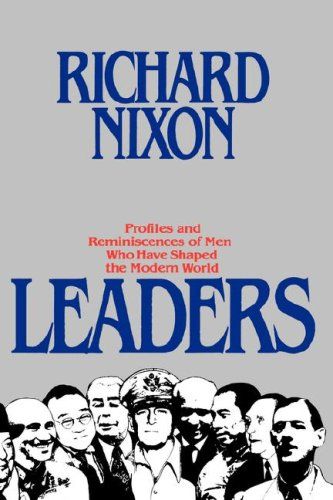
Nova: Exactly! And today, we’re digging into that very idea, drawing lessons from two incredibly influential, yet wonderfully contrasting, books. We’ve got Richard Nixon’s surprisingly insightful "Leaders," and Doris Kearns Goodwin's Pulitzer-winning masterpiece, "Team of Rivals."
Atlas: Whoa, Nixon writing on leadership? That’s certainly… a perspective. I imagine he had some rather unique insights into the pressures of power. And Goodwin’s Lincoln? That’s almost required reading for anyone trying to understand strategic collaboration during national upheaval. It’s widely acclaimed for a reason.
Nova: His unique position is exactly why "Leaders" offers such a raw, unfiltered look at the pressures and choices world leaders face. He’d seen it, lived it, and was analyzing his peers and predecessors from the inside. It's not a self-help book, it's a deep dive into the psychology of power. And Goodwin, of course, gives us a masterclass in how to unite a fragmented nation. But before we get to Lincoln's genius, I want to start with that raw, unfiltered reality of leadership decisions in crisis that Nixon often highlighted.
The Unfiltered Reality of Leadership Decisions in Crisis
SECTION
Atlas: Okay, so, the raw reality. I imagine that's not always pretty. For someone trying to lead a team through a difficult pivot, how do you even begin to apply the lessons from, say, a wartime leader without being a dictator?
Nova: That’s a fantastic question, because it’s not about style, it’s about the fundamental weight of decision. Nixon, for example, often wrote about Charles de Gaulle. De Gaulle, during World War II, was literally the voice of Free France. He was in exile, with very little actual power, but he had this immense moral authority and an unwavering vision for France. His great crisis was the collapse of his nation, the demoralization, the occupation. He had to make decisions that weren’t popular, that went against the grain of established powers, simply to keep the idea of France alive.
Atlas: So he was leading a ghost, almost, but with an iron will. I can see how that takes a certain kind of conviction. But in a real-world scenario, you’re often dealing with imperfect information, conflicting advice, and the constant threat of failure. How did de Gaulle, or leaders like him, navigate that immense isolation?
Nova: That’s the paradox. Nixon observed that in the ultimate moments of crisis, the leader is often profoundly alone. De Gaulle had to decide whether to continue the fight from London, essentially defying his own government. The cause of his decision was the fall of France. The process involved him broadcasting his defiance, rallying a disparate movement, and meticulously rebuilding legitimacy. The outcome was the eventual liberation and restoration of French pride. This wasn’t a consensus decision, Atlas. It was a singular, terrifying act of will. He didn't have a focus group. He had to trust his own judgment, his own deep understanding of his nation's soul.
Atlas: That’s going to resonate with anyone who has to make a call where there simply isn't a clear "right" answer, or where the popular answer is the wrong one. But wait, how do you separate the leader's inherent personality from the universal pressures of command? Is it just that de Gaulle was uniquely suited, or are there transferable lessons in that isolation?
Nova: The transferable lesson is the ability to maintain clarity of vision and purpose when everything else is crumbling. It’s about understanding the core mission so deeply that when external advice or circumstances become contradictory, you have an internal compass. Nixon saw this in many leaders: a profound sense of destiny or duty that allowed them to make choices others couldn't or wouldn't. It's not about being a dictator, but about accepting the unique burden of ultimate responsibility.
Atlas: So basically you’re saying that while the context is extreme, the core principle of having an unshakeable inner conviction during chaos is universal. That makes me wonder, though, if that kind of singular vision can also be a blind spot. What if that conviction leads you down the wrong path?
Nova: A brilliant question, and it naturally leads us to our second key idea, which often acts as a counterpoint to that singular, isolated leadership. Because while de Gaulle was making those solitary, high-stakes decisions, another leader was demonstrating the power of radical inclusion.
Inclusive Leadership and Strategic Collaboration in Adversity
SECTION
Nova: Think about Abraham Lincoln during the American Civil War. He faced a crisis that literally threatened to tear his nation apart. Yet, instead of surrounding himself with loyalists, Doris Kearns Goodwin’s "Team of Rivals" shows us he did something truly extraordinary.
Atlas: I’ve been thinking about this. He brought in William Seward, Salmon Chase, Edward Bates—all men who had actively campaigned against him for the presidency. That sounds almost suicidal from a strategic perspective. How do you even begin to build trust with people who actively campaigned against you? Isn't there a risk of constant infighting, especially in a fast-moving crisis?
Nova: It absolutely sounds counterintuitive, doesn't it? The cause of his decision was the existential threat to the Union. He knew he needed the strongest minds, the most experienced politicians, regardless of their personal ambition or past animosity towards him. The process involved Lincoln’s unparalleled humility, his strategic patience, and his remarkable ability to manage enormous egos. He didn't demand subservience; he demanded their best thinking for the nation. He would often let them argue vehemently, absorbing their diverse perspectives, and then, and only then, would he make the final decision.
Atlas: That's a great way to put it. So, he wasn't just collecting rivals; he was cultivating a true intellectual sparring ground. For innovators trying to disrupt an industry, is this about finding rivals, or just finding the sharpest minds, even if they fundamentally disagree with your core approach?
Nova: It’s both, actually. It’s about recognizing that the greatest strength often comes from embracing genuine intellectual diversity, even if it means discomfort. Lincoln understood that these men, his former rivals, represented different factions and viewpoints within the Republican party and the nation. By bringing them into his cabinet, he wasn't just getting their talent; he was integrating their constituencies and their perspectives directly into his decision-making process. The outcome was a stronger, more unified war effort, despite the immense internal struggles. He disarmed opposition by inviting it in.
Atlas: Wow, that’s actually really inspiring. It’s like he turned potential saboteurs into strategic assets. But how did he prevent that from just devolving into chaos? How did he maintain control without stifling dissent?
Nova: Goodwin emphasizes Lincoln’s moral authority and his extraordinary communication skills. He was patient, he listened intently, but when he made a decision, it was clear and final. He also had a remarkable ability to forgive and to appeal to a higher purpose. He made it clear their loyalty was to the Union, not just to him. It’s a profound lesson in inclusive leadership: you don’t need everyone to agree with you, you need them to contribute their best, even if their path to that best is different from yours.
Synthesis & Takeaways
SECTION
Atlas: So, we’ve got de Gaulle, making those solitary, conviction-driven decisions in exile, and Lincoln, masterfully orchestrating a 'team of rivals' during a national nightmare. It almost feels like two opposing poles of leadership.
Nova: That’s a perfect example of the 'crisis paradox.' It’s not that one is inherently better than the other; it’s about the adaptive capacity of leadership. Sometimes, as with de Gaulle, the moment demands a singular, unwavering vision, a leader who can cut through the noise and act decisively, even in isolation. That's for when the very identity or survival of the entity is at stake, and clear, painful choices must be made.
Atlas: And then there are times when that singular vision would be a fatal flaw, where the crisis is so multifaceted and complex that you need a tapestry of perspectives, even conflicting ones, to weave a path forward, like Lincoln. It’s about building resilience through intellectual rigor and diverse input.
Nova: Exactly. The real lesson from history's toughest moments, for any strategist or innovator, isn't to pick one style and stick with it. It's understanding when to be de Gaulle—that solitary, unwavering compass—and when to be Lincoln—the master orchestrator of dissent and collaboration. The crisis paradox is that both radical autonomy and radical inclusion can be the key to unlocking success, depending on the nature of the challenge. The profound insight here is that leadership in crisis demands a chameleon-like ability to shift your approach, to adapt your very nature to the problem at hand, not clinging to a single dogma.
Atlas: That gives me chills. It means the ultimate leadership principle is adaptability itself. For our listeners, I’d challenge you to consider: what kind of crisis are you facing right now? Is it one that demands your singular, unwavering vision, or one that desperately needs you to build a true team of rivals?
Nova: A powerful question to reflect on. Thank you for joining us on this journey through history’s leadership lessons. This is Aibrary. Congratulations on your growth!