

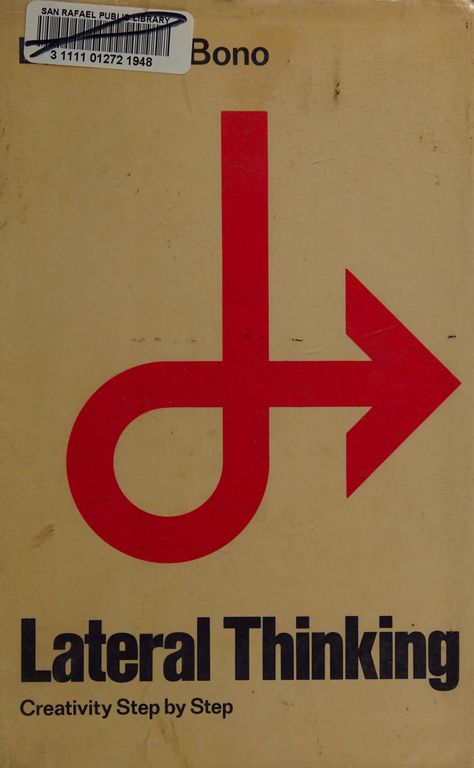
Lateral thinking: creativity step by step
Introduction
Nova: Imagine a man who lives on the tenth floor of an apartment building. Every morning, he takes the elevator all the way down to the ground floor and goes to work. But when he comes home in the evening, if it is a sunny day, he takes the elevator to the seventh floor and then walks up the stairs the rest of the way. If it is a rainy day, however, he takes the elevator all the way to the tenth floor. Why does he do this?
Atlas: Okay, I have heard this one before, but it always gets me. Is he trying to get some exercise only on sunny days? Or maybe he likes the view from the seventh floor? Wait, no, that does not explain the rainy day part. Why would rain change his elevator habits?
Nova: That is the beauty of a lateral thinking puzzle. Most people try to solve it using vertical thinking. They look for a logical reason why a person would choose to walk. But the answer is much simpler: the man is a person of short stature. He can only reach the button for the tenth floor with his umbrella. On sunny days, he does not have his umbrella, so he can only reach as high as the button for the seventh floor.
Atlas: That is brilliant and also incredibly frustrating. It feels like a trick, but it is actually just a shift in perspective. You have to stop thinking about his choices and start thinking about his physical reach.
Nova: Exactly. And that shift in perspective is the core of everything we are talking about today. We are diving into the landmark book Lateral Thinking: Creativity Step by Step by Edward de Bono. He is the man who actually coined the term lateral thinking back in the late sixties, and this book is essentially the manual for how to stop digging the same hole deeper and start digging a new one somewhere else.
Atlas: I love that analogy. Digging a new hole. Because usually, when we have a problem, we just try harder at the same solution, right? We just dig deeper. But de Bono says that is not always the way to find the gold.
Nova: Precisely. He argues that creativity is not some mystical gift from the muses. It is a deliberate, systematic way of using the mind. Today, we are going to break down his techniques, look at how our brains are actually wired to resist creativity, and see how these ideas saved the 1984 Olympics from financial ruin.
Atlas: I am ready. If I can learn to think like the man with the umbrella, maybe I can finally solve some of the problems sitting on my own desk.
Key Insight 1
Vertical vs. Lateral Thinking
Nova: To understand de Bono, we have to start with the difference between vertical and lateral thinking. Vertical thinking is what we are taught in school. It is selective, analytical, and sequential. You move forward only if there is a logical path. You have to be right at every single step.
Atlas: That sounds like just being a reasonable person. If I am building a bridge, I definitely want the engineer to be right at every step. I do not want them to try a lateral approach to gravity.
Nova: You are absolutely right. De Bono is very clear that vertical thinking is essential. It is the tool for development and refinement. But the problem is that vertical thinking is not very good at generating new ideas. It is like a train on a track. It is efficient, but it can only go where the tracks already lead.
Atlas: So lateral thinking is like taking the train off the tracks?
Nova: More like building a whole new set of tracks in a different direction. Lateral thinking is generative. It is not about being right at every step. In fact, de Bono says that in lateral thinking, you might have to be wrong at some stages to reach a correct and innovative solution in the end.
Atlas: That sounds dangerous. Being wrong on purpose? My boss would have a heart attack if I told him that was my new strategy.
Nova: It feels counterintuitive because our education system punishes being wrong. But think about it this way: vertical thinking is like digging a hole deeper and deeper to find water. If there is no water there, digging deeper does not help. Lateral thinking is the act of moving twenty feet to the left and starting a new hole.
Atlas: Okay, I get the hole analogy. But how do you know when to stop digging the first hole? Is there a sign that says stop being logical and start being weird?
Nova: Usually, it is when you hit a plateau. When you are working harder but getting the same results. Vertical thinking is about depth; lateral thinking is about breadth. Vertical thinking says, I know what I am looking for. Lateral thinking says, I am looking, but I do not know what I am looking for until I find it.
Atlas: It sounds like lateral thinking is more about exploration than execution. But de Bono claims this is a step-by-step process. How can you have a step-by-step process for something that is supposed to be non-linear?
Nova: That is the genius of the book. He provides specific tools to force the brain out of its comfort zone. He treats the mind like a muscle that can be trained to see patterns and then deliberately break them. It is not about waiting for a lightning bolt of inspiration. It is about setting up the conditions where lightning is more likely to strike.
Atlas: So it is a system for being unsystematic? That is a bit of a paradox, Nova.
Nova: It is! De Bono calls it the logic of creativity. He realized that the brain is a self-organizing system that creates patterns. Once a pattern is formed, it is very hard to see anything else. Lateral thinking is the set of tools we use to disrupt those patterns so new ones can form.
Key Insight 2
The Self-Organizing Mind
Nova: To really appreciate why we need lateral thinking, we have to look at how the brain works. De Bono uses a great analogy involving a tray of sand and some water.
Atlas: I am a fan of analogies. Lay it on me.
Nova: Imagine you have a tray of sand, and you pour a little water onto it. The water will trickle down and leave a slight mark. If you pour more water, it will naturally follow the same path that the first bit of water took. Eventually, you get a deep groove in the sand.
Atlas: Right, because water follows the path of least resistance. It is easier to flow into an existing groove than to create a new one.
Nova: Exactly. Our brains are that tray of sand. Information is the water. When we experience something or solve a problem, we create a neural groove. The next time we face a similar situation, our thoughts naturally flow into that same groove. This is how we form habits and patterns. It is incredibly efficient. It is why you do not have to relearn how to tie your shoes every morning.
Atlas: So the grooves are good for efficiency, but they are the enemy of innovation. If I am always following the same groove, I am never going to find a new way to tie my shoes or a new way to run my business.
Nova: Precisely. De Bono calls the brain a self-organizing system. It is designed to create and stick to patterns. The problem is that once a pattern is established, it becomes almost impossible to see the information in any other way. We become prisoners of our own efficiency.
Atlas: That is a bit scary. It means our expertise actually makes us less creative because our grooves are so deep we can't see over the edges.
Nova: That is a huge insight, Atlas. Often, the more you know about a subject, the harder it is to think laterally about it. You have so many established vertical paths that your brain just refuses to jump the tracks.
Atlas: So how do we jump the tracks? If my brain is naturally pulling me into the groove, how do I force it out?
Nova: You use what de Bono calls provocations. You have to create a mental jolt that is so illogical that the water has no choice but to splash out of the groove and find a new path. It is about creating a temporary instability in the system.
Atlas: Like a controlled explosion in the sand tray?
Nova: Exactly. You are not trying to destroy the tray; you are just trying to move the water. Lateral thinking is the art of creating those splashes. It is about realizing that the way we organize information is not the only way, or even the best way. It is just the way that happened to form first.
Key Insight 3
The Toolkit: PO and Random Entry
Nova: Let's get into the actual tools. One of the most famous ones de Bono introduced is the concept of PO. P-O.
Atlas: PO? Like a post office? Or a parole officer?
Nova: Neither! It stands for Provocative Operation. De Bono actually wanted it to be a new word in the language, like yes or no. He argued that we need a third option. Yes is for judgment, no is for rejection, and PO is for provocation.
Atlas: So instead of saying that is a bad idea, I just say PO?
Nova: Sort of. You use PO to introduce an idea that is intentionally absurd or impossible, just to see where it leads. For example, you might say, PO, cars should have square wheels.
Atlas: But square wheels are terrible! They would not roll. That is a vertical thinking response, isn't it?
Nova: Exactly. A vertical thinker says, that is wrong, discard it. A lateral thinker says, PO, square wheels. Now, where does that take us? Maybe it leads to the idea of a suspension system that adjusts to the bumps, or maybe it leads to a new type of terrain-traversing vehicle. The square wheel is an intermediate impossible. It is a stepping stone to a new idea.
Atlas: I see. So the goal isn't to actually make square wheels. The goal is to use the absurdity of square wheels to force your brain to think about suspension or road contact in a way it never would have otherwise.
Nova: You nailed it. Another tool is Random Entry. You take a completely unrelated word—you can literally pick one out of a dictionary—and try to link it to your problem. If you are trying to design a new lightbulb and you pick the word soap, you start thinking about bubbles, or transparency, or how soap cleans things. Maybe that leads to a lightbulb that cleans the air using UV light.
Atlas: That sounds like a fun game, but does it actually work in a high-stakes environment? It feels a bit like we are just messing around with words.
Nova: It works because it forces a connection between two neural patterns that would never normally meet. It is like a bridge between two different grooves in that sand tray. De Bono also talks about Reversal. You take a situation and flip it. Instead of a doctor visiting a patient, what if the patient visits the doctor? Oh wait, that is what happens. So reverse it: what if the doctor never sees the patient at all?
Atlas: Then you get telemedicine. Or diagnostic AI. Wow, okay, I see how that works. By reversing the standard assumption, you find the gaps in the current model.
Nova: And then there is Fractionation. You break a problem down into its parts, but not in the logical way. You break it down into arbitrary pieces and then rearrange them. It is all about disrupting the standard sequence of thought. If you change the order of the steps, you often change the outcome.
Case Study
The 1984 Olympics Case Study
Nova: Now, I promised you a real-world example. Let's talk about Peter Ueberroth and the 1984 Los Angeles Olympics. Before 1984, the Olympics were a financial nightmare. Montreal in 1976 had left the city with a billion dollars in debt. No city wanted to host them.
Atlas: I remember hearing about that. It was basically a guaranteed way for a city to go bankrupt. So what did Ueberroth do differently? Did he just cut costs?
Nova: That would have been vertical thinking. Cutting costs is just digging the same hole more efficiently. Instead, Ueberroth used lateral thinking. He realized that the traditional model was that the host city pays for everything and hopes to make it back in ticket sales and tourism. He flipped the script.
Atlas: How so?
Nova: He decided that the Olympics should be privately funded. But instead of just asking for donations, he created a sense of scarcity. Usually, the Olympics had hundreds of small sponsors. Ueberroth said, PO, we will only have thirty sponsors. And they have to pay a massive premium for the privilege.
Atlas: Wait, he had fewer sponsors but asked for more money? That sounds like it would backfire. Why would anyone pay more for less?
Nova: Because he made it an exclusive club. By limiting the number of sponsors, he made the sponsorship incredibly valuable. Companies like Coca-Cola and Samsung fought to be the exclusive sponsor of their category. He also refused to build new stadiums. He used existing ones and renovated them. He looked at the problem not as a construction project, but as a media and branding project.
Atlas: So he moved the hole. He stopped looking for money in the city budget and started looking for it in corporate marketing budgets.
Nova: Exactly. And the result? The 1984 Olympics didn't just break even. They made a profit of about 250 million dollars. It completely changed the way the Games were run forever. Ueberroth was even named Time Magazine's Man of the Year. He used lateral thinking to solve a problem that everyone else thought was unsolvable.
Atlas: It is amazing how a simple shift in how you define the problem changes everything. He didn't ask, how do we pay for this? He asked, how do we make people want to pay for this?
Nova: That is the core of de Bono's philosophy. The way you frame the problem is often the problem itself. If you are stuck, it is usually because you are asking a vertical question. You need a lateral leap to find a better question.
Deep Dive
Criticisms and the Legacy of de Bono
Nova: Now, we should be fair. Not everyone is a fan of de Bono. Some critics argue that his work is a bit pseudoscientific. They say he doesn't provide enough empirical data to back up his claims about how the brain works.
Atlas: I can see that. The sand tray analogy is great, but is there actual neuroscience behind it? Or is it just a helpful metaphor?
Nova: It is largely a metaphor, though modern neuroscience does support the idea of neural plasticity and pattern recognition. Another criticism is that his books can be very repetitive. He wrote over sixty books, and many of them cover the same ground.
Atlas: Sixty books? That is a lot of ways to say think differently. I guess he was really good at digging new holes, or maybe he was just digging the same hole in sixty different libraries.
Nova: Some people definitely feel that way. But even his critics admit that he changed the conversation. Before de Bono, creativity was seen as something you were born with. You were either a creative person or you weren't. He democratized it. He said, no, thinking is a skill. And like any skill, it can be taught and practiced.
Atlas: That is a powerful legacy. It takes the pressure off. You don't have to be a genius; you just have to use the right tools.
Nova: Exactly. He brought lateral thinking into schools, into corporate boardrooms, and even into government. He once suggested that the Arab-Israeli conflict could be solved by shipping in Marmite, because the zinc deficiency in the local diet might be making people more irritable.
Atlas: Okay, now that is a PO if I ever heard one. Marmite as a peace treaty?
Nova: It sounds ridiculous, but that is the point of a PO! It forces you to think about the physiological and nutritional aspects of conflict, rather than just the political ones. Whether or not it works is almost secondary to the fact that it opens up a new line of inquiry.
Atlas: I like that. It is about being a mental explorer. Even if you don't find land, the act of sailing in a new direction is valuable.
Nova: And that is why Lateral Thinking: Creativity Step by Step remains a classic. It is not just a book of puzzles. It is a manifesto for a more flexible, open-minded way of living. It challenges us to realize that our current way of doing things is just one possibility among many.
Conclusion
Nova: We have covered a lot of ground today. From the man in the elevator to the 1984 Olympics, the message is clear: our brains are pattern-making machines, and while those patterns are useful, they can also be traps.
Atlas: I am definitely going to start using PO in my next meeting. Even if it just makes people look at me funny, it will be worth it to see if we can splash some water out of those old grooves.
Nova: That is the spirit. Remember, vertical thinking is for when you want to be right. Lateral thinking is for when you want to be new. You need both to truly succeed. De Bono's work reminds us that the greatest obstacle to a new idea is often an old one that worked too well.
Atlas: I think I am going to go look at my biggest problem right now and try to reverse it. Or maybe I will just pick a random word from the dictionary and see where it leads me.
Nova: If you find yourself thinking about square wheels or Marmite, you know you are on the right track. The world needs more people willing to dig holes in unexpected places.
Atlas: This has been an eye-opener, Nova. I feel like I just got a new pair of glasses for my brain.
Nova: That is the goal of lateral thinking. It is not about changing what you see, but changing how you look. Thank you for joining us on this journey through the mind of Edward de Bono.
Atlas: I am ready to go out there and be intentionally wrong until I find something brilliantly right.
Nova: This is Aibrary. Congratulations on your growth!