

The Analytical Mindset: Systems, Simplification, and Breakthroughs
Golden Hook & Introduction
SECTION
Nova: Stop trying to improve everything. Seriously. If you want real breakthroughs, you actually need to ignore 99% of your problems and focus on just one. Sounds completely counterintuitive, right? But it's the secret to massive, impactful change.
Atlas: Whoa, hold on. That flies in the face of, well, everything I’ve ever been taught about productivity and problem-solving. My instinct is always to make better. Are you telling me that’s a waste of time?
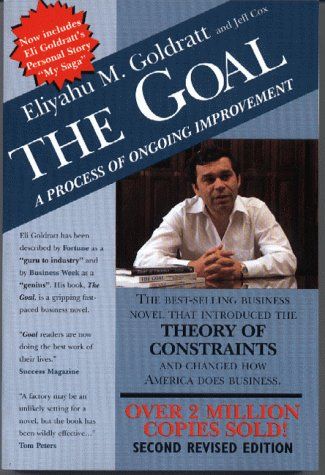
Nova: In many cases, yes! And today, we’re unpacking exactly why, through the lens of a truly groundbreaking book: by Eliyahu M. Goldratt. Goldratt, believe it or not, was a physicist. He brought that scientific rigor, that search for fundamental laws, into the messy world of business management.
Atlas: A physicist writing a business book? That’s already intriguing. I imagine it wasn’t your typical dry management textbook.
Nova: Far from it! It’s actually a novel, a story about a plant manager trying to save his factory. When it first came out, some critics were skeptical of its fictional format for delivering serious business principles, but its impact has been profound. It revolutionized how many companies think about efficiency and process. It’s all about understanding systemic interconnectedness and identifying those few leverage points that can create disproportionate positive change.
Atlas: Okay, 'systemic interconnectedness' – that sounds like a big, academic phrase. For someone, say, managing a complex project or a marketing campaign, how does that actually translate? How do I even begin to see those connections, let alone find a 'leverage point'?
Deep Dive into Core Topic 1: The Theory of Constraints: Finding Your Bottleneck
SECTION
Nova: Exactly the right question, Atlas. And that's where Goldratt's Theory of Constraints, or TOC, comes in. Imagine an entire system, like a factory, a project, or even your daily workflow. It's like a chain. Every link in that chain represents a step or a process.
Atlas: Right, and common sense says if one link is weak, you strengthen it. If two are weak, you strengthen both.
Nova: And that's where the counter-intuitive magic begins! Goldratt’s core insight is that system, no matter how complex, has at any given moment, only true constraint or bottleneck that limits its overall output. Only one. And the performance of the entire system is dictated by that single weakest link.
Atlas: Only one? That’s a bold claim. So, if my marketing team is struggling with content creation, lead generation, conversion rates, you’re telling me only one of those is the real problem?
Nova: Precisely. Let me give you a classic analogy Goldratt used: imagine a group of Boy Scouts on a hike. Each scout walks at their own pace. Some are fast, some are slow. If you want the entire troop to arrive at the campsite together, at what speed must the whole group walk?
Atlas: Well, at the speed of the slowest scout, obviously.
Nova: Exactly! The slowest scout is your bottleneck. Now, what happens if you tell the fastest scouts to walk even faster?
Atlas: They’ll just get further ahead, create more distance, and then have to wait longer at the next checkpoint for everyone else to catch up. They might even get frustrated.
Nova: And what if you tried to make the slowest scout walk faster?
Atlas: The overall speed of the group still wouldn't change, because the scout is still setting the pace.
Nova: You've got it. That's the essence of TOC. In a business context, trying to make every department "more efficient" without first identifying the bottleneck is like telling your fastest scouts to run ahead. You create inventory, queues, and frustration, but you don't actually increase the overall throughput of your business. Goldratt argued that focusing on local efficiencies, without understanding the global constraint, is often detrimental. It sounds almost heretical to traditional management, but it's fundamentally logical.
Atlas: That makes so much sense! I can totally see how improving a non-bottleneck just creates a pile-up somewhere else, or makes people work on things that aren’t actually moving the needle for the whole system. But how do you that slowest scout, that true bottleneck, in a complex organization? It feels like everything is a problem at some point.
Nova: That's where the analytical mindset truly comes in. It requires stepping back and looking at the entire system, not just individual parts. Often, the constraint isn't where you think it is. It might be an outdated policy, a specific piece of equipment, a lack of skilled personnel in one area, or even the market itself. The deep question you posed earlier is so crucial: "In your current projects, what is the single biggest constraint limiting progress or impact?" Asking that forces you to look beyond symptoms.
Atlas: So, it's not about the loudest complaint or the most visible problem. It's about finding the actual choke point. That’s a tough shift for a lot of us, myself included, who are used to tackling every problem that screams for attention.
Deep Dive into Core Topic 2: The Five Focusing Steps: A Practical Blueprint for Breakthroughs
SECTION
Nova: It absolutely is. And once you've wrestled with identifying that constraint, the next logical step is, "Okay, now what do we about it?" That's where Goldratt gives us his incredibly practical, actionable blueprint: the Five Focusing Steps. They take you from theory to real-world application, step-by-step.
Atlas: Okay, so once I’ve pinpointed my slowest scout, what’s step one? Do I just… fire them? Just kidding, mostly.
Nova: Ha! Not quite. Step one, as we just discussed, is to the system's constraint. We've talked about that. Then comes step two: the constraint. This means getting the absolute maximum out of that bottleneck with existing resources. Don't invest in new equipment or hire new people yet. Just make sure it's never idle, that it's working on the right things, and that its output is maximized.
Atlas: So if my bottleneck is, say, a particular approval process that's slowing down project delivery, 'exploiting' it would mean making sure the people involved in that process are super clear on priorities, have all the information they need, and aren’t wasting a single second?
Nova: Exactly. No coffee breaks if it means the bottleneck stops, no working on low-priority items. Every minute of that constraint's time is precious. Then comes step three: everything else to the constraint. This means all other parts of the system, the non-bottlenecks, must align their pace and activities to support the constraint.
Atlas: That's a huge mindset shift. It means the faster scouts on the hike actually have to slow down or even wait for the slowest one. That goes against every fiber of efficiency thinking, where everyone is supposed to be working at 100%.
Nova: It does, and that’s why Goldratt’s ideas were so revolutionary. Local efficiency, if it doesn't serve the constraint, is an illusion. The faster scouts should be preparing the trail for the slowest one, fetching water, or making sure the slowest one has everything they need, rather than running ahead and creating distance. In a business, this might mean a department that could produce more, deliberately produces less, just to avoid overwhelming the bottleneck downstream.
Atlas: Wow. That's powerful. It requires incredible discipline and a global view. So, after exploiting and subordinating, what's next?
Nova: Step four is to the constraint. This is where you actually invest in improving its capacity. This might mean buying new equipment, hiring more staff for that specific function, or implementing new technology. But only you've fully exploited and subordinated, because otherwise, you'd be throwing resources at a problem you haven't fully understood or optimized.
Atlas: So you don’t just jump to throwing money at the problem. You optimize what you have first. That’s a much more strategic approach for anyone trying to make an impact without just burning through resources. And the final step?
Nova: The fifth and crucial step, often overlooked, is:. Once you've elevated the constraint, it's very likely that the bottleneck will shift to another part of the system. You then go back to step one and start the whole process again. It’s a continuous loop of improvement. Goldratt, the physicist, understood that systems are dynamic. What was once the slowest link might now be perfectly capable, and a new constraint emerges. That’s the "process of ongoing improvement" right there in the title.
Atlas: That makes so much sense. It’s not a one-and-done fix; it’s a continuous journey. It’s about constantly asking, "What's holding us back?" and then systematically addressing it. For anyone who wants to make a tangible difference, this isn't just theory; it's a strategic framework for real-world impact.
Synthesis & Takeaways
SECTION
Nova: Exactly. Goldratt's work, rooted in his scientific approach, pushes us to think systemically. True analytical prowess isn't just about dissecting problems into smaller and smaller pieces; it's about understanding their interconnectedness and identifying the few leverage points that can create disproportionate positive change. It’s about working smarter, not just harder, by focusing your energy where it will have the most significant effect.
Atlas: It really shifts your perspective. Instead of feeling overwhelmed by a hundred problems, you're empowered by the knowledge that only one or two truly matter at any given time. So, for our listeners out there, what is the single biggest constraint limiting progress or impact in your current projects? How could focusing all efforts on alleviating that one constraint unlock significant improvements?
Nova: That's the question that can unlock breakthroughs. It’s a powerful challenge, and it’s what Goldratt gave us: a way to continuously improve and truly achieve our goals by understanding the system.
Atlas: An incredibly valuable insight.
Nova: This is Aibrary. Congratulations on your growth!