The Philosophical Compass: Navigating Ethical Dilemmas in Complex Systems
Golden Hook & Introduction
SECTION
Nova: Atlas, what's your go-to move when you're caught in a truly thorny ethical dilemma?
Atlas: My go-to? Usually a dramatic sigh, followed by a frantic Google search for 'Is this bad?' It's not exactly a robust framework.
Nova: You know, Atlas, I think a lot of our listeners can relate to that frantic search. It highlights a fundamental challenge in how we navigate right and wrong. We often rely on intuition, on that gut feeling, but in today's complex world, that can leave us adrift.
Atlas: Oh, I know that feeling. It's like you you know what's right, but then someone else feels just as strongly about the exact opposite. Why does our intuition fail us so spectacularly when things get really messy?
Nova: Exactly! That's the ethical blind spot we're exploring today, drawing insights from what we're calling 'The Philosophical Compass: Navigating Ethical Dilemmas in Complex Systems.' We're diving into the powerful ideas of thinkers like Michael J. Sandel, whose book 'Justice: What's the Right Thing to Do?' is renowned for making these complex philosophical theories incredibly accessible, and Colin McGinn, who pushes us to grapple with the very nature of evil.
Atlas: Accessible is good. Because sometimes, philosophy sounds like it's designed to make your head spin, not help you actually decide anything.
The Peril of Intuition & Ethical Blind Spots
SECTION
Nova: It can, but the core idea here is that relying solely on intuition is like trying to navigate a dense fog without a map. Our gut reactions are often inconsistent. Let's take a classic thought experiment, slightly tweaked: imagine you're a surgeon, and you have five patients who all need different organs to live. On the other hand, you have one healthy person in the waiting room who could provide all five organs.
Atlas: Oh, I see where this is going. My gut immediately screams, 'No! You can't just take organs!'
Nova: Right. Now, what if you're driving a runaway trolley, and you can either let it hit five people on one track, or you can switch it to another track where it will hit only one person? Most people, intuitively, would switch the track.
Atlas: Huh. Okay, but... wait. In both scenarios, it's one life versus five. My gut gives a different answer depending on whether I'm actively a life or just a harm. That's a huge inconsistency.
Nova: Absolutely. That's precisely the ethical blind spot. Our intuition is heavily swayed by factors like direct action versus indirect action, or emotional proximity. For someone grappling with a really controversial topic, this means their 'feeling' could shift based on how the situation is framed, not on a consistent moral principle.
Atlas: That makes me wonder, how does that actually play out? Like, if I 'feel' something is wrong, isn't that enough? For instance, I might feel a certain policy is unjust, but someone else feels it's perfectly fair. How do we move beyond that subjective clash of feelings?
Nova: That's the challenge. When we rely solely on intuition, our positions become difficult to articulate or defend beyond 'it just feels right to me.' It leaves us vulnerable to confirmation bias, where we seek out information that supports our initial gut feeling, rather than truly analyzing the situation. It means that when someone challenges your stance on a controversial topic, you might find yourself without a robust argument.
Atlas: So it's not just about what we, but we feel it, and whether that 'why' holds up under scrutiny. That's a massive shift from just declaring a stance.
The Philosophical Compass: Structured Ethical Frameworks for Clarity
SECTION
Nova: And that's precisely where our philosophical compass comes in. This is where Michael J. Sandel's work truly shines. He doesn't just present theories; he shows us how they apply to those very real, gut-wrenching dilemmas. One of the core frameworks is.
Atlas: Okay, so utilitarianism. That sounds like... 'the greater good,' right?
Nova: Exactly. It's about maximizing overall happiness or well-being. The moral action is the one that produces the greatest good for the greatest number of people. Think of it like a cost-benefit analysis for morality. If you're deciding on a public health policy, a utilitarian might argue for the policy that saves the most lives or prevents the most suffering, even if it means some individuals bear a disproportionate burden.
Atlas: So it's just about the numbers, then? The greatest good for the greatest number, even if it means sacrificing one for many? That feels... uncomfortable. What about individual rights?
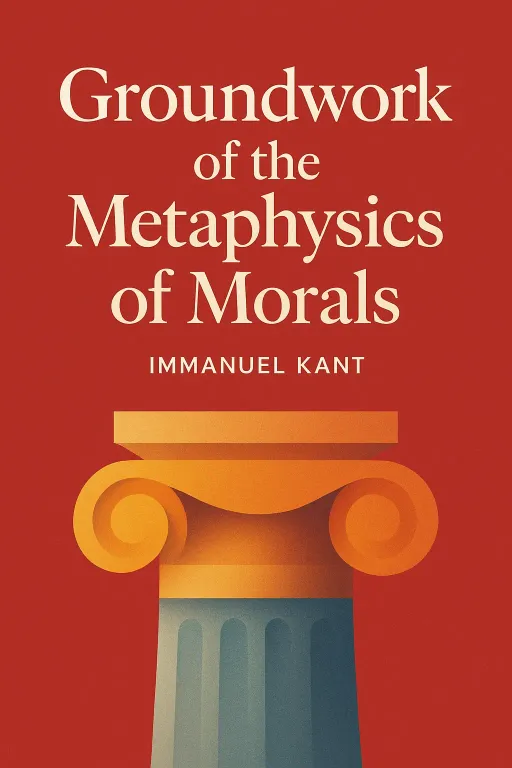
Nova: That's a powerful and common critique, Atlas. And it leads us directly to another framework:, or duty-based ethics, named after Immanuel Kant. Kant argued that certain duties and rights are universal, regardless of the consequences. For him, lying is always wrong, not because of the bad outcome it might cause, but because it violates a universal moral law that you would want everyone to follow.
Atlas: So it's about universal rules, no exceptions? What about messy real-world situations where rules clash? Like, if telling a lie could save an innocent person's life, Kant would still say don't lie? That seems incredibly rigid in the face of true evil or complex human suffering.
Nova: It highlights the tension, doesn't it? And this is where Colin McGinn's work on understanding the nature of evil becomes so relevant. Frameworks like Kantianism don't just dismiss evil; they provide a lens to analyze actions that seem inherently wrong, regardless of their consequences. It helps us grapple with what makes something fundamentally immoral, rather than just brushing it aside as 'bad.'
Atlas: So these frameworks aren't just academic exercises. They're different lenses to analyze a situation, especially those really tough ones where your gut is screaming, but your brain needs a map.
Nova: Precisely. And a third framework Sandel explores is, which emphasizes individual freedom and rights above all else. A libertarian might argue that people should be free to do whatever they want, as long as they don't harm others, and the government's role should be minimal. This perspective often clashes with both utilitarianism's focus on collective good and Kantianism's universal duties.
Atlas: So these three—utilitarianism, Kantianism, and libertarianism—they're like three different moral operating systems, each with its own logic. When you're looking at a controversial topic, like, say, vaccine mandates, you can see how people are often arguing from one of these different philosophical starting points, even if they don't explicitly name them.
Nova: Exactly! It's not about finding the right framework, but understanding framework is being applied, and what its implications are. It moves you from simply reacting to a controversial topic, to systematically dissecting the underlying ethical assumptions.
Synthesis & Takeaways
SECTION
Nova: So, bringing it all together, applying a structured ethical framework fundamentally changes your approach to analyzing a controversial topic or a challenging personal decision. You move from the murky waters of subjective feeling to a clear-eyed analysis of principles, consequences, and rights.
Atlas: It sounds like it moves us from 'this feels right' to 'this is right...' which is a massive shift. For someone who thrives on intellectual rigor and dissecting meaning, that systematic approach must be incredibly empowering. It provides a language to articulate your stance with clarity.
Nova: It truly does. The profound insight here is that intellectual rigor in ethics isn't about finding a single, universal answer that satisfies everyone. It's about developing the capacity to understand the various, often conflicting, moral principles at play. It's about being able to articulate you hold a certain position, acknowledging the alternative perspectives, and understanding the sacrifices and benefits inherent in each. It allows for a more robust, defensible, and ultimately more intellectually honest engagement with the world's complexities.
Atlas: That completely reframes what 'making a decision' means in a complex ethical space. What's the one thing you'd want our listeners to take away from this?
Nova: I'd say, the true power of this philosophical compass isn't just in knowing the theories, but in using them to illuminate your own blind spots. It's about developing the intellectual muscle to consistently analyze, articulate, and defend your ethical positions, transforming vague intuition into clear, principled thought.
Atlas: We invite you to challenge your own intuitive responses this week. Pick a challenging decision, personal or public, and try to view it through a utilitarian, Kantian, or libertarian lens. How does that shift your perspective?
Nova: This is Aibrary. Congratulations on your growth!