

Beyond the Plate: The Psychology of Mindful Eating and Emotional Well-being
Golden Hook & Introduction
SECTION
Nova: Alright, Atlas, quick game: I say "diet culture," you give me a one-word reaction.
Atlas: Oh, I like that. Hmm, "exhausting."
Nova: Exhausting! I love it. And honestly, for so many of us, that's exactly what it feels like. A constant battle, a mental drain, and ultimately, a blind spot to what our bodies are truly trying to tell us.
Atlas: Absolutely. I imagine a lot of our listeners feel like they're just constantly trying to keep up with the latest food rules, or feeling guilty about what they ate five minutes ago.
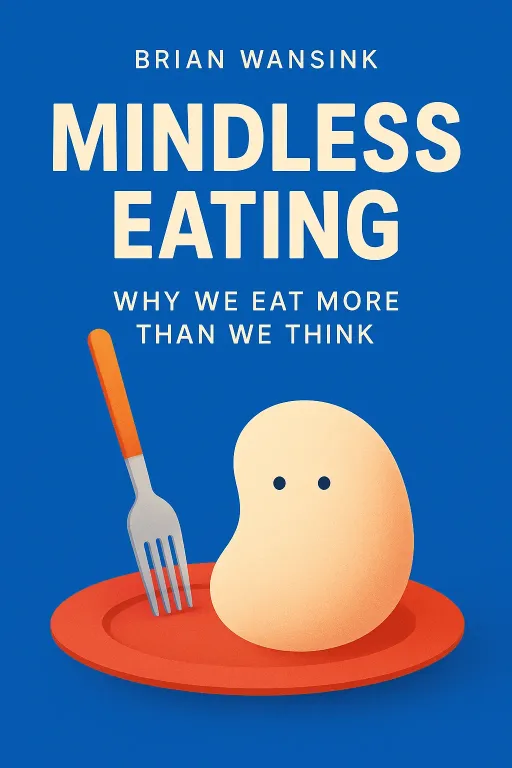
Nova: Exactly! And today we're cracking open this fascinating space where psychology meets the dinner plate, drawing insights from two groundbreaking books. We're talking about Brian Wansink's "Mindless Eating," a book that really shook up the food industry with its surprising research, and Laura Thomas's "Just Eat It," which offers a radical, body-positive alternative to traditional dietetics.
Atlas: That's a powerful combination. I mean, the idea of "mindless eating" already sounds like something everyone can relate to. But what's the big revelation there? Is it just about paying attention?
The Invisible Nudges of Mindless Eating
SECTION
Nova: Well, Atlas, it’s far more insidious than just "paying attention." Wansink’s work, which is rooted in behavioral economics and consumer psychology, really highlights how our environments are silently, subtly, and often successfully, manipulating how much we eat. He's a Cornell professor who dedicated his career to understanding why we eat what we eat, often without realizing it.
Atlas: Hold on, so you're saying my environment is making me eat more? Like, it's not me, it's the plate? That sounds a bit out there.
Nova: It sounds wild, I know! But Wansink proved it with some truly iconic experiments. The most famous one involves what he called the "bottomless soup bowl."
Atlas: The bottomless soup bowl? That sounds like something out of a cartoon.
Nova: It does, right? But it was a real, scientific experiment. Wansink had participants come in, and he gave them bowls of soup. Unbeknownst to half of them, their bowls were rigged with a tube that subtly, slowly, refilled their soup as they ate.
Atlas: Oh, I see where this is going. They just kept eating, didn't they?
Nova: Exactly! The participants with the bottomless bowls ate 73% more soup than those with regular bowls. But here's the kicker: when asked, they reported feeling no fuller, and they didn't even realize they’d eaten more! Their visual cue—the level of soup in the bowl—overrode their internal hunger signals.
Atlas: Wow. That's incredible. So basically, their eyes were telling their stomach, "Nope, still empty!" even when it wasn't. I can see how that would be a problem when you're at a buffet or just pouring yourself a bowl of cereal.
Nova: Precisely. It highlights this fundamental "blind spot" we have. We think we're listening to our bodies, but our brains are constantly processing external cues. Think about plate size, for instance. If you serve yourself on a larger plate, a normal portion looks tiny, so you serve more. Or if you're eating from a large package, you're likely to eat more than if you portion it out into a smaller bowl.
Atlas: That makes me wonder, if these nudges are so powerful, is it even possible to truly "listen to our bodies"? Or are we just doomed to be manipulated by the environment around us? It sounds like we're fighting an uphill battle against our own psychology.
Nova: That's a really insightful question, Atlas. And it’s exactly the kind of frustration that leads to the constant struggle with food that so many of us experience. It's not about willpower; it's about awareness. Once you know these invisible nudges exist, you can start to counter them. But that leads us perfectly into the second part of our conversation, which is about actively reclaiming our internal wisdom.
Reclaiming Internal Wisdom: The Power of Intuitive Eating
SECTION
Nova: So if external cues are pulling us away, how do we find our way back to our own internal compass? That's where Laura Thomas and the concept of intuitive eating step in. Her book, "Just Eat It," is a powerful response to the diet culture that has dominated our lives for so long.
Atlas: I’ve heard of intuitive eating, and honestly, the first thing that comes to mind for many, I imagine, is just "eating whatever you want." Isn't that just a recipe for disaster for someone who's trying to manage their health?
Nova: That's a common misconception, and a very valid one. But intuitive eating, as Thomas advocates, is far from a free-for-all. It's a framework built on ten core principles, but at its heart, it's about rejecting the diet mentality and truly trusting your body's signals of hunger and fullness. Thomas, a registered nutritionist, really emphasizes the importance of challenging those restrictive rules that diet culture has instilled in us.
Atlas: Okay, so it’s not just about eating a whole cake because you "feel like it." It's about a deeper connection. Can you give an example of how someone would actually make this shift? Because for many, myself included, that sounds incredibly liberating, but also terrifying.
Nova: It absolutely can feel terrifying at first, especially if you've spent years following external rules. Imagine someone, let's call her Sarah, who has been on every diet imaginable since she was a teenager. She constantly felt guilty about food, swinging between strict restriction and then feeling out of control around "forbidden" foods. This cycle left her exhausted, both physically and emotionally.
Atlas: Oh, I've been there. I totally know that feeling. That constant mental negotiation around food.
Nova: Right? So, Sarah starts exploring intuitive eating. The process begins with simply recognizing physical hunger cues—a gentle growl, a slight dip in energy—rather than waiting until she's ravenous. And crucially, she learns to identify fullness, not just when she's stuffed, but when she's comfortably satisfied. She also starts challenging those "food rules." For example, she loved chocolate but always deemed it "bad," leading her to overeat it whenever she "slipped up."
Atlas: So she just... started allowing herself chocolate? That seems counterintuitive initially.
Nova: At first, yes! But what often happens, and what Sarah experienced, is that when a food is no longer "forbidden," its power over you diminishes. When she allowed herself to eat chocolate without guilt, she often found she only needed a small amount to feel satisfied, and the intense cravings lessened. The outcome for Sarah was profound: she developed a peaceful, sustainable relationship with food, free from guilt and obsession. Her energy levels became more consistent, and her emotional well-being significantly improved because food was no longer a source of constant stress.
Atlas: That's actually really inspiring. It sounds like it's less about restriction and more about listening to your body's wisdom, which, for someone who values holistic health and lasting change, is exactly what we're after. It's not just about the scale, it's about genuinely feeling better. Does this approach also help with emotional eating, then? Because that's a huge component for so many.
Nova: Absolutely. By fostering that internal awareness, you start to differentiate between physical hunger and emotional hunger. Instead of reaching for food when you're stressed or sad, you learn to pause and ask, "What am I truly feeling right now?" This shift from external reaction to internal inquiry is fundamental to addressing emotional eating, offering a path to deeper well-being and stress management.
Synthesis & Takeaways
SECTION
Nova: So, what we're really seeing here is a powerful synthesis. Brian Wansink's "Mindless Eating" shines a spotlight on the external forces that pull us away from our bodies, while Laura Thomas's "Just Eat It" offers the roadmap back to our innate internal wisdom. It's about being aware of the subtle nudges around us, and simultaneously, tuning into the profound intelligence within us.
Atlas: That's a great way to put it. It's not about being perfect, but about being present. It’s moving from a place where food has power over us, to a place where we have a peaceful, informed relationship with it. It's truly a pathway to genuine nourishment and satisfaction, not just for our bodies, but for our minds too.
Nova: Exactly. And that brings us to our deep question for you, our listeners. When you next eat, pause for 30 seconds before your first bite. What are you truly feeling in your body and mind? Just observe.
Atlas: That's such a simple yet profound challenge. Start small, celebrate every win. Just that 30-second pause could be the beginning of a completely different relationship with food. It’s about building those lasting habits, one mindful bite at a time.
Nova: Absolutely. Take that moment, discover what your body is trying to tell you, and begin to trust that inner wisdom.
Atlas: And for anyone out there struggling with the endless cycle of diet culture, remember: your journey is unique, and your inner wisdom is your most reliable guide.
Nova: This is Aibrary. Congratulations on your growth!