

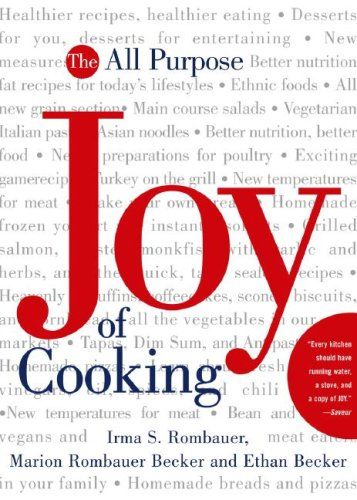
Joy of Cooking
Introduction
Nova: Imagine it is 1931. The Great Depression is crushing the American spirit, and you are a St. Louis socialite who has just lost her husband to suicide. You have three thousand dollars left in your life savings, no professional training, and a collection of recipes. What do you do? If you are Irma Rombauer, you bet everything on a book that would eventually become the most influential cookbook in American history.
Nova: It is much more than a textbook, Leo. It is a survival story. Irma Rombauer did not just write a cookbook; she created a friend for the kitchen. Today, we are diving into the fascinating, sometimes controversial, and deeply personal history of the book that taught America how to eat, from squirrel stew to kale pesto.
Key Insight 1
The Birth of the Kitchen Bible
Nova: To understand why Joy of Cooking is so special, you have to understand Irma. She was not a chef. She was a hostess. She was known for her charm and her dinner parties, not for her technical knife skills. When she self-published those first three thousand copies in 1931, she was basically writing for her friends.
Nova: Exactly. But she did something revolutionary that changed the way we read recipes. Before Irma, cookbooks usually listed all the ingredients at the top in a big block, and then gave you the instructions below. It was easy to lose your place or forget an ingredient halfway through.
Nova: Well, Irma invented what she called the Action Method. She embedded the ingredients directly into the instructions. It would say something like, 'Cream together half a cup of butter and one cup of sugar,' with the amounts bolded right there in the sentence. It made the process feel like a conversation rather than a chemistry experiment.
Nova: Because most cookbooks were written by professionals who assumed you already knew the basics. Irma assumed you were just like her—someone who wanted a good meal but might be a little overwhelmed by the process. She even included a famous line in the early editions: 'Stand facing the stove.'
Nova: It was her way of saying, 'Take a breath, you can do this.' It was that witty, encouraging voice that made people fall in love with her. She was not lecturing you; she was standing there with you, probably with a cocktail in her hand.
Key Insight 2
The Family Legacy and the Squirrel in the Room
Nova: That is where the family comes in. Joy of Cooking is unique because it has stayed in the Rombauer family for four generations. Irma’s daughter, Marion Rombauer Becker, took over in the fifties. She was the one who added the nutritional information and those iconic line drawings of herbs and techniques.
Nova: They were done by artists like Ginnie Hofmann and Ikki Matsumoto. Marion was obsessed with detail. She turned the book from a collection of Irma’s favorites into a true encyclopedia. This is when the book started including things like how to skin a squirrel or clean a turtle.
Nova: It was! For decades, the 'Joy' was famous for its illustrations on how to prepare small game. It reflected a time when people were more connected to where their food came from, or out of necessity during the war years, were eating whatever was available. It became a point of pride for the book—if it was edible, Joy of Cooking would tell you how to cook it.
Nova: It became a bit of a cultural touchstone. By the time Marion’s son, Ethan Becker, took over, the book had to balance that 'cook anything' heritage with a modernizing world. They eventually moved the squirrel and opossum recipes to a specialized section, but they kept them for a long time because they represented the book’s core mission: being the ultimate resource.
Key Insight 3
The Great 1997 Identity Crisis
Nova: Oh, the 1997 edition is a legendary story in the publishing world. The publisher, Simon and Schuster, decided the book needed a massive 'professional' overhaul. They hired a high-profile editor, Maria Guarnaschelli, and a small army of professional chefs to rewrite the recipes.
Nova: You would think so, but they made a fatal mistake. They stripped away the 'Action Method' and, more importantly, they stripped away the Rombauer voice. It felt like a textbook written by a committee. It was technically perfect but totally soul-less.
Nova: Exactly. And the fans hated it. There was a huge backlash. People felt like their family heirloom had been vandalized. It was a classic case of fixing something that was not broken. They even removed some of the quirky, personal anecdotes that Irma and Marion had woven in over the years.
Nova: It was a huge wake-up call. For the 75th anniversary edition in 2006, Ethan Becker stepped back in to reclaim the family legacy. He brought back the Action Method and restored a lot of the personality. It was a 'return to roots' moment that saved the book's reputation. It proved that people did not want a perfect cookbook; they wanted Irma's cookbook.
Key Insight 4
Modern Joy and the New Generation
Nova: It absolutely does, and the 2019 edition is the proof. This one was spearheaded by Irma’s great-grandson, John Becker, and his wife, Megan Scott. They spent years testing thousands of recipes. They did not just reprint the old stuff; they added six hundred brand-new recipes.
Nova: Actually, they brought it right into the 21st century. They added sections on fermentation—think kimchi and kombucha—and modern techniques like sous vide. They even updated the international sections to be more authentic, moving away from the 'Americanized' versions of the mid-century.
Nova: That is a great way to put it. John and Megan realized that for 'Joy' to survive, it has to be a living document. They kept the 'Action Method' because it is still the best way to follow a recipe, but they adjusted the flavors for a globalized palate. They even addressed the environmental impact of food, which is something Marion was actually ahead of her time on back in the seventies.
Conclusion
Nova: We have covered a lot today—from Irma Rombauer’s desperate gamble during the Depression to the modern-day revival by her great-grandchildren. The story of Joy of Cooking is really the story of the American kitchen itself. It has seen us through wars, economic collapses, and the rise of the digital age.
Nova: Well said, Leo. It is a reminder that cooking is a conversation between generations. So, the next time you are stuck on what to make for dinner, maybe skip the search engine and pull that thick, white-and-red spine off the shelf. There is a century of wisdom waiting for you in those pages.
Nova: Fair enough. This is Aibrary. Congratulations on your growth!