Market-Fit Engineering: Building What Humans Value
Golden Hook & Introduction
SECTION
Nova: What if the biggest mistake you're making in building your AI agent isn't a coding error, but a fundamental misunderstanding of your user's deepest desires?
Atlas: Ooh, bold start, Nova. Because usually, our instinct as builders, as architects, is to dive deep into the code, right? To perfect the algorithm, to make it. Are you saying all that brilliance might be misplaced if we're not asking the right 'why'?
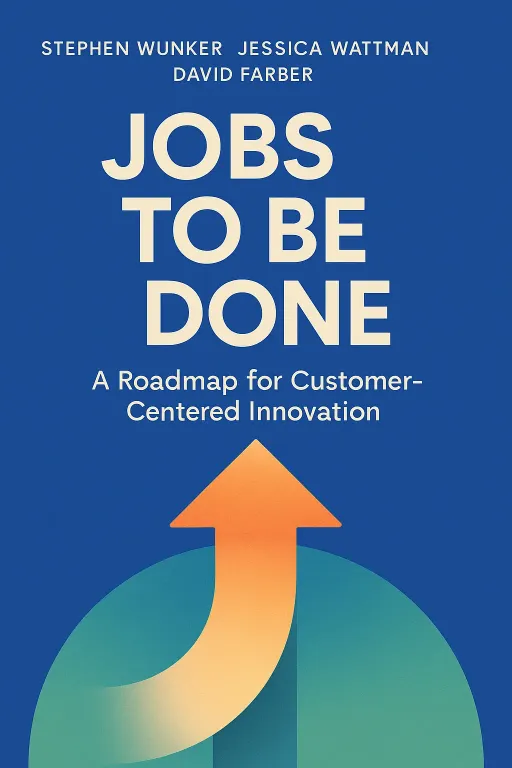
Nova: Precisely. Today, we're diving into a concept that can fundamentally change how you architect your AI agents, inspired by two influential thinkers who challenged conventional wisdom. We're talking about the powerful ideas found in Stephen Wunker's and Steve Blank’s foundational.
Atlas: Okay, so we're moving beyond just building cool tech. Wunker and Blank are suggesting we need to be more… human-centric, perhaps?
Nova: Exactly. Wunker, a consultant focused on innovation, helps companies move beyond just listing features to understanding people adopt solutions. His work is all about the underlying progress people are trying to make in their lives. And Blank, a legendary entrepreneur and educator, essentially wrote the playbook for validating market need. He saw countless startups crash and burn not because their code was bad, but because they simply didn't have customers. His model is all about de-risking that process.
Atlas: So, less about the elegant algorithm, more about the messy, often unarticulated, reality of human problems and needs? That’s a fascinating pivot.
The "Job to Be Done" Framework
SECTION
Atlas: Let's start with that human element. You mentioned Stephen Wunker and the "Jobs to be Done" framework. For those of us deep in the weeds of building systems, what does that really mean? Are we talking about user stories, or something deeper?
Nova: It’s deeper, Atlas. Much deeper. The core idea, popularized by Wunker and others, is that customers don't actually buy products or services. They them to do a specific job. Think about it: nobody wakes up in the morning wanting to buy a quarter-inch drill bit. They wake up wanting a quarter-inch hole in their wall. The drill bit is just the tool they hire for the job of making that hole.
Atlas: Right, right. The classic analogy. So, for an AI agent, it's not about hiring "an LLM with advanced reasoning capabilities," it's about hiring something to, say, "draft a compelling marketing email in under five minutes," or "summarize this dense research paper so I can grasp the key findings before my meeting," or "plan a complex, multi-city itinerary that accounts for my family's specific dietary needs and budget."
Nova: You've got it! The agent’s value is defined by the progress it enables for the user in accomplishing that specific job. If your agent helps someone draft that marketing email faster and more effectively, it's providing value. If it just has a lot of fancy features but doesn't actually make the user better at their job or make their life easier in that specific context, then what are we really building?
Atlas: That's a critical question. Because as practitioners, as architects, the temptation is always to add more features, to build a more sophisticated model, to add more layers of complexity that understand and appreciate. But if those layers don't directly contribute to reducing friction in the user's specific 'job,' then they’re just… overhead? Or worse, technical debt, as the takeaway suggests.
Nova: Exactly. Imagine you're building an AI agent to help project managers. A developer might focus on its ability to integrate with Jira, its sophisticated task dependency mapping, or its natural language query for real-time status updates. These are all technically impressive. But what if the job the user is hiring this agent for is "to get my team aligned on Project X by Friday so we don't miss the critical launch deadline," or "to reduce the two hours I spend every day chasing down status updates by 50%."
Atlas: Ah, I see. So, if the agent's complex features don't directly contribute to progress – the alignment, the time saved – then all that sophisticated code is just noise, or even worse, it actively friction because it's confusing or difficult to use. It becomes something the user has to to get their actual job done.
Nova: Precisely. And this is where the user profile comes into play for us. If we're a full-stack engineer, an architect, a value creator, this framework forces us to stop thinking about the we can build and start thinking about what job our user is trying to get done,, or. It's about understanding their struggle.
Atlas: So, for us practitioners, the idea of technical debt is a constant battle. This "Jobs to be Done" framework sounds like a powerful tool to that debt from being created in the first place, by ensuring every technical decision is tied to a validated user need, a specific job. It's about building what humans value, not just what's technically feasible or interesting to build.
Nova: It’s about building the, not just the drill bit. And this leads us beautifully into the second major idea, from Steve Blank. Because you can have a brilliant understanding of the job, but how do you know you've got it right? How do you know people will actually your agent for it?
The Customer Development Imperative
SECTION
Nova: That's where Steve Blank's work on Customer Development comes in. Blank, a seasoned entrepreneur and academic, observed something profound: most early-stage startups fail not because their technology is flawed, but because they haven't found a viable market. They haven't found customers who what they're building badly enough to pay for it.
Atlas: This is the "lack of customers, not lack of code" mantra, right? It’s a tough pill to swallow for engineers who pour their hearts into elegant code. It feels like saying, "Your beautiful machine is useless because nobody wants to use it."
Nova: Exactly. And Blank's Customer Development model is the antidote. It’s a systematic process for getting out of the building, talking to potential customers, and validating your business model before you invest massive resources into building. It’s about testing your assumptions about the problem, the solution, and the market.
Atlas: So, instead of spending months perfecting the agent's code, optimizing its latency, or adding sophisticated conversational nuances, we should be spending weeks talking to potential users, understanding their "jobs," and seeing if our proposed agent makes their life easier or their business more efficient?
Nova: That’s the essence of it. Think about an AI agent designed to automate customer support. A developer might build an incredibly sophisticated chatbot that can handle 90% of common queries. It’s technically brilliant. But if the job the business hired it for was to "reduce customer churn by resolving faster and more empathetically than human agents," and your AI, while handling volume, fails on those complex issues because the wasn't fully understood or validated, then it’s a failure.
Atlas: And Blank would ask, "Did you to the actual support agents? Did you talk to the customers who have those complex issues? Did you test the hypothesis that your AI could solve, or did you just build a cool AI that handles simple stuff?"
Nova: Precisely. It’s about validating the for the solution to that specific job. If you haven't validated that demand, all that sophisticated code, all that engineering effort, is just technical debt waiting to happen. It’s a beautifully crafted tool for a job nobody actually needs done, or a job they need done in a way you haven't understood.
Atlas: This really hits home for the "architect" and "value creator" aspects of our user profile. As architects, we're trained to build robust, scalable, efficient systems. But Blank is telling us that the most robust system is one that has a market, one that addresses a real need. How do we balance that architectural rigor with this upfront market validation? It feels like a shift in priority.
Nova: It is a shift, but it’s a necessary one for creating value. The validation process isn't just an afterthought; it the architecture. It informs the technical decisions you make. If your validation shows users will pay a premium for an agent that provides highly personalized, empathetic support for complex issues, that architectural decision will be very different than if they just need a quick FAQ bot.
Atlas: So, the "technical decision tree" needs to be mapped directly to the "job" the user is hiring the agent for. If the agent's logic doesn't reduce friction in that specific job, it's not a feature; it's a liability. It’s technical debt. That’s a powerful takeaway for anyone building AI agents today. It’s so easy to get lost in the technical marvels.
Synthesis & Takeaways
SECTION
Nova: So, to tie it all together: Stephen Wunker’s "Jobs to be Done" framework gives us the lens to understand job our users are trying to accomplish, and Steve Blank's Customer Development model provides the rigorous method to that we're building the right solution for that job, we over-invest in code.
Atlas: It’s a potent combination. The JTBD framework helps us identify the target – the specific progress a user seeks. Customer Development helps us confirm we're actually aiming at that target and that our arrow will hit the mark. If we miss either step, we risk building something impressive that ultimately doesn't serve anyone effectively.
Nova: And the ultimate takeaway for any architect, engineer, or value creator building AI agents is starkly clear: map your technical decision tree directly to the 'Job' the user is hiring the agent for. Every line of code, every architectural choice, should be a direct answer to how it reduces friction or enables progress in that specific job.
Atlas: And if it doesn't? If that piece of logic, that feature, that architectural decision doesn't actively contribute to getting the user's job done better or faster?
Nova: Then, as the material states, it is technical debt, not a feature. It's a cost that doesn't deliver commensurate value, potentially hindering future development or user adoption. It’s a distraction from the core purpose.
Atlas: That’s a powerful reframe. It means we need to be disciplined, to resist the urge to build for building's sake, and to constantly ask: "Is this making the user's 'job' easier?" For our listeners who are practitioners and architects, this isn't just theory; it's a practical guide to building more effective, valuable, and less debt-ridden AI systems.
Nova: Absolutely. It’s about building what humans truly value, not just what's technically interesting. It's about understanding the human at the other end of the interaction, their goals, their struggles, and their progress.
Atlas: So for our listeners, the next time you're architecting an agent, pause. Before you dive into the code, ask: What is the this agent is hired to do? And more importantly, have you validated that job with real users? If not, that’s your first priority, before writing another line of code.
Nova: That’s the path to market-fit engineering. This is Aibrary. Congratulations on your growth!